
How does light color influence lighting?
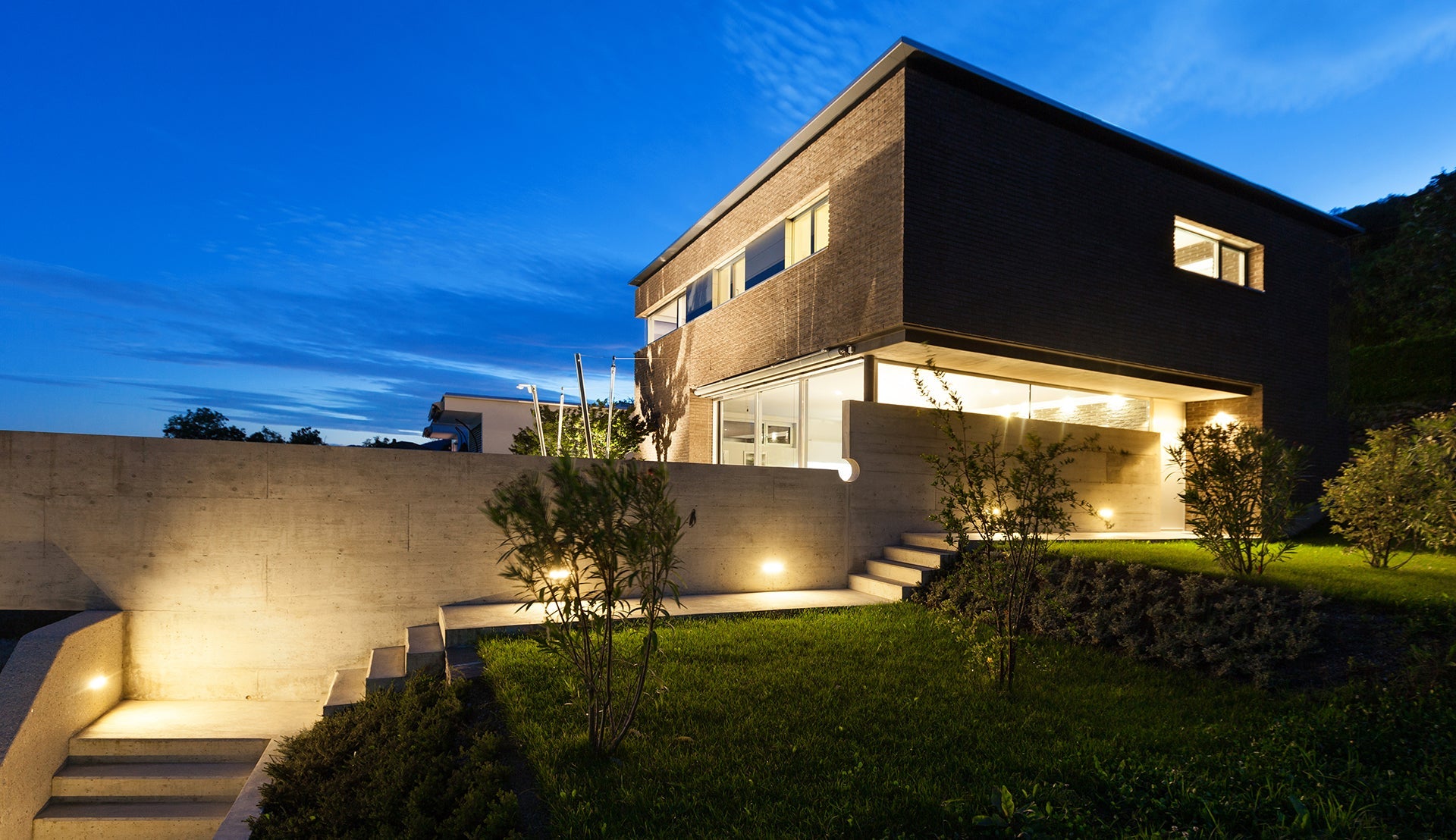
The color of light or the temperature of a light can influence the type of lighting you choose to highlight an element of your garden or home. To this end, halogen bulbs and LED bulbs each have certain advantages that homeowners can leverage depending on their intentions to project a warm (yellow-white), neutral, or cool (blue-white) light.
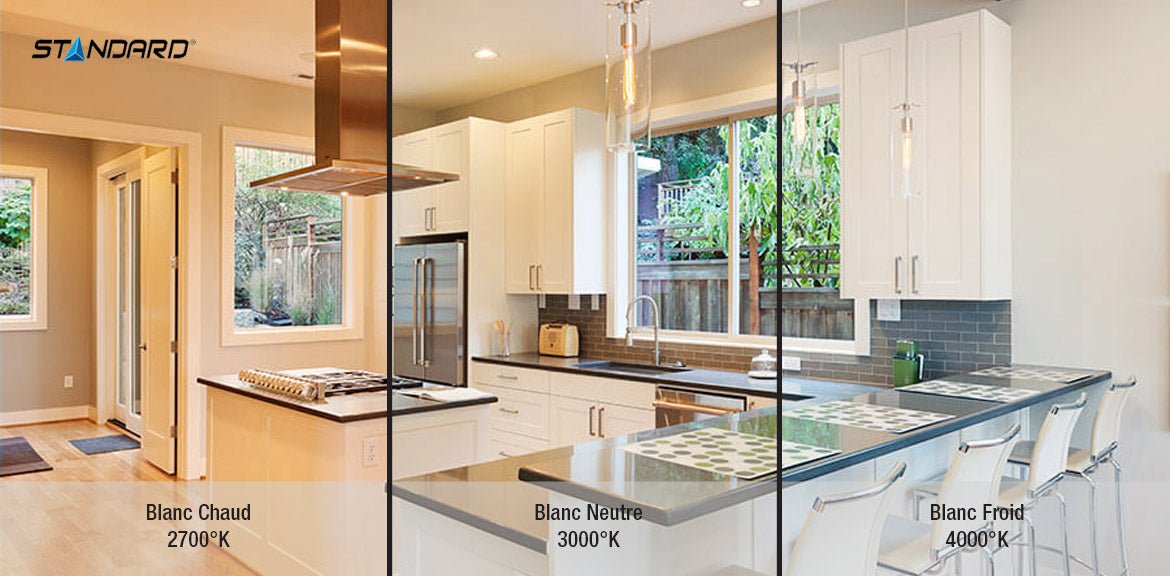
Color temperature or light color is measured in Kelvins (K) and indicates whether white light is warm (more yellow) or cool (bluish tint, approaching daylight). A color temperature of 2700 to 3300 K is described as warm white. It is pleasant, relaxing, and resembles late-day light. New LED bulbs and halogen bulbs can provide this type of warmth, traditionally associated with old incandescent bulbs. Neutral white light, with a temperature between 3300 and 5300 K, is energizing and suitable for more manual tasks. Finally, above 5300 K, the color of light is described as daylight and promotes concentration. If compared to natural light, at midday, sunlight has a color temperature of 8000 K. As evening approaches, and with it the time to rest, the light becomes more yellow and then turns red. This warm white light color interval begins at 3300 K. The intensity of the light decreases (for example, candlelight produces light at 1500 K). Warm light, therefore, corresponds to the cessation of daily activities, determined by our internal clock. This light, which heralds the nocturnal rest phase, is pleasant and soothing.Halogens are hot!
Halogen bulbs offer warm, bright, and natural lighting. Strongly accented and contrasted, they can create different lighting zones. The 12V halogen allows for up to 50% energy savings compared to a classic incandescent bulb, and 25% for the 230V halogen. To illuminate a terrace for the purpose of relaxing, for example, halogens can be perfectly suitable because they offer the best color rendering. Paradoxically, your colors will be as if in broad daylight. Moreover, they provide good accent lighting to highlight certain objects in your yard.9 advantages of halogen lamps
- Thanks to their compatible base, they advantageously replace incandescent bulbs and come in different shapes and colors for all lighting styles.
- The halogen lamp provides 20% more light compared to a classic incandescent lamp, and its lifespan is two or three times longer (the 12V halogen lasts up to 5000 hours, the 230V halogen up to 2000 hours).
- Halogen fixtures are very mobile and often equipped with a dimmer switch that allows for varying ambiances and brightness. Projecting light in a targeted manner, they can also be oriented according to your mood and needs.
- Since the halogen lamp emits warm white light, which provides excellent color rendering, it is less tiring for the eyes.
- Its activation is instantaneous; it starts immediately at full power.
- The range of halogens is very wide, from 20 to 500 Watts.
- The small size of halogen lamps allows them to be used in very compact floor lamps.
- There are now low voltage and even very low voltage halogen lamps.
- Halogen spotlights are equipped with a double glass wall to protect the quartz, which is very heat resistant but very susceptible to shocks.
5 disadvantages of halogen lamps
- A halogen lamp consumes much more than a low-energy lamp.
- Halogen lamps emit ultraviolet rays that can be dangerous in the long term. You should not remain exposed under a halogen floor lamp for too long. To limit the effects of these UVs, it is possible to place a glass filter to block the rays.
- A halogen lamp is more fragile than an incandescent bulb because it is covered with quartz.
- Halogen lamps must be regularly brought to their maximum power so that the halogen cycle is fully completed.
- The price of halogen lamps remains quite high.
LED bulbs, from warm to cool!
LED has become the fashionable light. Gone are the days when it was described as cool light. Today, you can truly create a feeling of well-being thanks to warm white color temperatures. By definition, a light-emitting diode (LED) is an electronic component that converts electricity into light. Its main applications, in order of market importance, are mobile electronics, displays, the automotive sector, lighting, and signage. For domestic lighting, lamps made up of several high-power LED bulbs combined are used. The best current models also display high luminous efficiencies - and the rapid progress recorded by manufacturers allows for much higher levels to be anticipated in the medium term. However, the LEDs available today remain of modest power: they produce much less light than a modest 60W bulb, for example. This is why lighting manufacturers sometimes integrate several LEDs within the same luminaire. LEDs are undoubtedly a solution for the future.9 advantages of LED lamps
- LED technology is constantly progressing: its energy efficiency doubles every 2 years and prices decrease by 20% each year.
- Much longer lifespan than other technologies: from 25,000 to 40,000 hours on the market (i.e., several decades of use) compared to 1,000 hours for incandescent lamps, 2,000 to 5,000 hours for halogen lamps, and 10,000 hours for compact fluorescent lamps. Thus, the purchase and replacement of an LED lamp are less frequent, making the investment more profitable.
- Maximum lighting upon ignition. They instantly emit the desired luminous flux, which can be advantageous for outdoor applications such as passageways.
- Compactness which makes them interesting, especially for recessed sources. They come in a variety of innovative designs.
- Flexibility: LED modules, directly installed in a luminaire and which can integrate control electronics, facilitate the implementation of lighting management solutions such as presence detection or variation according to daylight.
- LEDs operate at very low voltage and even at low temperatures, which can be an advantage for the electrical safety of the building and outdoor lighting in winter.
- They are shock-resistant, which makes them more robust than other lighting sources.
- Colored LED bulbs can be used for light effects without the use of filters.
- Finally, LEDs do not contain mercury, nor UV or infrared radiation, and are largely recyclable as non-hazardous waste (unlike compact fluorescent lamps).
5 disadvantages of LED lamps
- They are more expensive to purchase.
- Their power is lower than traditional bulbs.
- LED lamps are still not well suited for high-power lighting.
- LED bulbs cannot replace incandescent bulbs in luminaires, due to a generally incompatible base. Luminaires specifically designed for LEDs must be used.
- A risk of glare from cool white and blue LED lights. It is recommended to stay more than 20 cm from an LED light source if this exposure is prolonged (more than 12 hours).