

Skip to content

Cart

Your cart is empty

Article: 4 Points to Consider for Your Home Office Lighting

4 points à considérer pour l’éclairage de bureau à la maison - Luminaires & cie

4 Points to Consider for Your Home Office Lighting

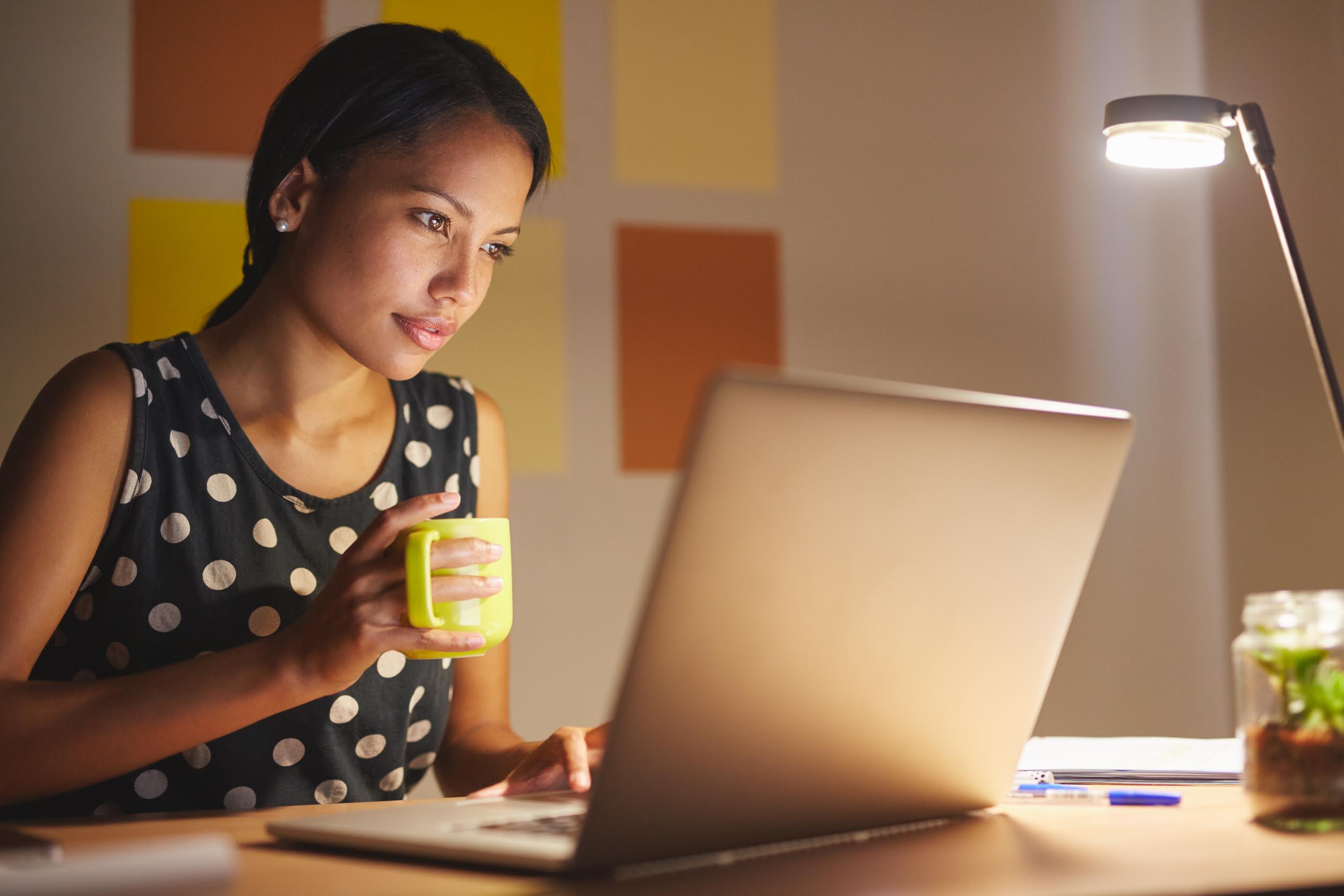
If you are a freelancer or student who spends a lot of time in front of your computer in your home office, it's important to properly light your workspace. Adequate office lighting not only helps protect your health and eyes, but also improves performance and thought processes, while avoiding unnecessary fatigue. And there's no harm in combining aesthetics with practicality. Many factors contribute to successful, well-designed, and pleasant lighting in your home office: a good combination of natural light and artificial light sources, the orientation and intensity of the light, the right type of bulbs, lamp models, and lighting around a screen. With the back-to-school season approaching, here are some tips to help you work in the best possible lighting conditions.
1) Natural/Artificial Light for Your Office Lighting

Since you are likely to spend long hours working in your office, one of your priorities for perfecting your setup is to ensure you have adequate lighting that promotes good performance and eye health. Ideally, you need a basic natural light source (window, skylight). But this is not enough, of course, because depending on the season, especially in a northern country like ours, light levels vary, not only from season to season, but also from day to day and even within a single day. Multiplying light sources is therefore essential to allow for variations in use according to the time of day and the desired working conditions. The light must not only ensure eye comfort, but also create an ambiance. To stimulate alertness and activity, a high degree of brightness will be sought. And for an atmosphere that encourages more reflection, a soft, subdued light will be preferred. Ideally, to supplement natural light, you should install at least two desk lamps (rather than decorative lamps), but also a ceiling light diffusing homogeneous light. Make sure your lamps have an articulated arm and an adjustable head. These two very practical features will allow you to perform very precise work and reduce eye strain. If necessary, use dimmers and other mood-creating devices, as inspiration strikes! But while the number of lamps is important, their placement, orientation, and the quality of the light they diffuse are equally so. This can vary significantly depending on other more personal criteria, such as the type of work, interior design conditions, and also your preferences.

2) Orientation of the Light Flow

Are you right-handed or left-handed? The question may seem trivial, but this detail is important for the placement of your main desk lamp. For example, if you are right-handed, the lamp should be placed to your left to limit shadow areas when you write by hand. For a left-handed person, it will be the opposite. Direct the light beam towards the center of the work area while avoiding it crossing your field of vision. And if you work on a computer, install a low-intensity lamp nearby, on the side or behind the device, to avoid eye strain. As for the ceiling light, avoid spotlights and opt for a pendant light diffusing homogeneous light. In all cases, always be careful of direct glare and do not direct any light flow into your line of sight. The same applies to indirect glare, i.e., reflections of light on a lacquered or shiny surface. You should choose matte finishes. And if you regularly find yourself in front of your computer screen, don't forget that this type of device also emits some light. Even if it's more readable in the dark, don't work in total darkness. It is therefore advisable to limit reflections as these reduce contrast and thus the readability of the screen. It should therefore be moved away from natural or artificial light sources. It should be placed perpendicular to them, even if it means rotating it if the daylight shifts.

3) Which Bulbs to Choose for Your Office Lighting?

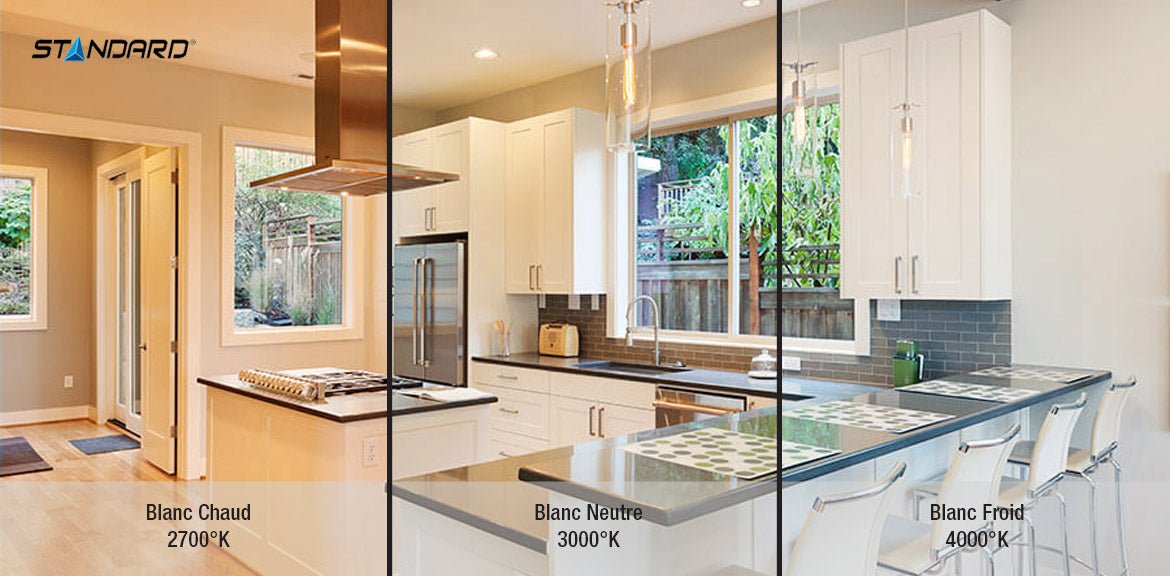
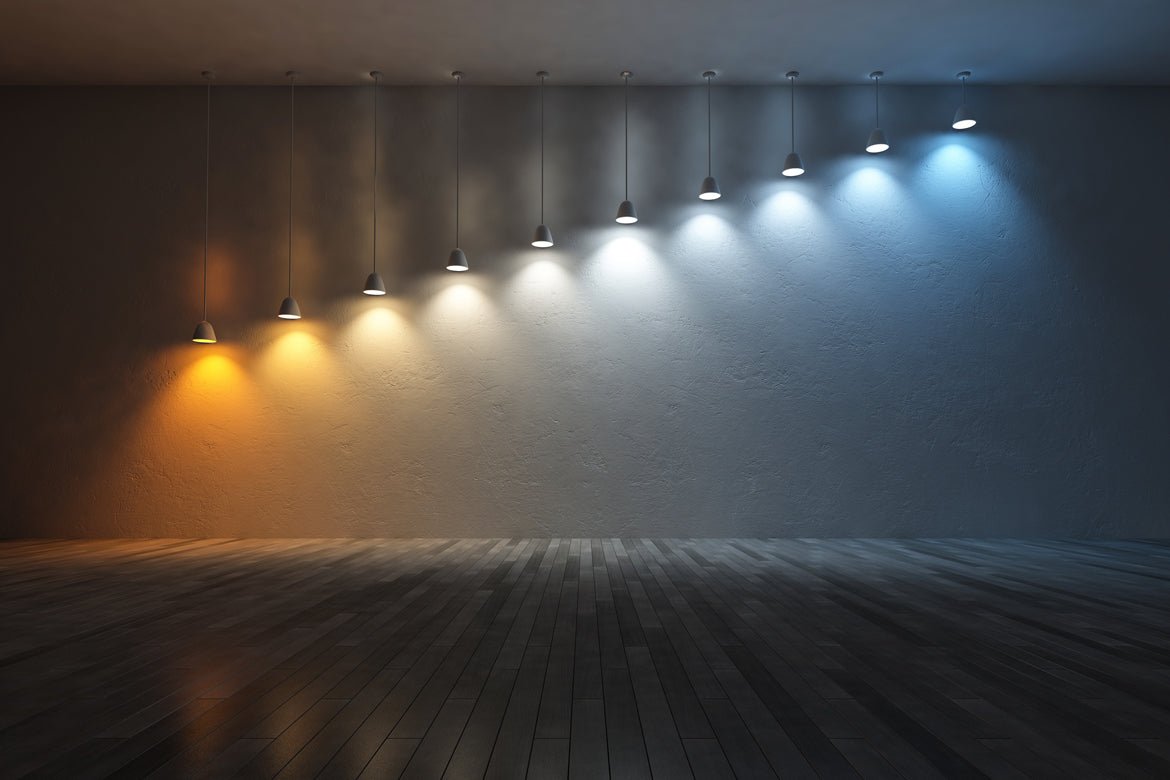
You'll be spoilt for choice between incandescent, halogen, LED, and fluorescent lights... For your office lighting, a good bulb must first limit glare. Generally, it is advisable to have a 15W bulb, which is largely sufficient for computer work. The ideal is to favor warm, natural lighting that is not too white. Classic LED bulbs (5W) emit a blue light that can sometimes be distracting for work. Prefer white light models or halogen bulbs for the quality of the light emitted. The color of a light source greatly influences visual comfort. Warm tones (yellow, orange) have a color temperature below 3300 K, while cool tones (white, blue) go above 5300 K. Generally, powerful lighting should have cool tones, while low lighting should provide warm tones. Furthermore, it would be prudent not to install a compact fluorescent bulb less than 30 cm from you.

4) Office Lighting: A Matter of Intensity!

The intensity of the light must be adapted to the type of work you are doing. For example, for precise and meticulous work, high-intensity lighting will be necessary. It will also be necessary to avoid too great differences between the illumination level of the work area and its environment (e.g., a dark background against which your computer screen stands out). This difference is likely to cause significant fatigue, as the eyes must adapt to this difference in intensity. There is one last element to consider: the age factor. Unfortunately, with age, eyesight diminishes, and consequently, a user in their twenties will need half as much light as a 50-year-old person. Therefore, office lighting must also be adapted according to the user's age. To work well, you need good conditions. Home office lighting must be adjustable to meet all situations. Visit our store to ask for advice from one of Luminaires & cie's experts. You will certainly find inspiration there. You can also consult our online flyer and our virtual store.

Read more

Comment la couleur de la lumière influence-t-elle l’éclairage? - Luminaires & cie
éclairage extérieur

How does light color influence lighting?

The color of light or the temperature of a light can influence the type of lighting you choose to highlight an element of your garden or home. To this end, halogen bulbs and LED bulbs each have cer...

Read more
Prendre les mesures précises pour installer un luminaire suspendu - Luminaires & cie

Take precise measurements to install a pendant light

To install a pendant light and obtain adequate lighting, you need to know how to install it in the right place and at the right height. Similarly, it is important to leave enough space between each...

Read more