









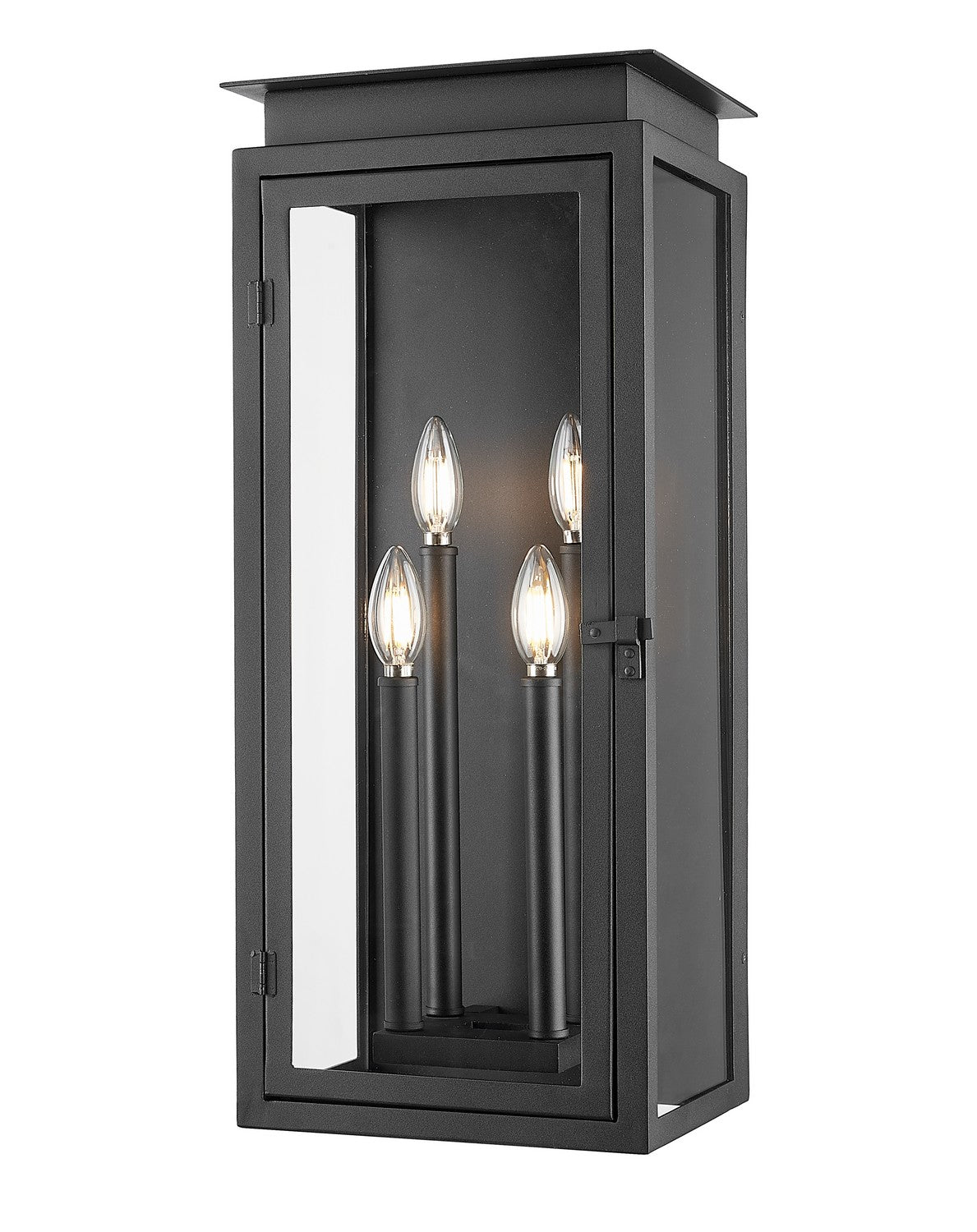
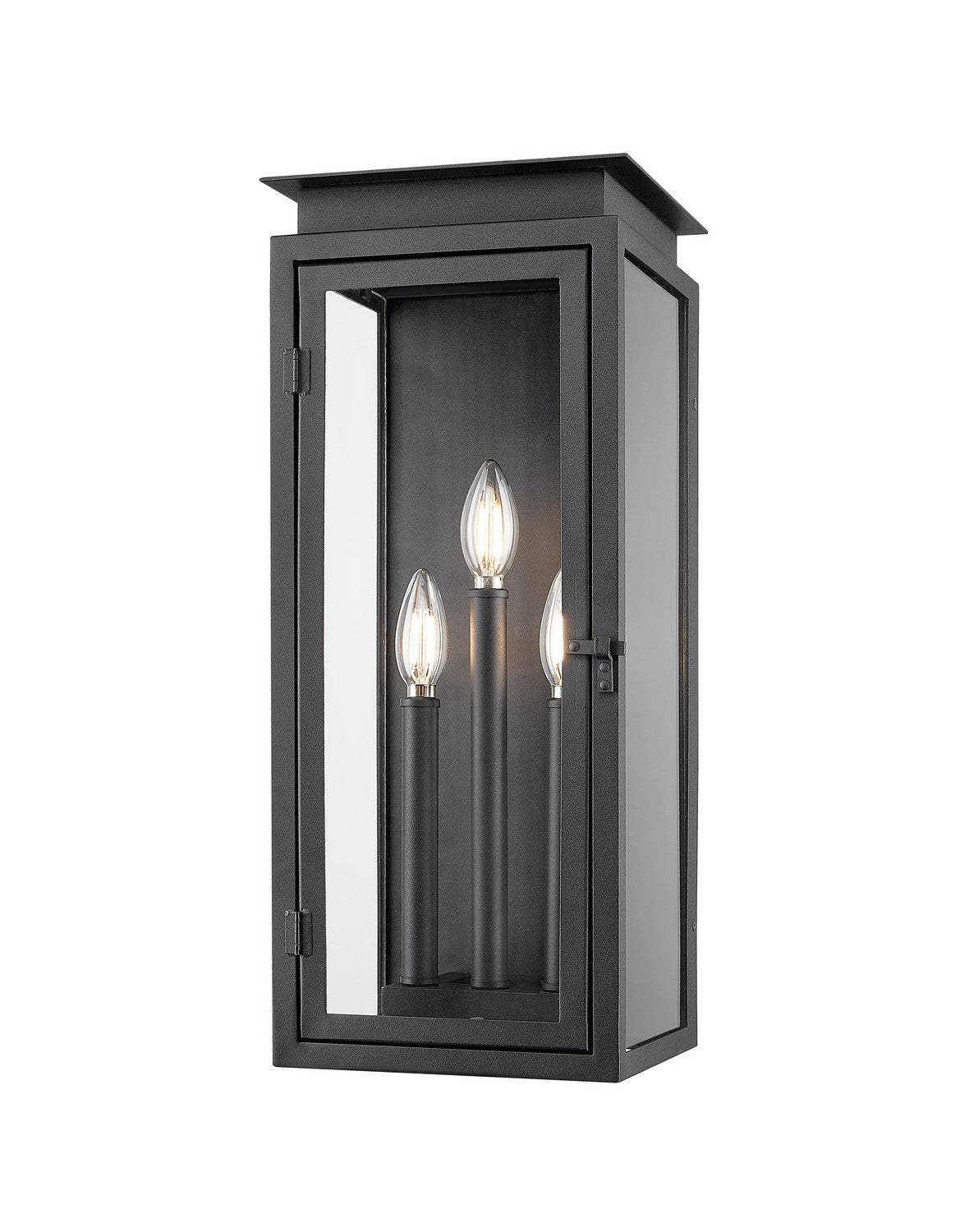
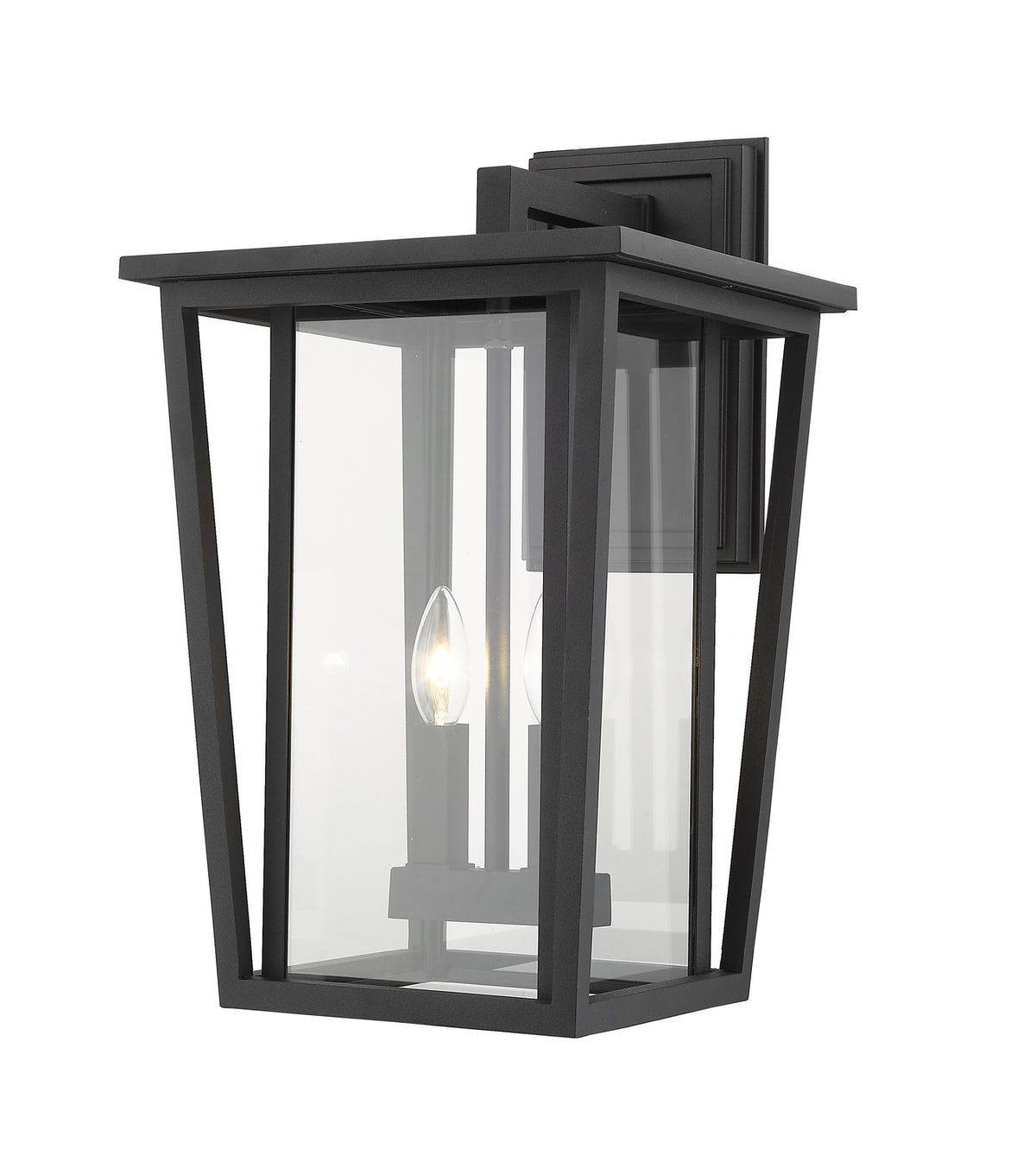
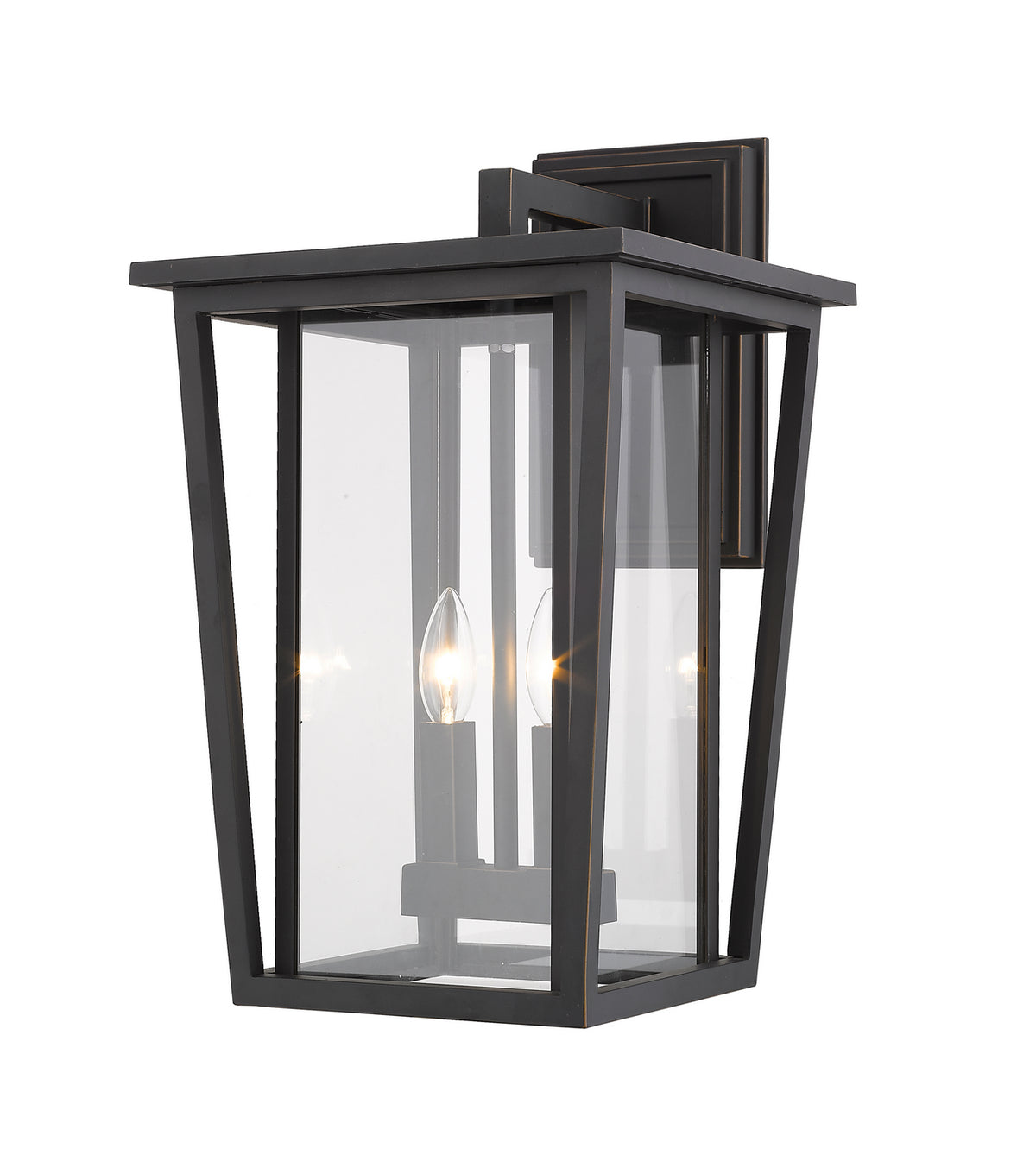

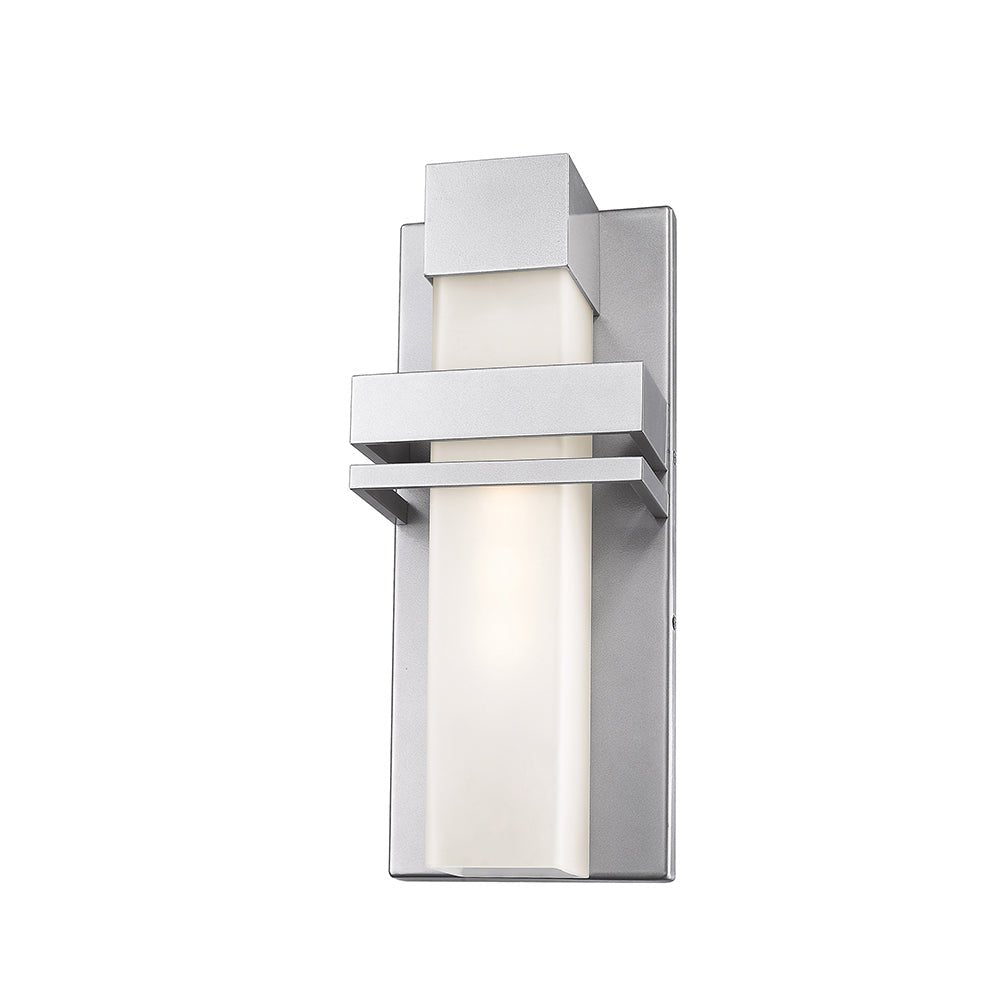
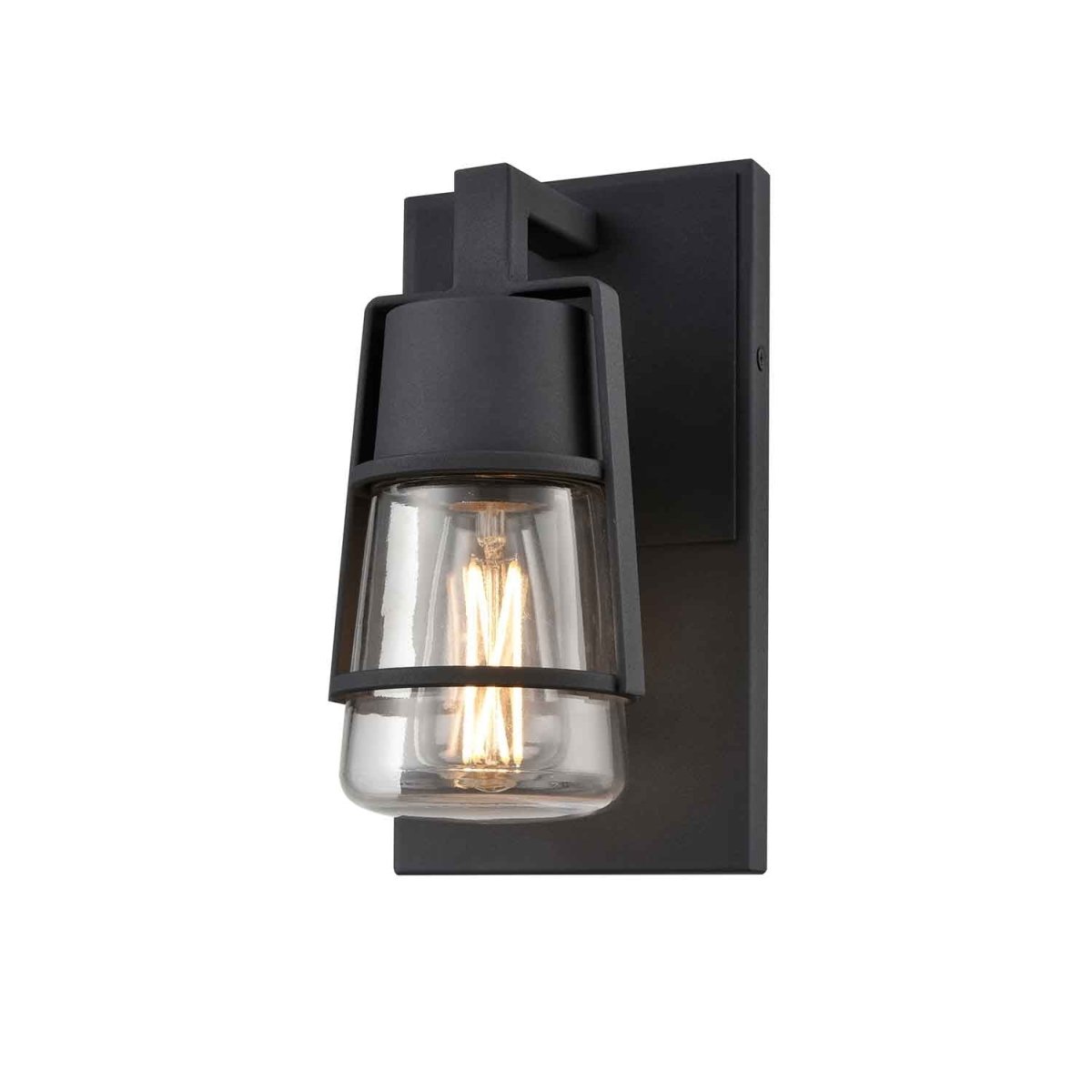
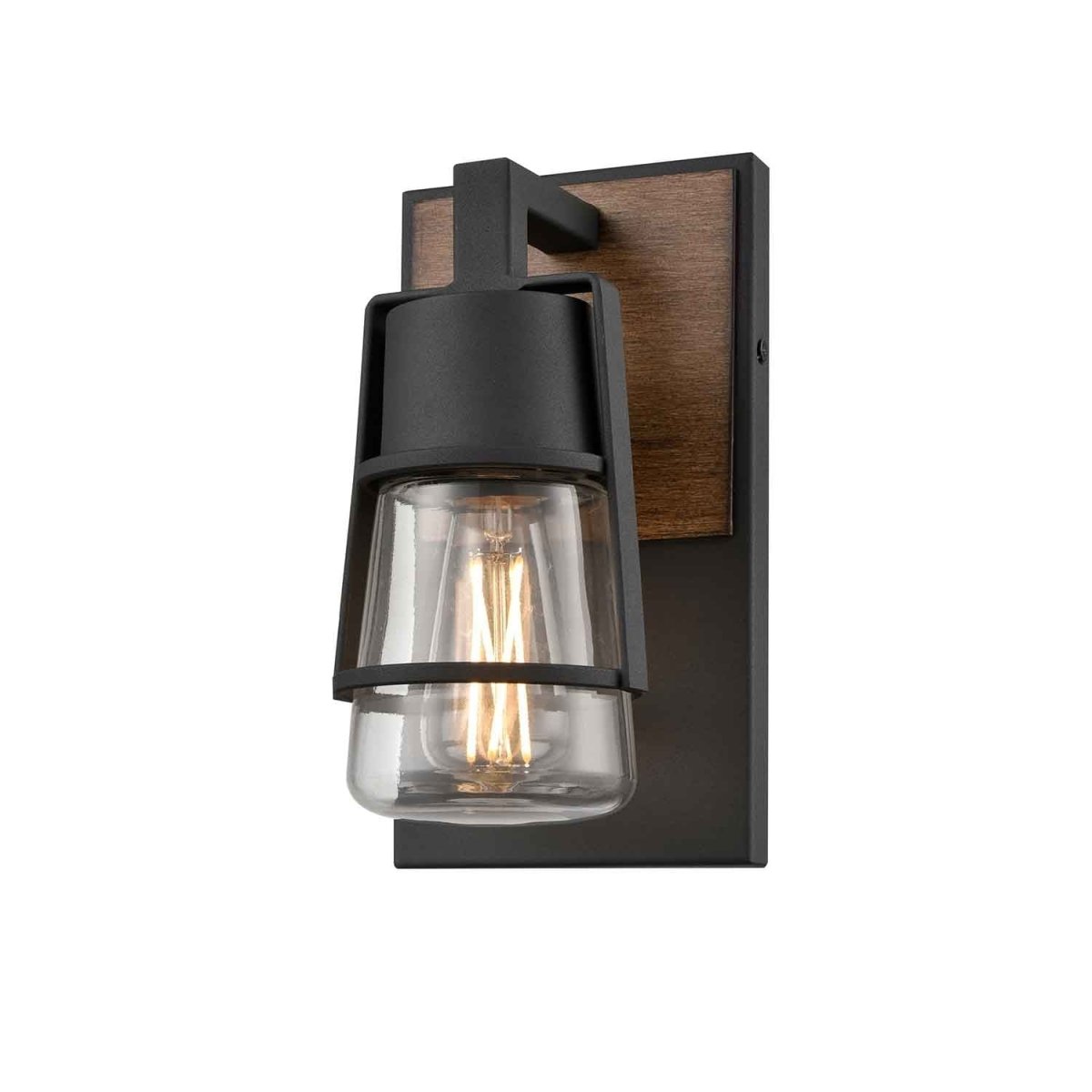
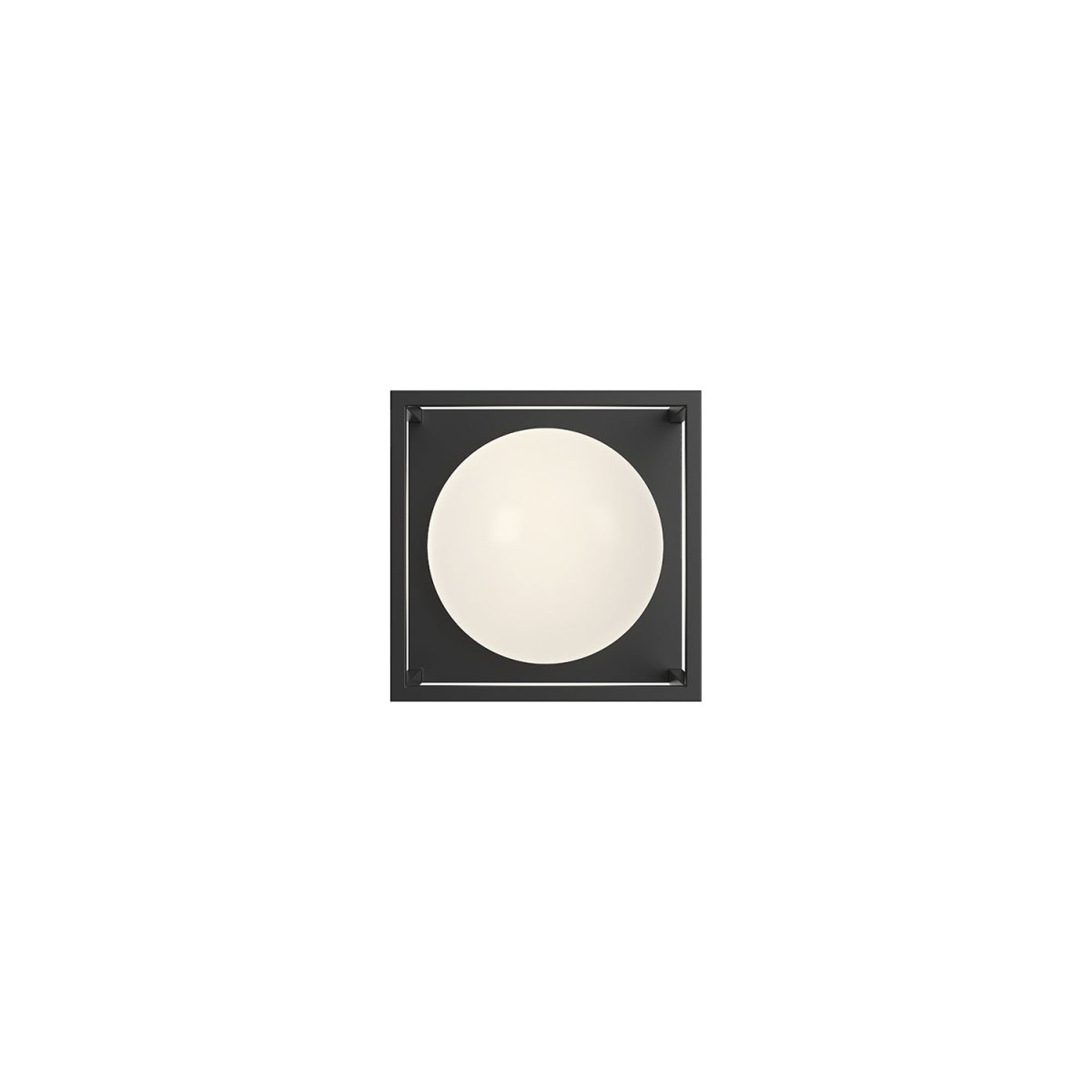
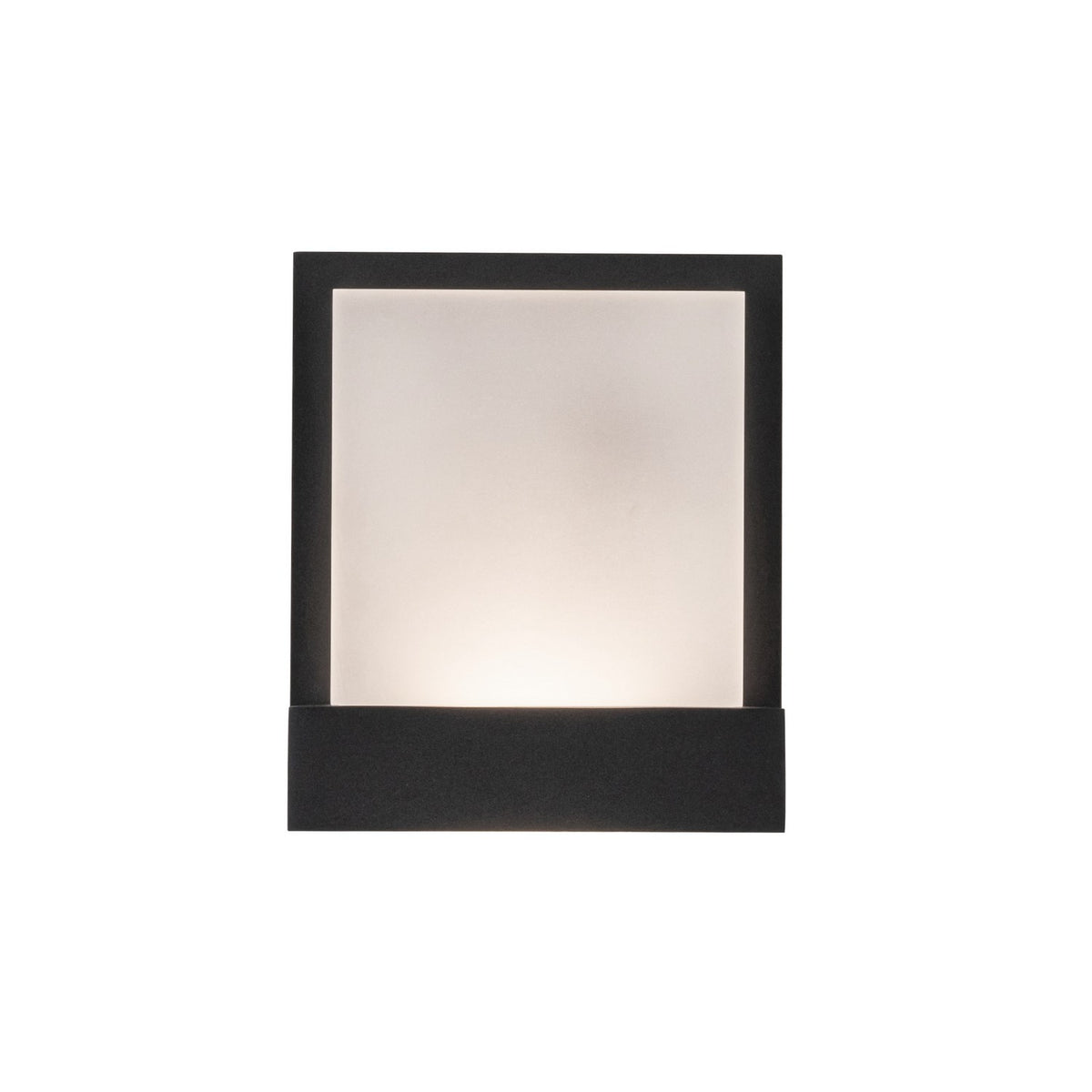
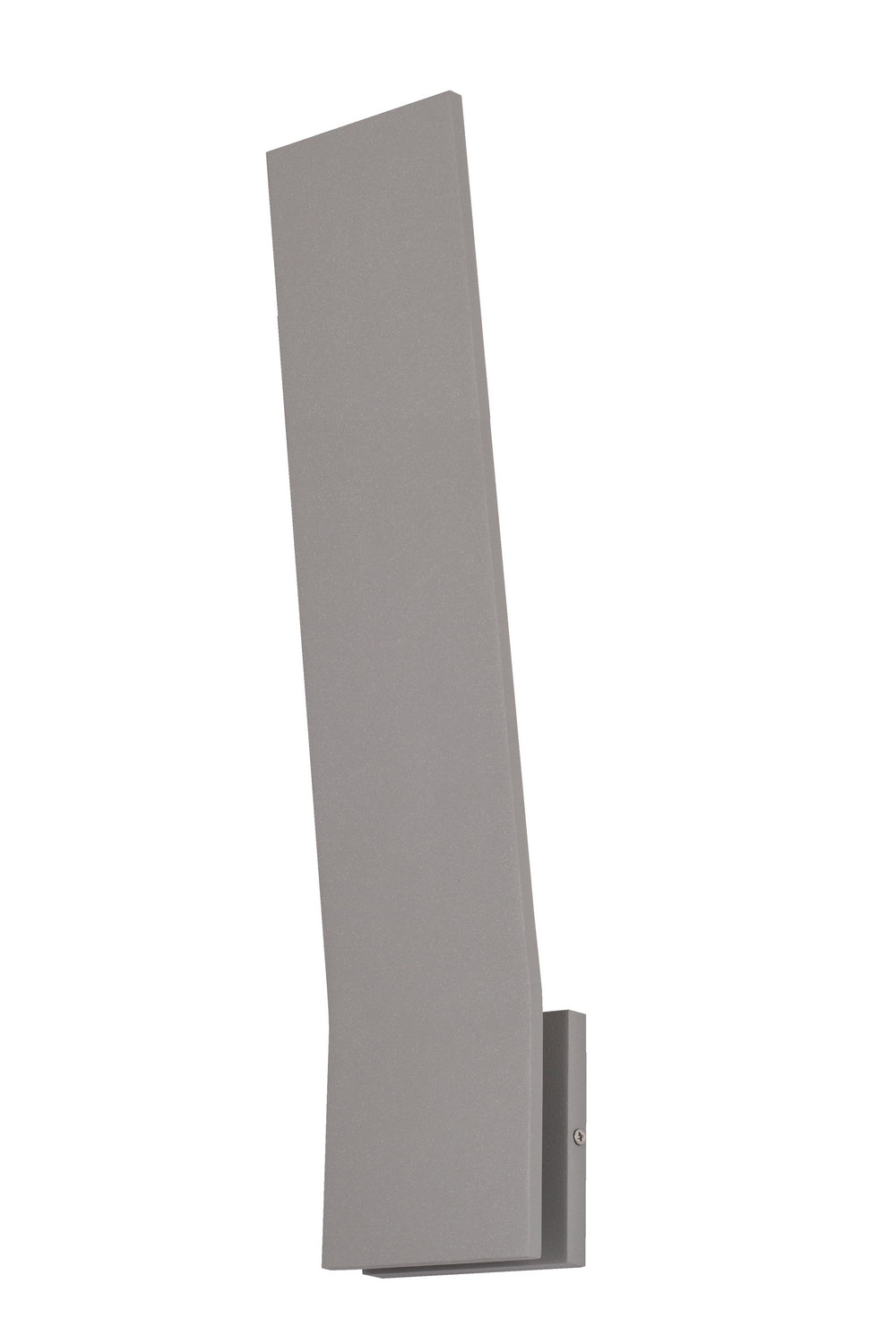
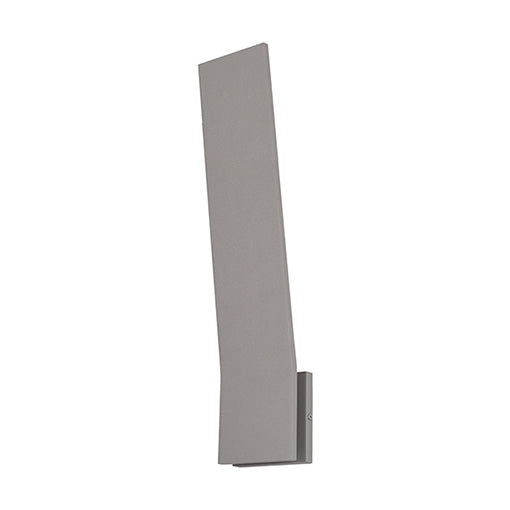
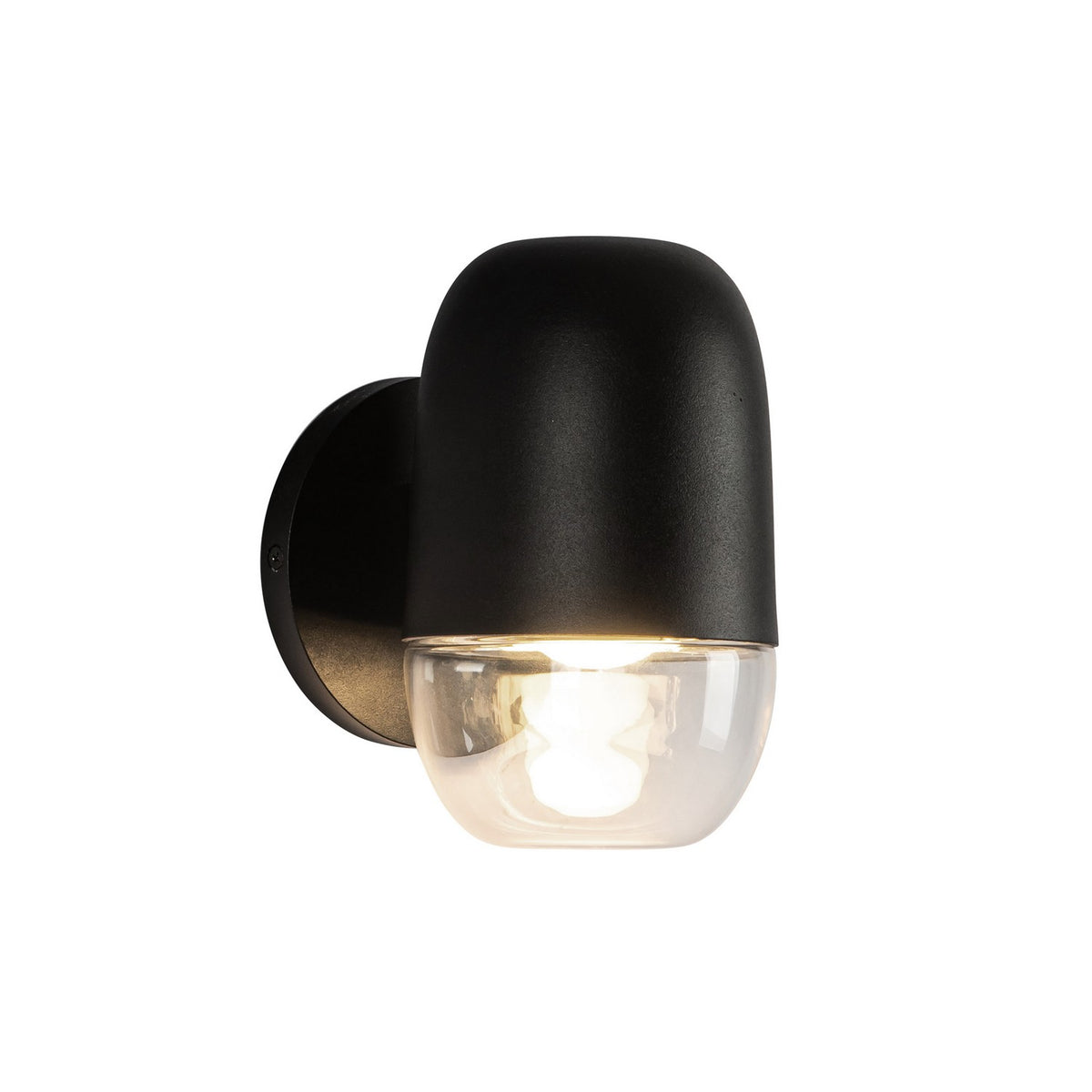





Choosing an outdoor wall light by zone
Every space around the home has its own needs. The main entry calls for balanced visual presence, the garage needs a wide throw, the patio favors atmosphere, and walkways call for subtle, downward light. Here's how to lay out your fixtures by use.
Entry and front door
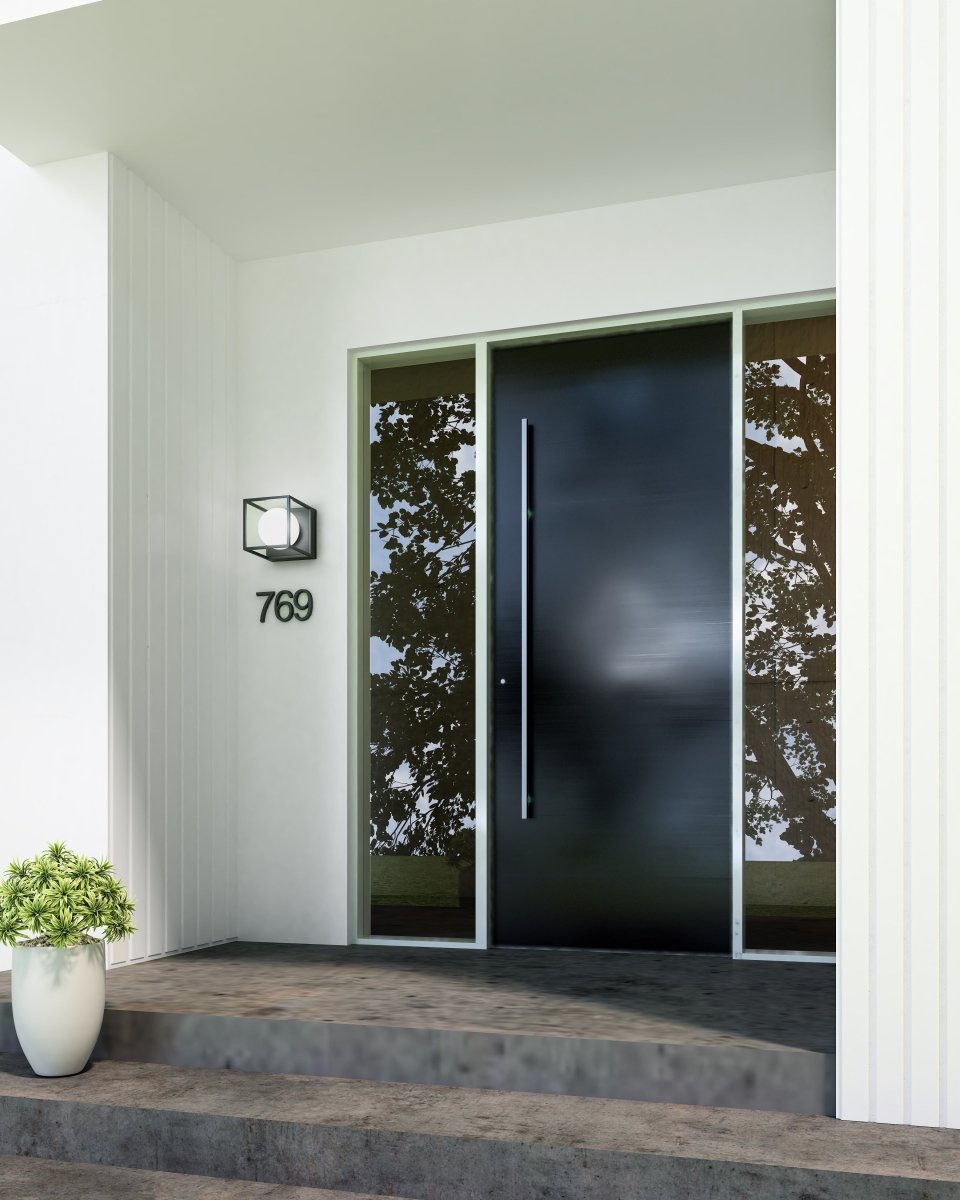
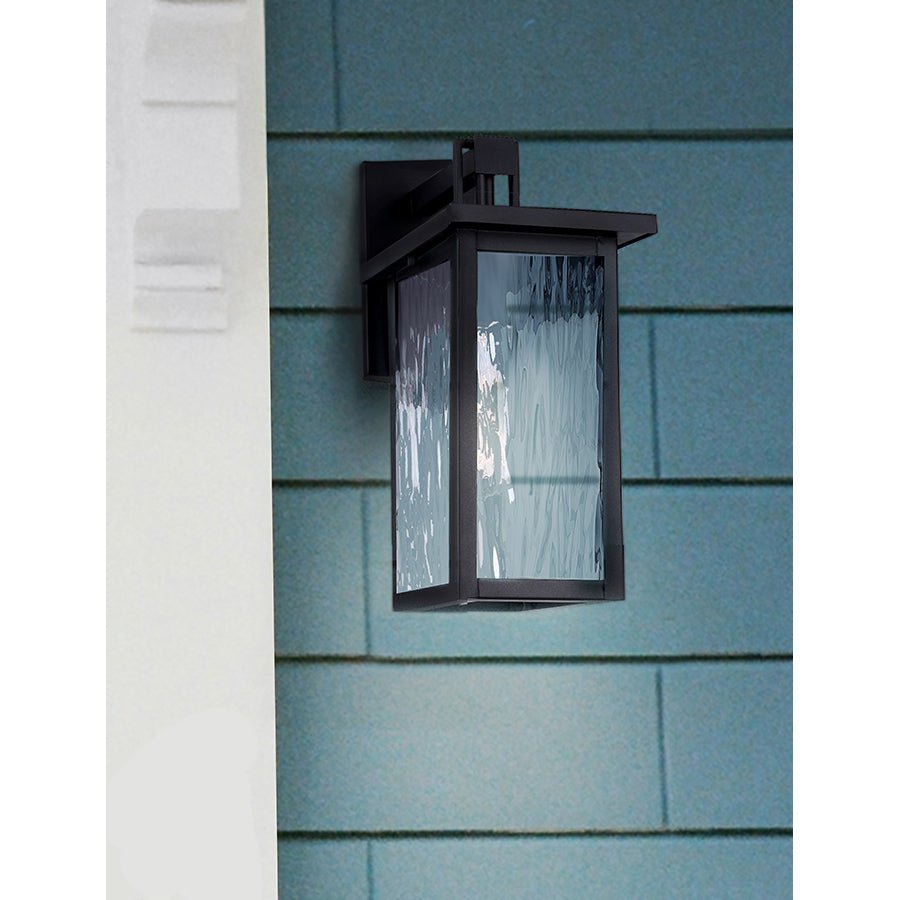
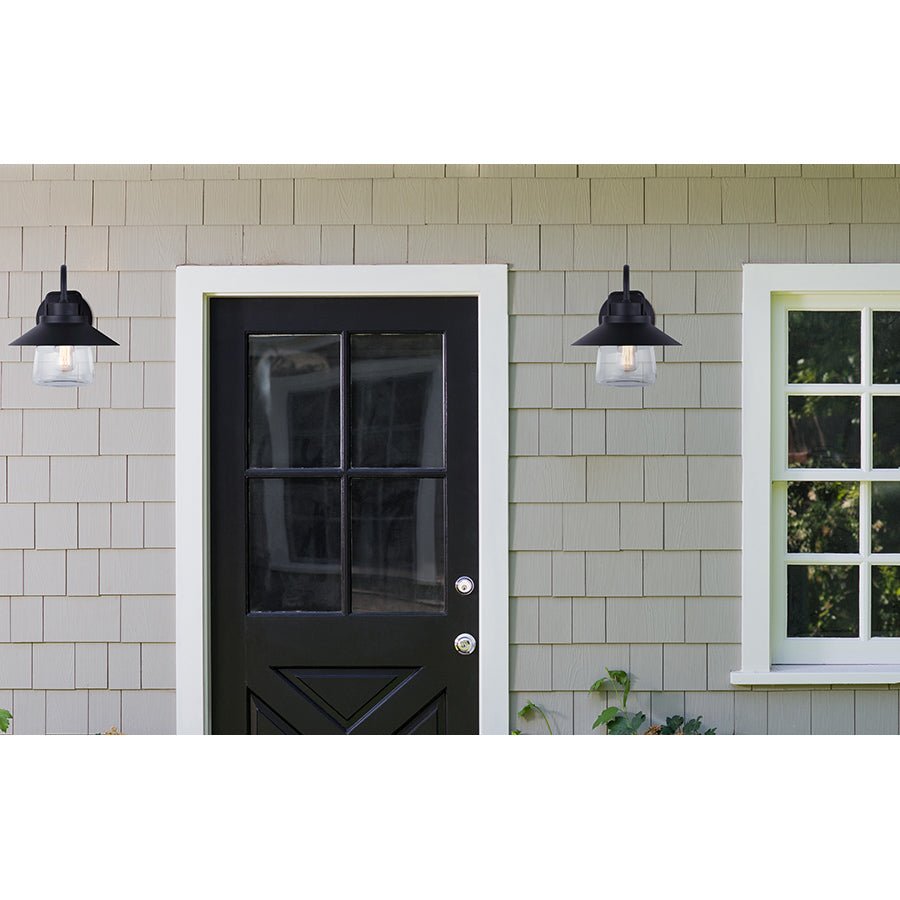
This is where an exterior wall light makes its strongest statement. Two matching sconces on either side of the door, mounted about 66 to 72 in (168 to 183 cm) from the ground to the fixture's center, create a welcoming symmetry. To keep good proportion, pick a fixture roughly one-quarter to one-third the height of the door.
Garage and driveway
Near the garage, you want a wide beam that covers the driveway without glare. A higher mount, between 8 and 10 ft (2.4 to 3 m), spreads light over a larger area while keeping the source above the sightline. Motion-sensor models are especially useful here.
Patio and outdoor living spaces
Under a roof or on a covered patio, soft, warm light is the way to go. An outdoor wall light at 2700 to 3000 K sets an inviting mood for dinners and evenings. Space fixtures about 8 to 10 ft (2.4 to 3 m) along the perimeter and lean on dimming.
Walkways and garden walls
Along low walls and paths, smaller fixtures with downward-directed light mark the route without flooding the landscape. A mount at 24 to 36 in (61 to 91 cm) above grade is enough for gentle path marking.
Exterior wall light materials and finishes that last
In our climate, the choice of material makes all the difference. An exterior wall light exposed to rain, frost and sometimes salt air needs to hold up without degrading.
Brass and copper
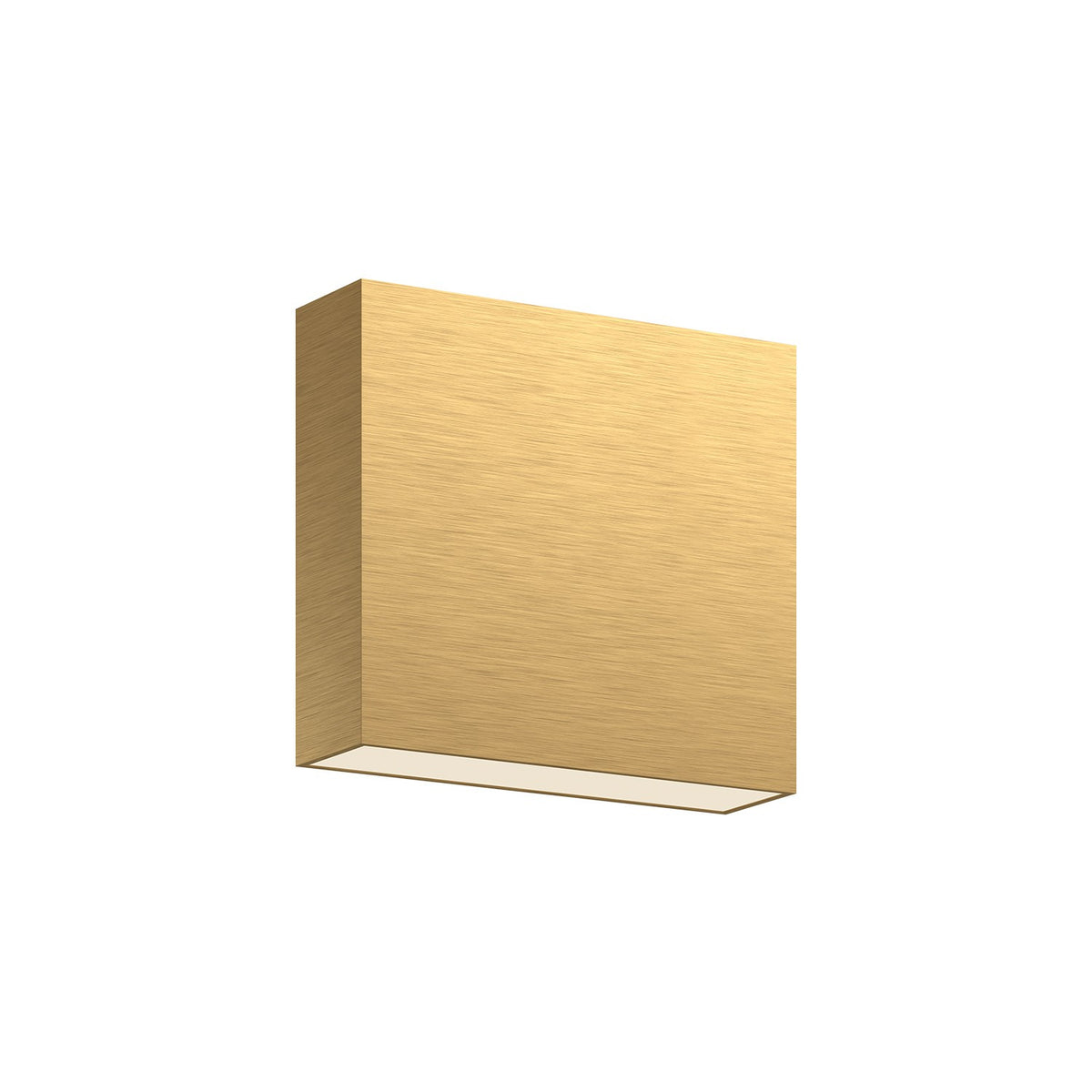
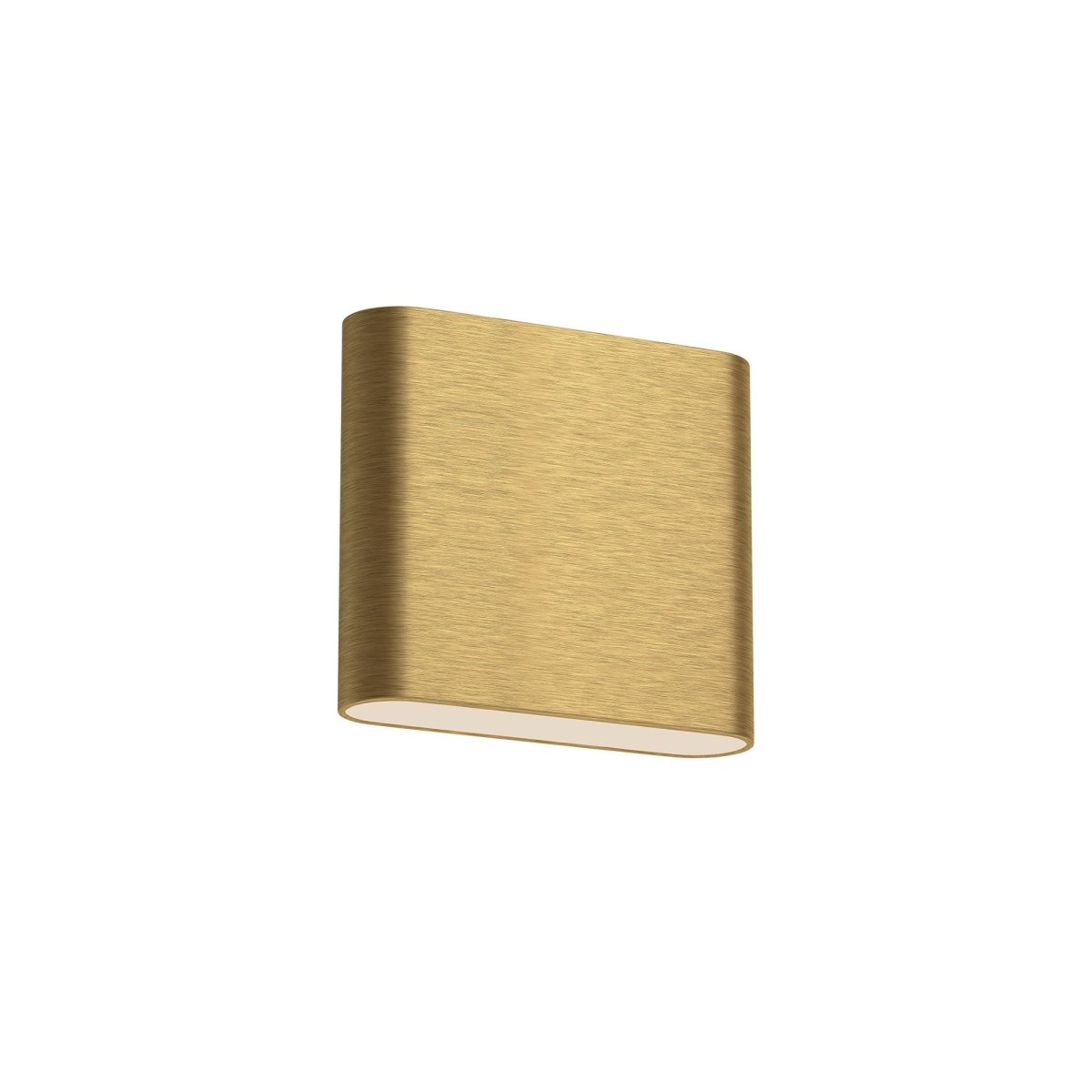
Solid brass and copper develop a living patina across the seasons. Naturally corrosion-resistant, they're the go-to for coastal or salt-air installations.
Powder-coated aluminum
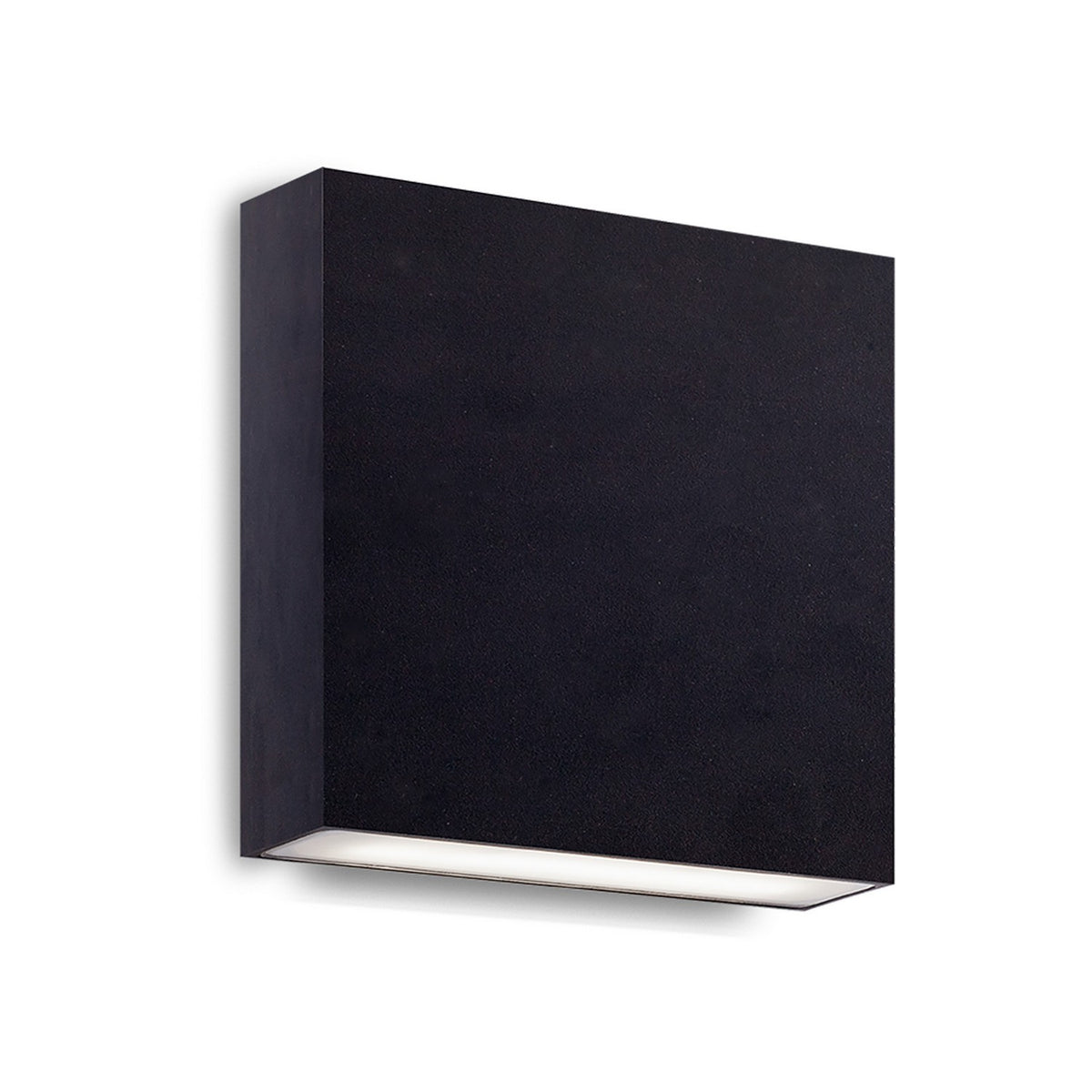
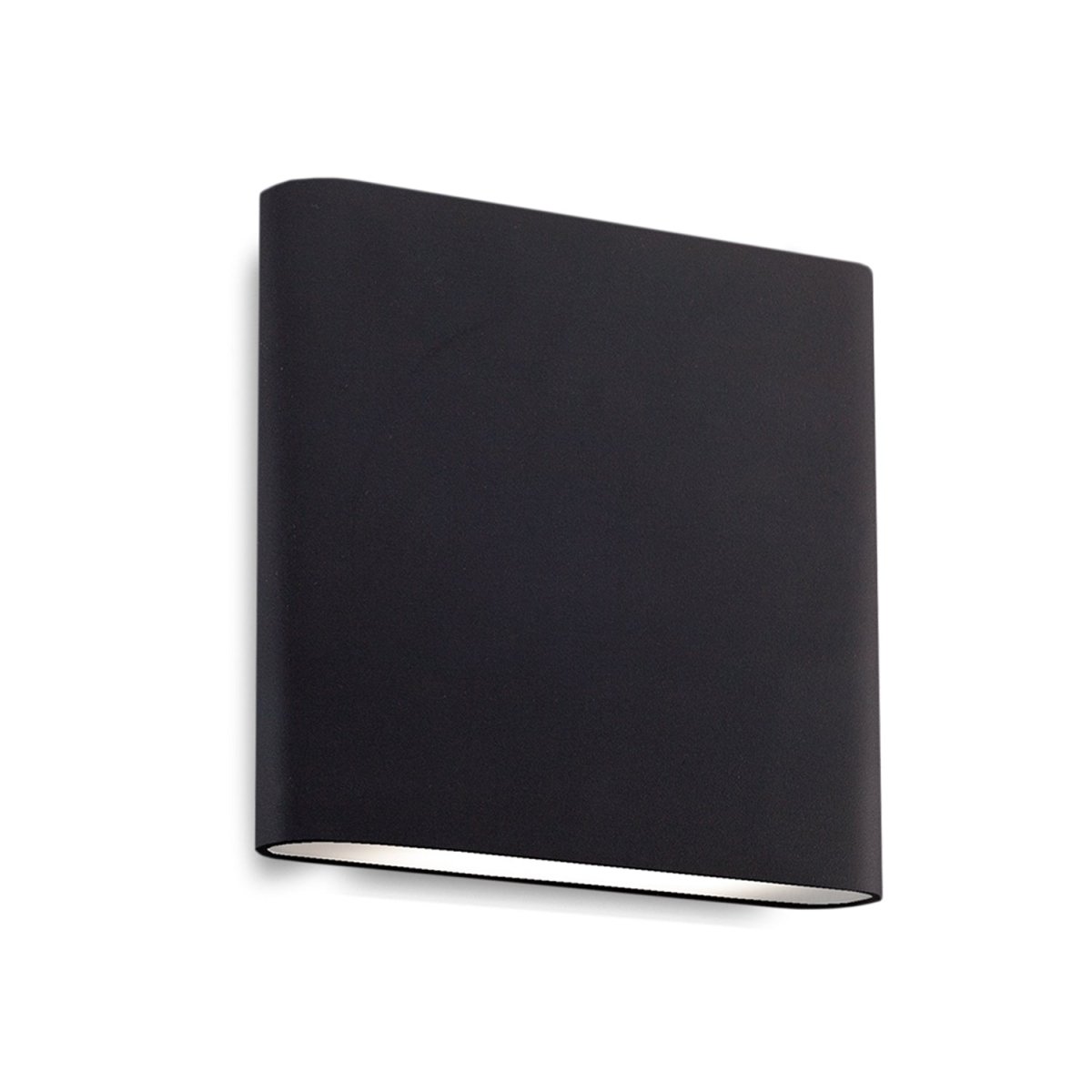
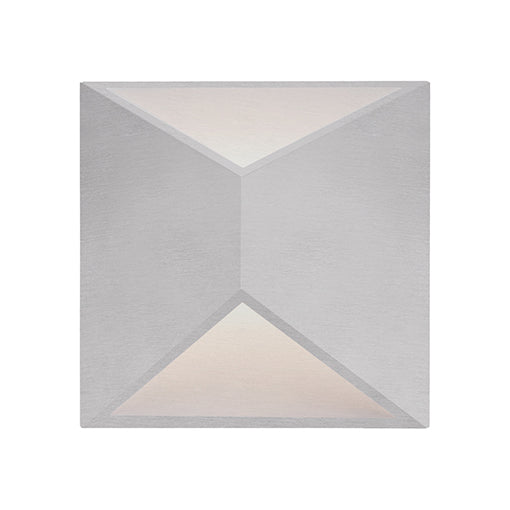
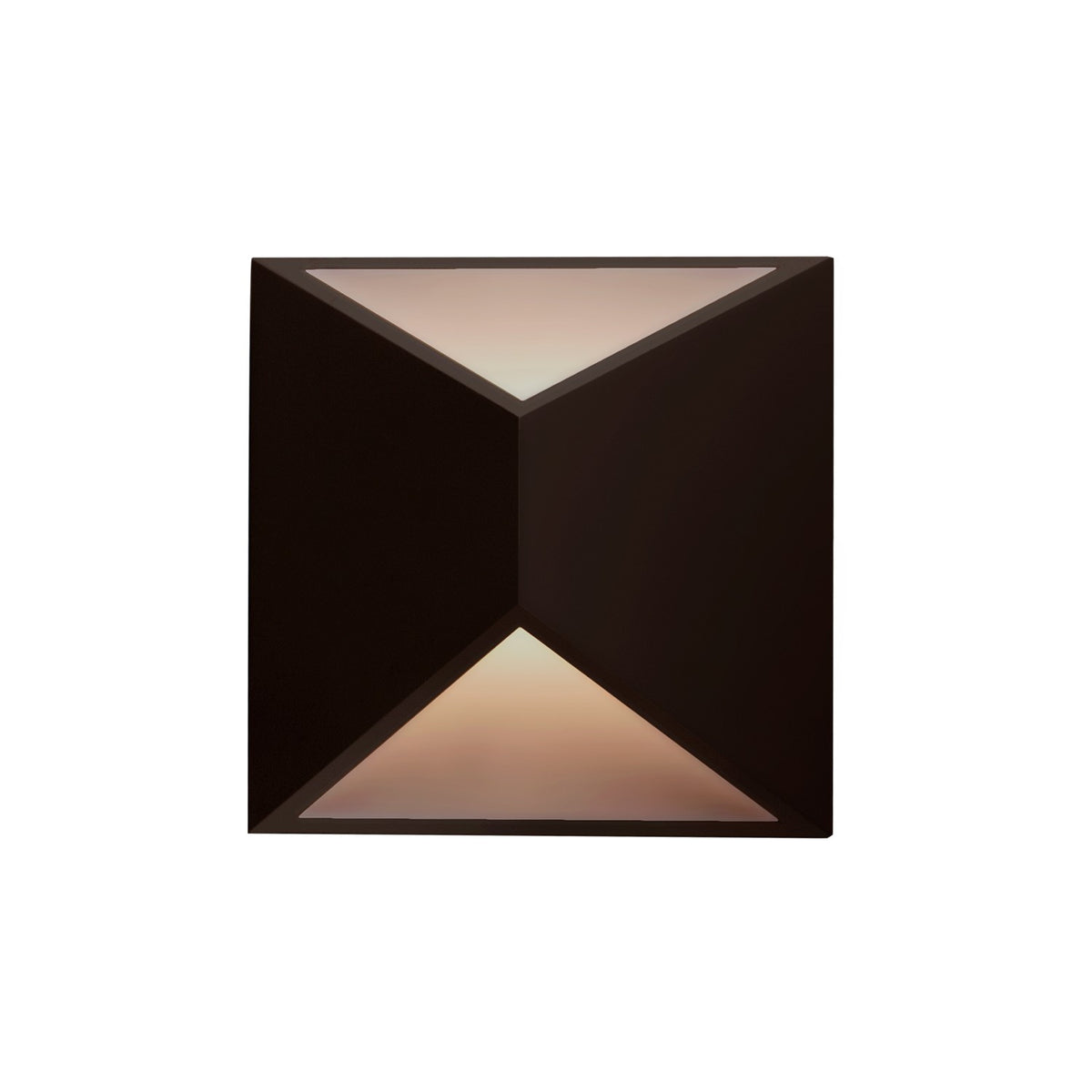
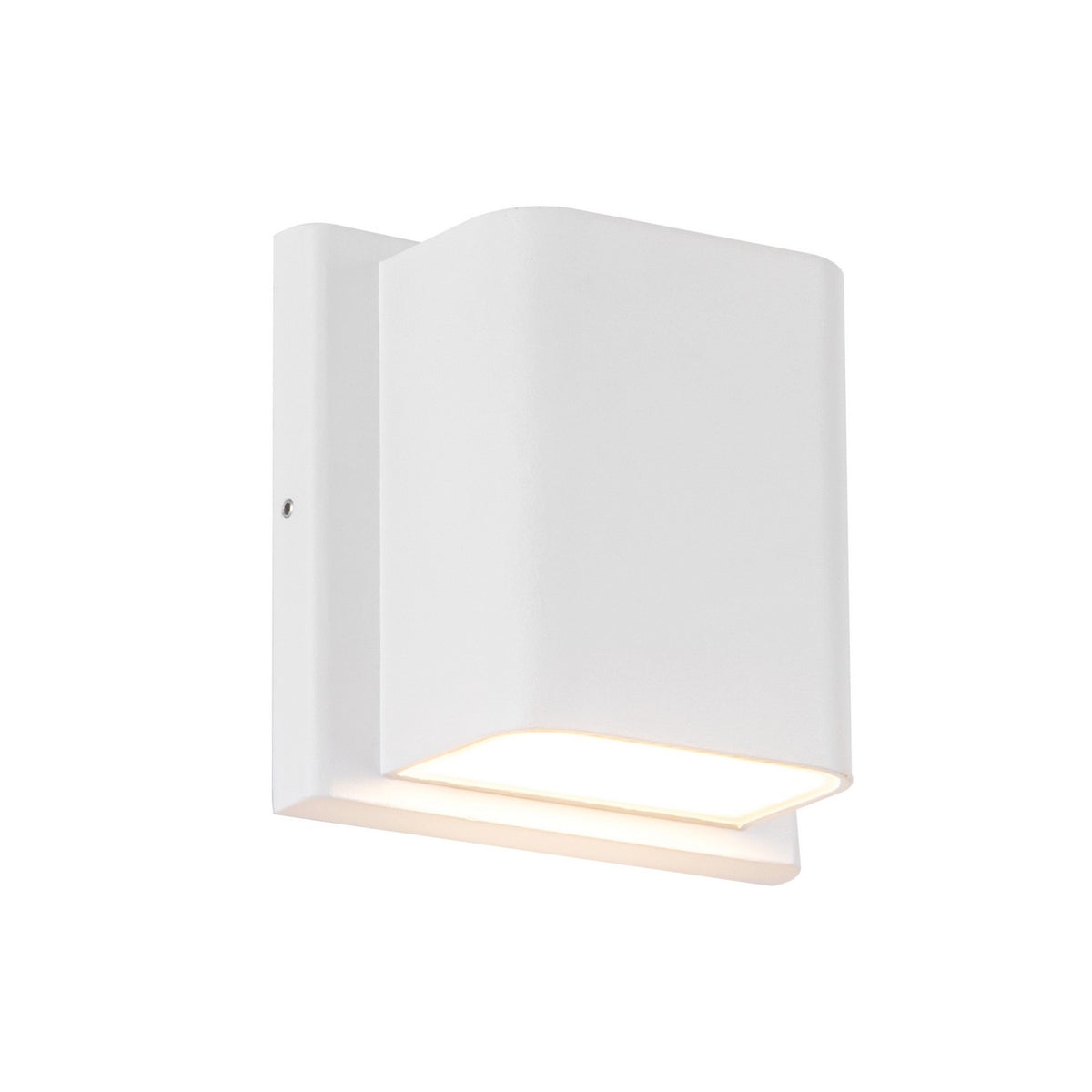
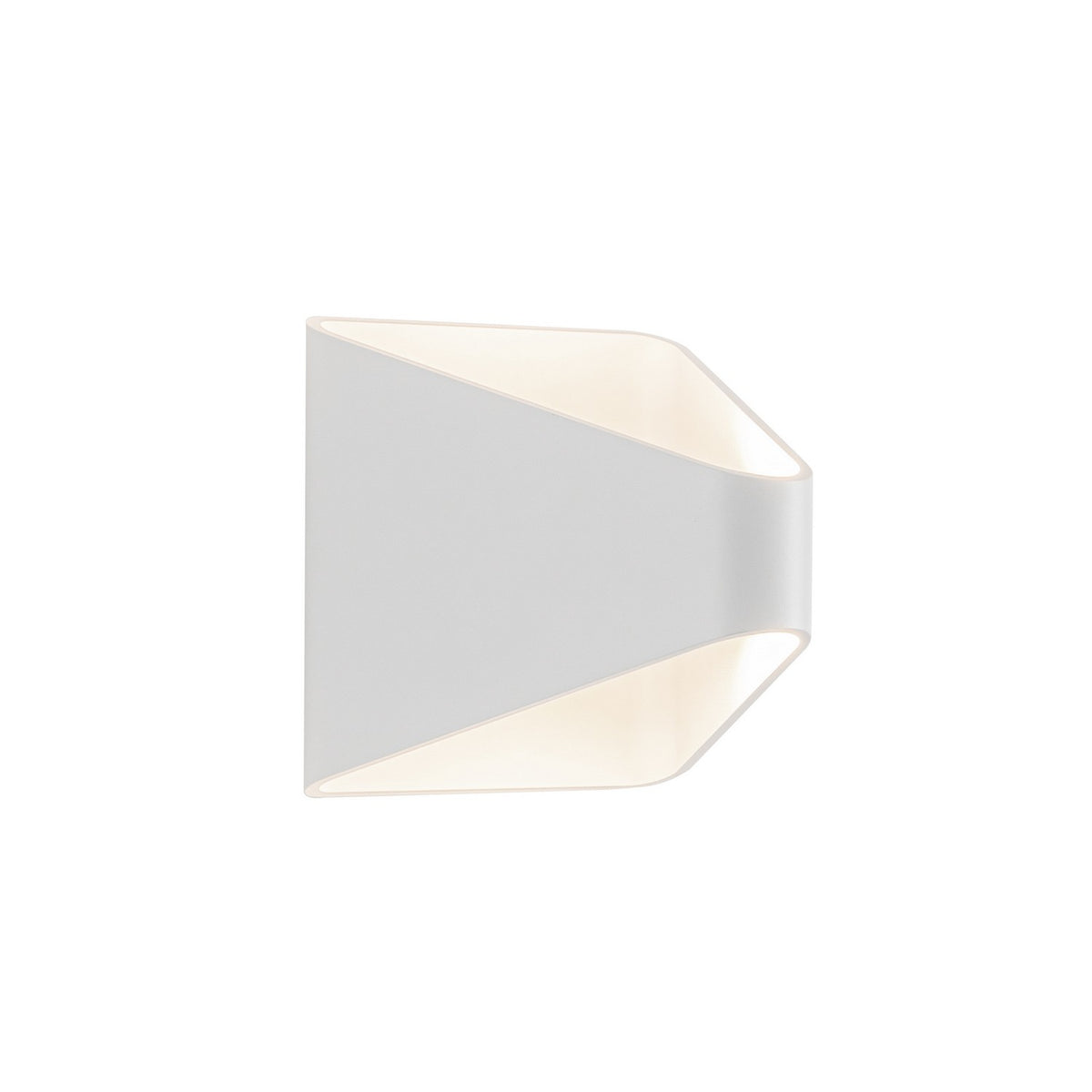
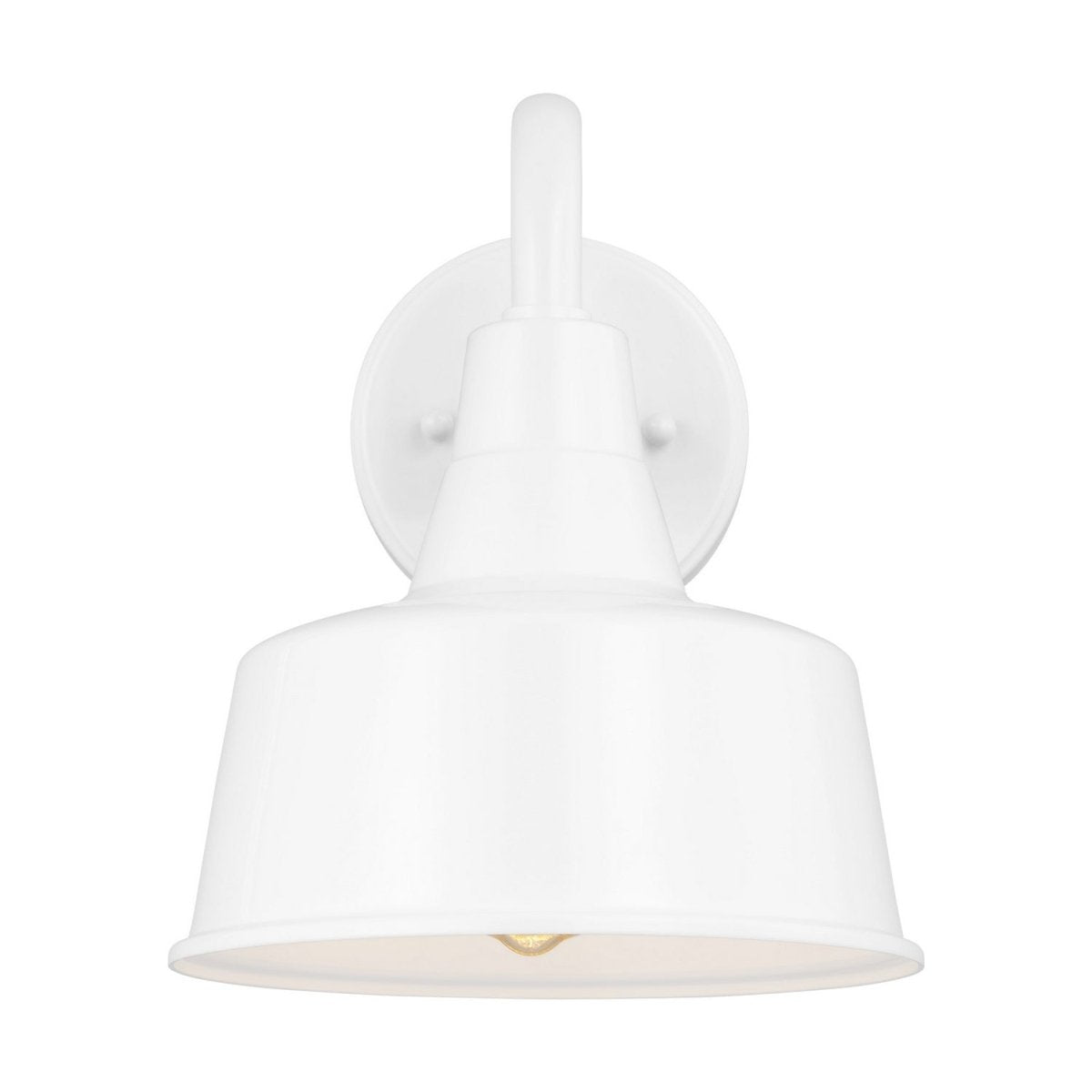
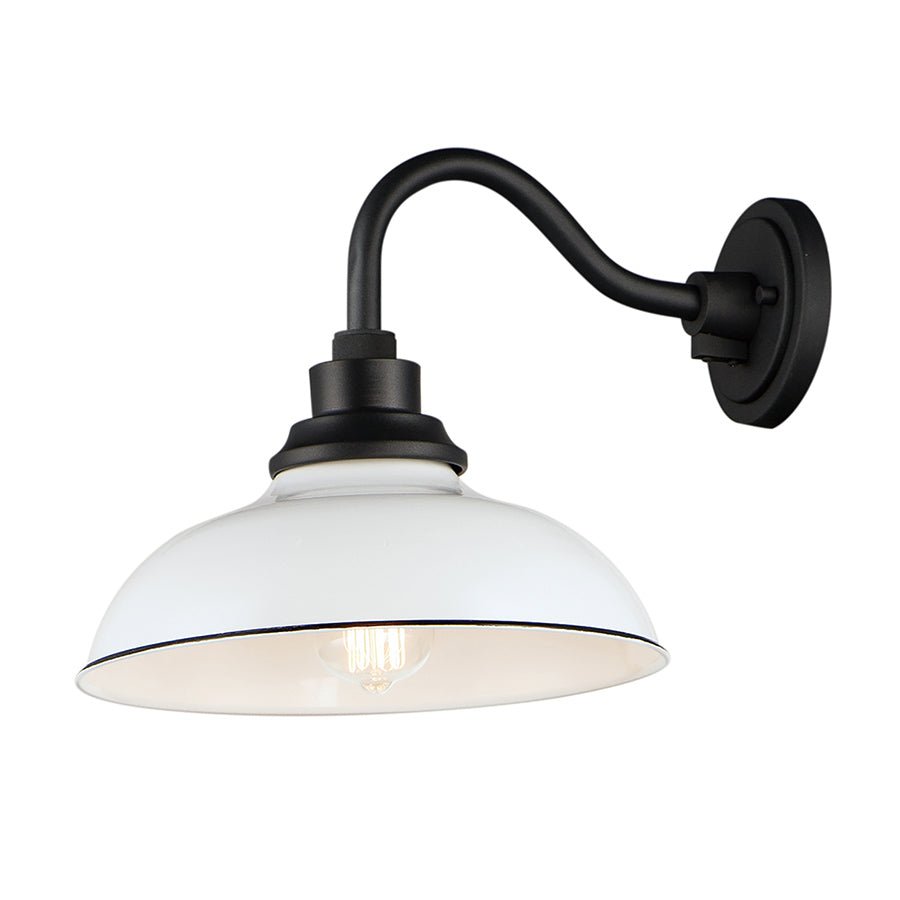
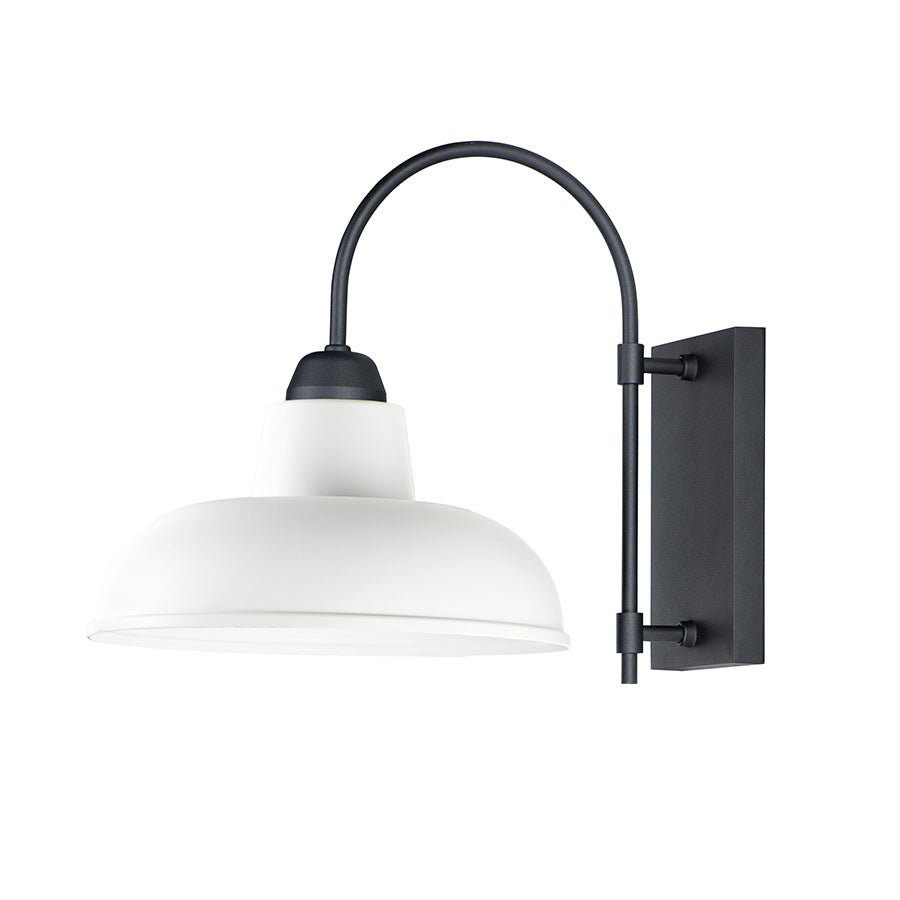
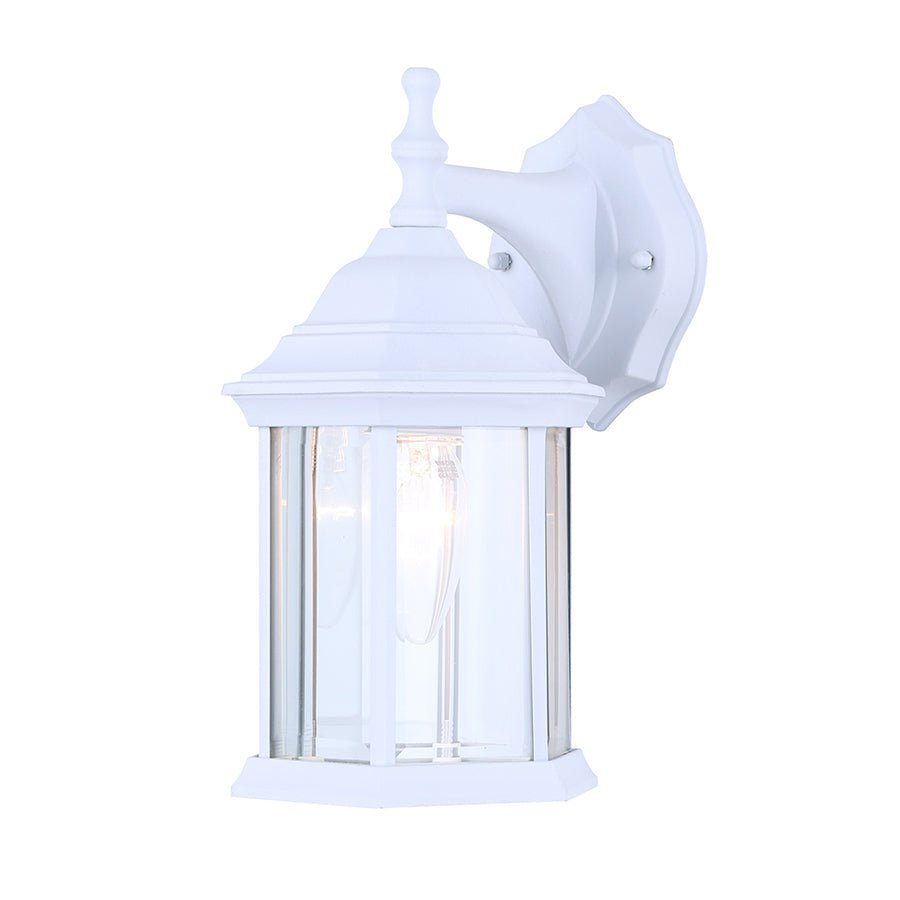
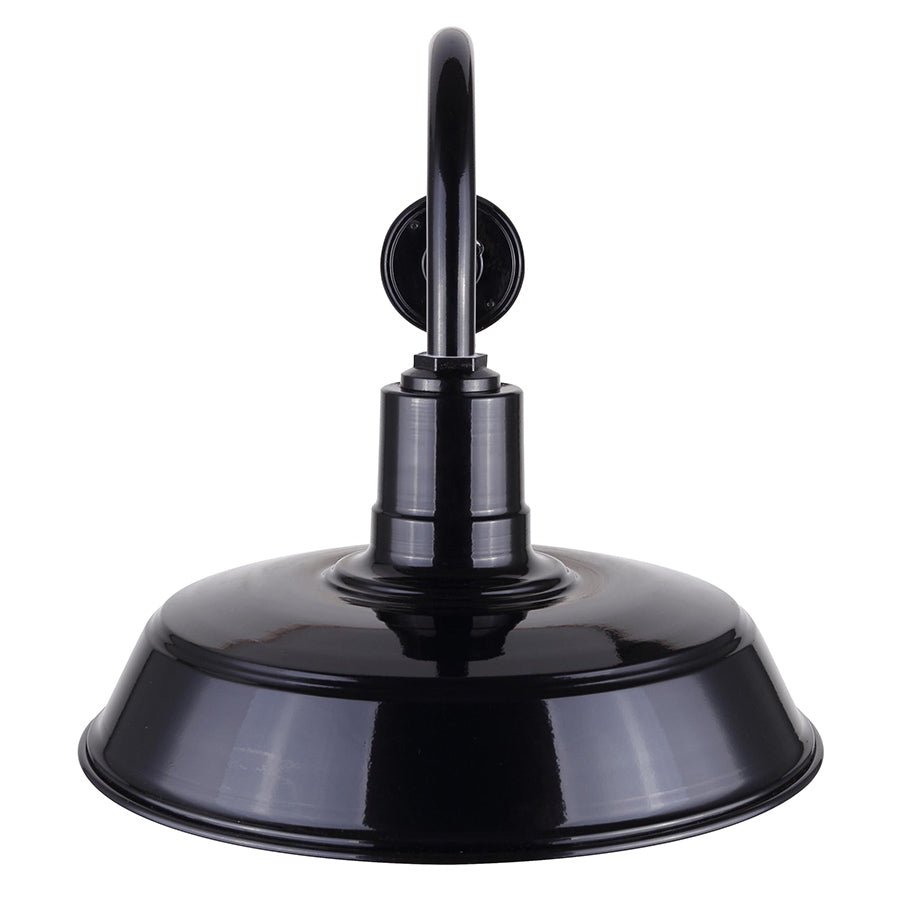
Light and strong, aluminum resists rust well. A powder coat adds a durable, even finish in a wide range of shades, from matte black to textured bronze and white — perfect for a white outdoor wall light that pairs with light siding.
Stainless steel and composites
Stainless steel offers a crisp look with strong UV and corrosion resistance. Engineered composites allow complex shapes and rich textures without heavy upkeep.
Outdoor wall lighting styles to explore
Our selection covers the main aesthetic families, from clean lines to tradition.
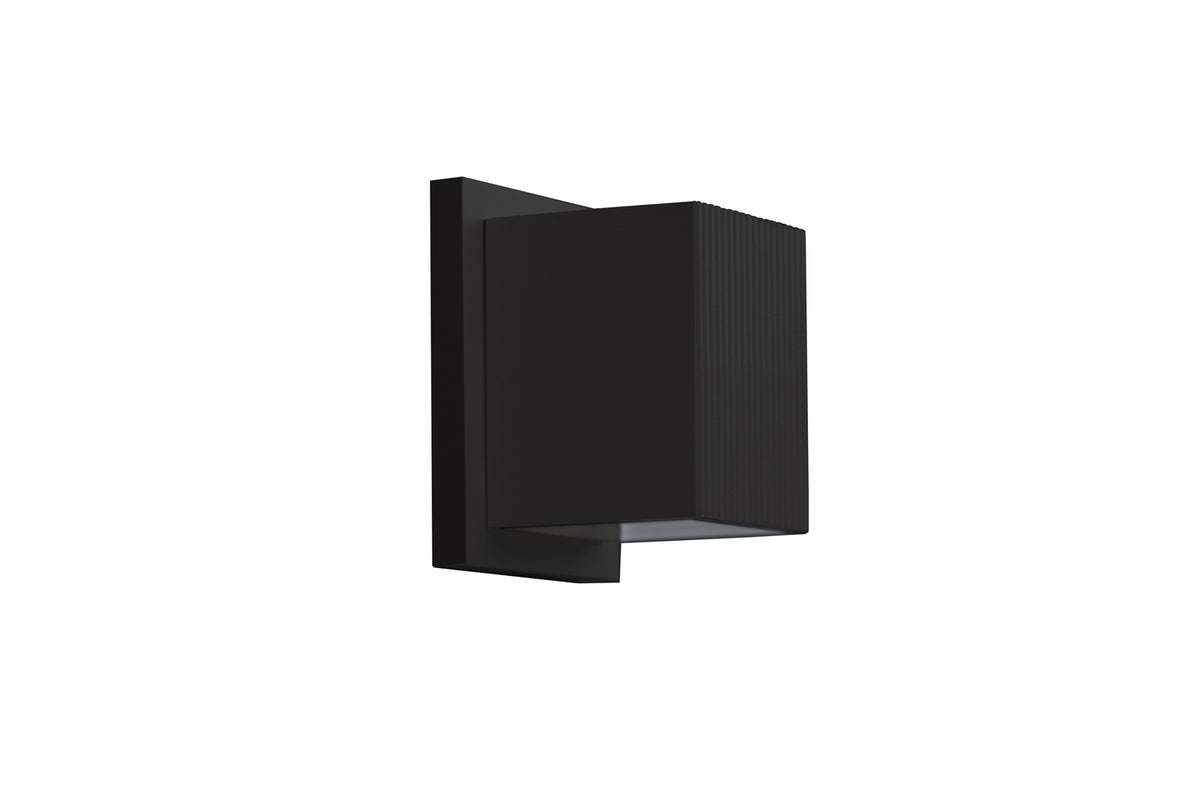
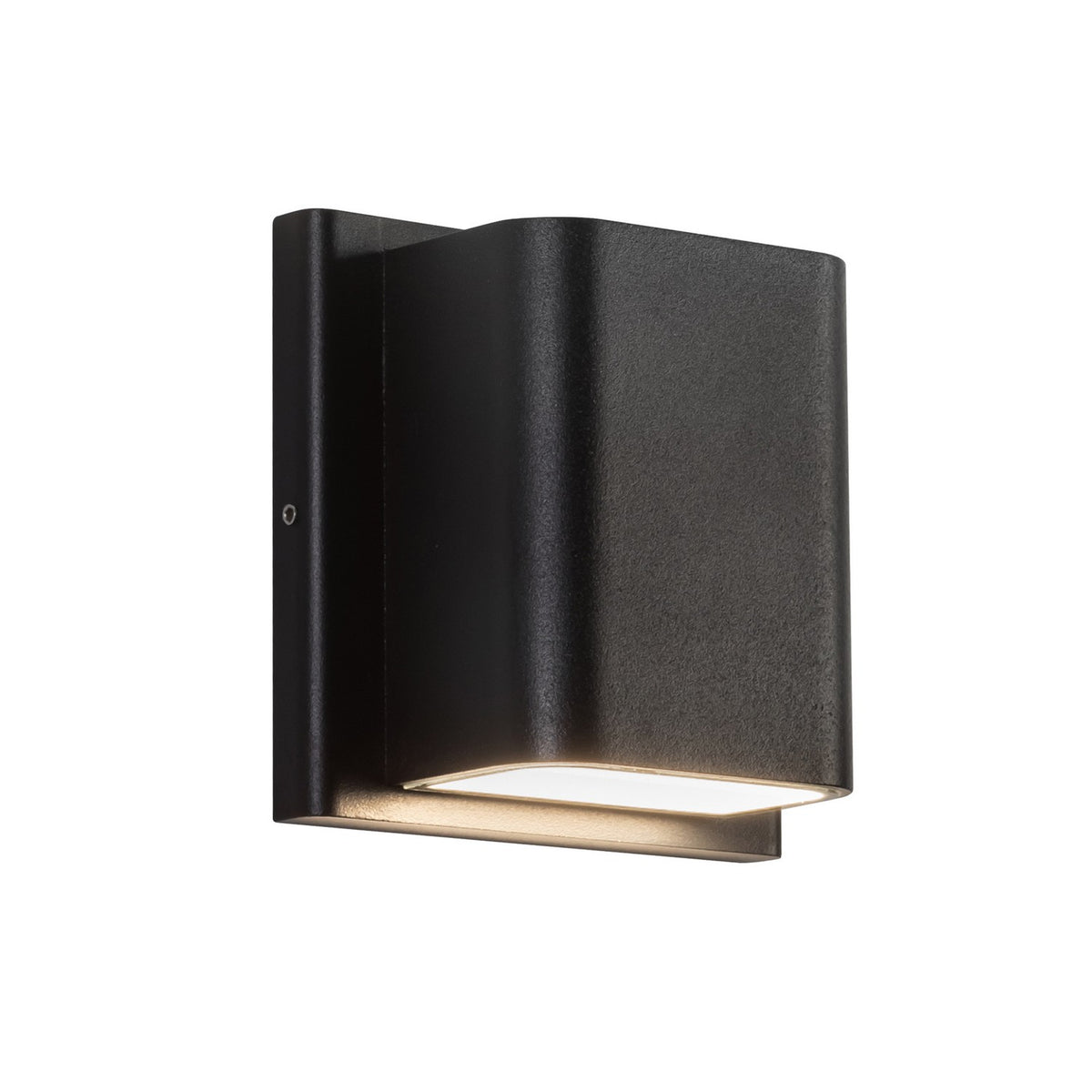
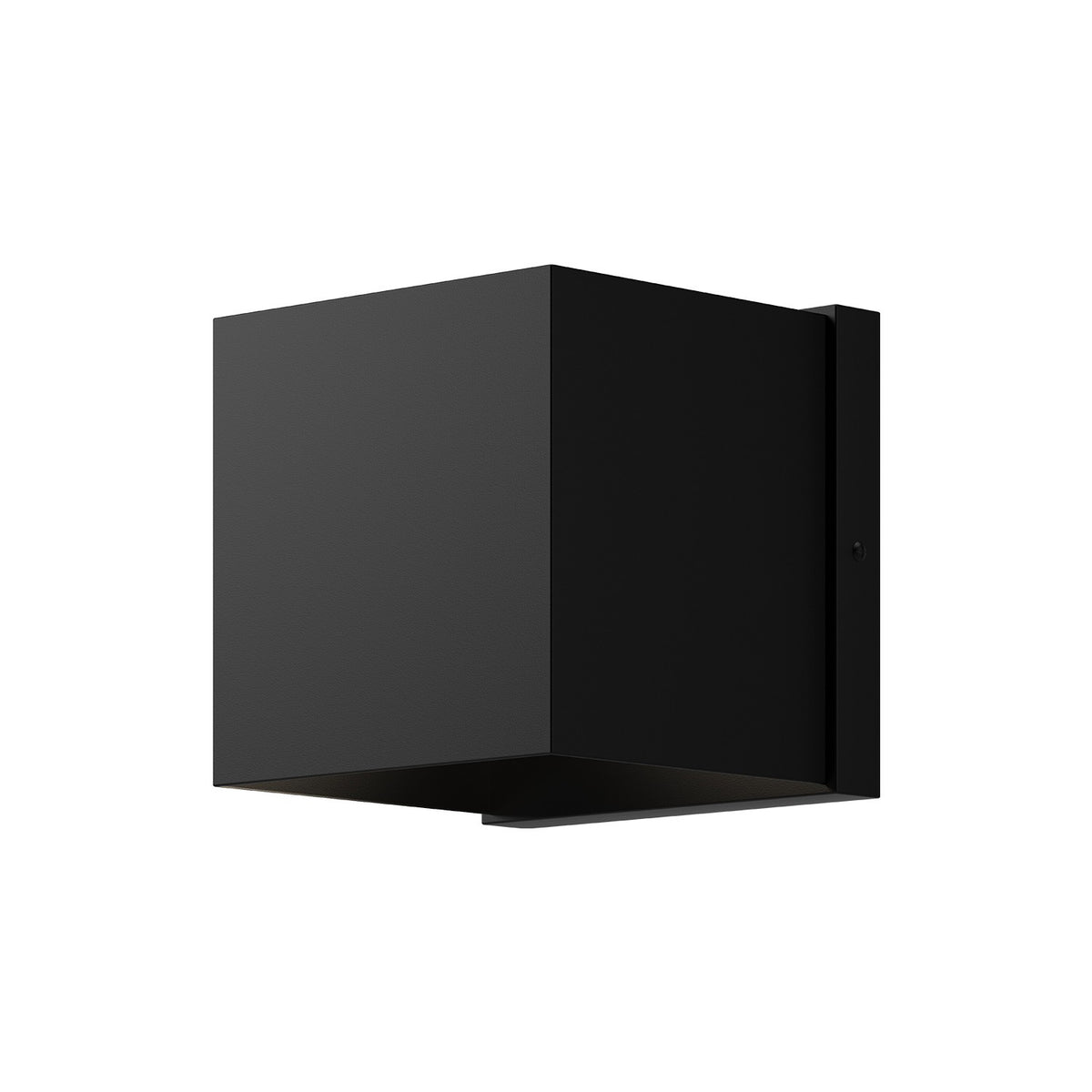
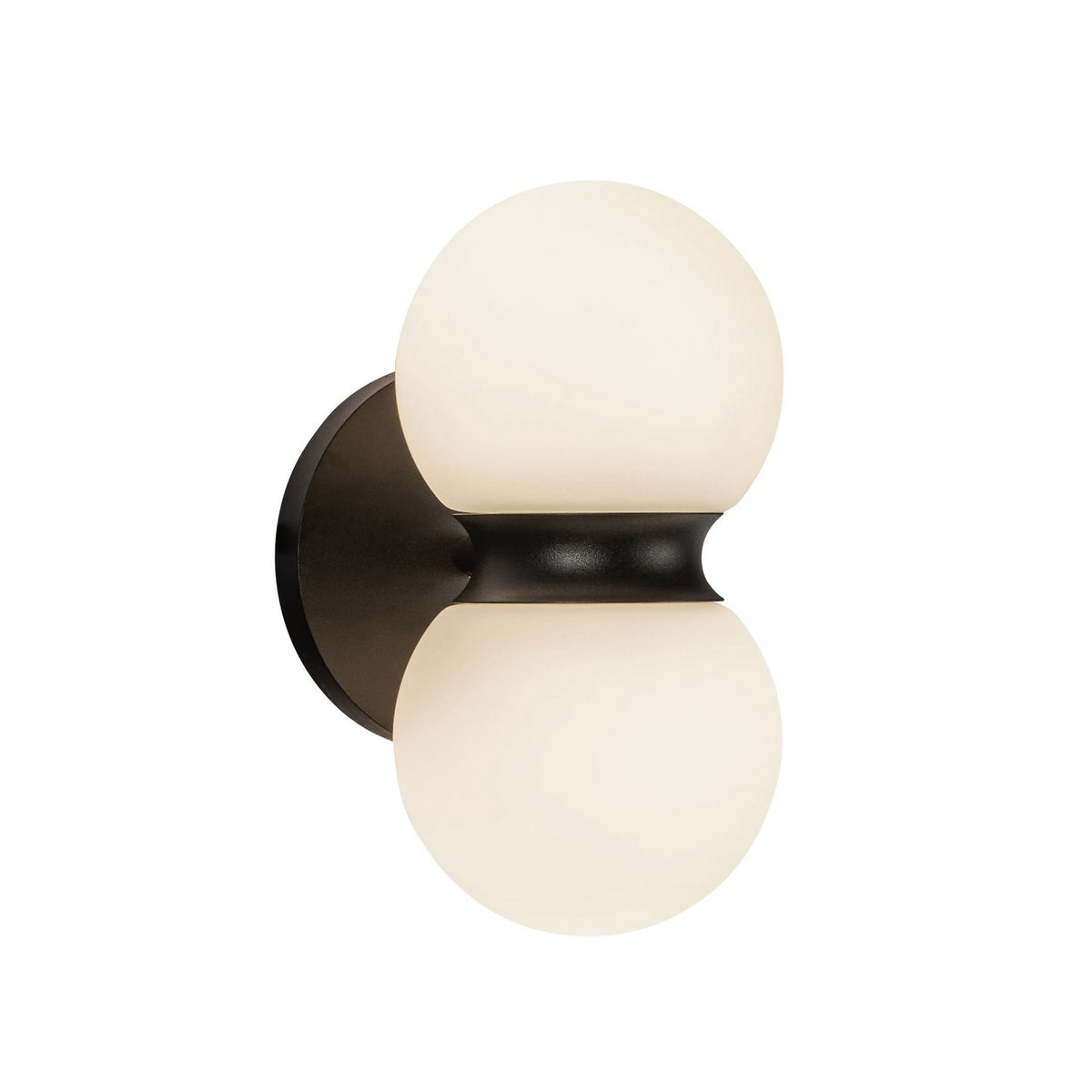
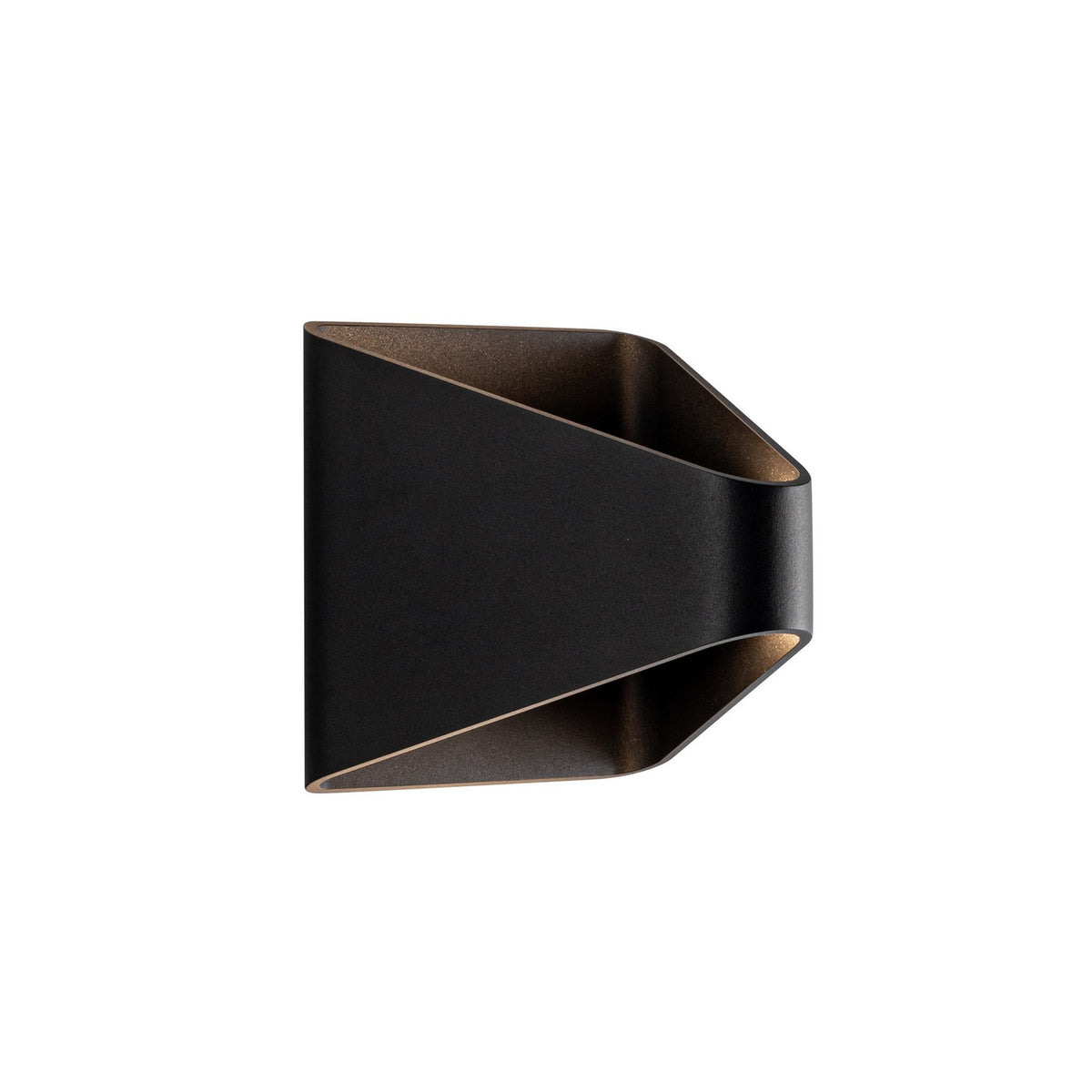
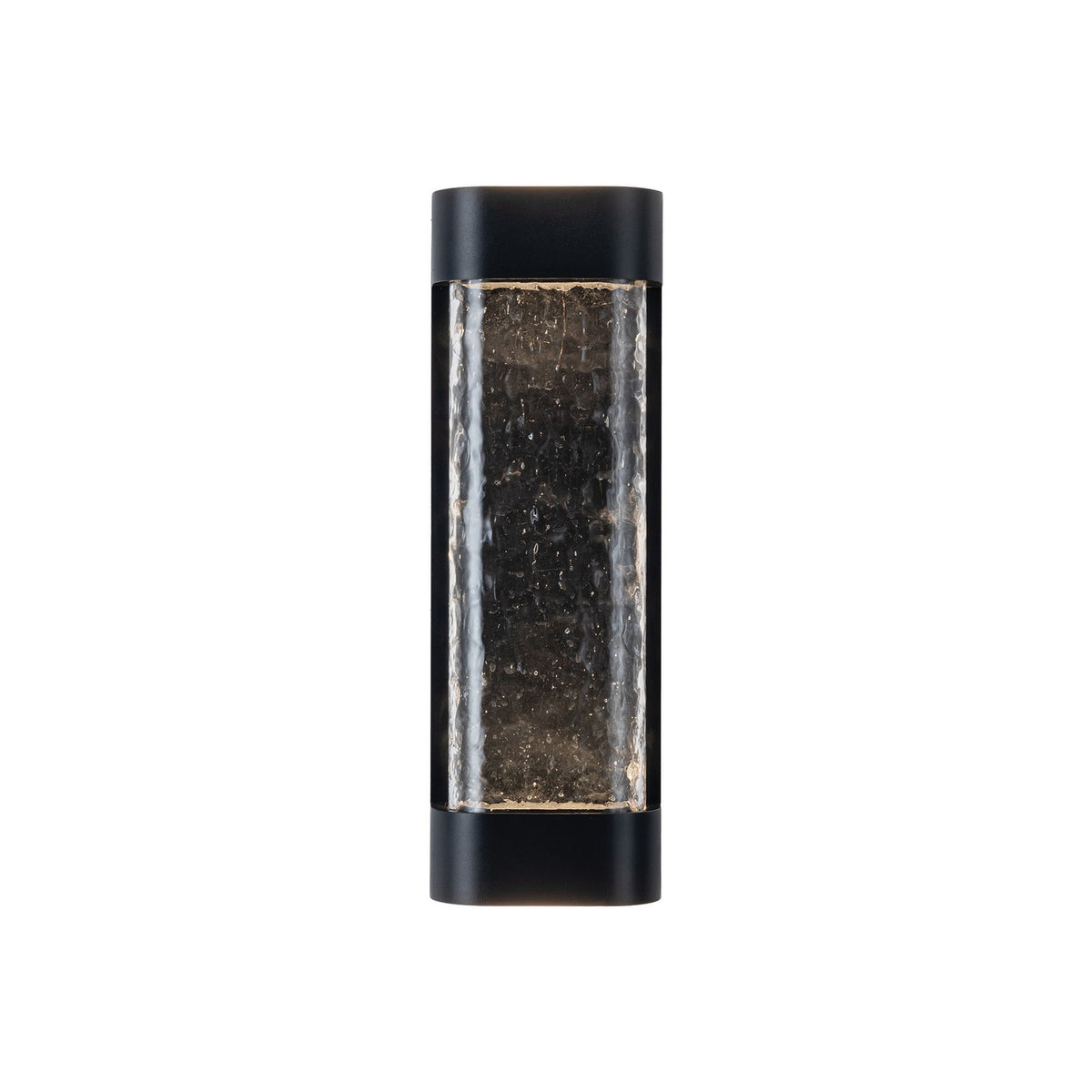
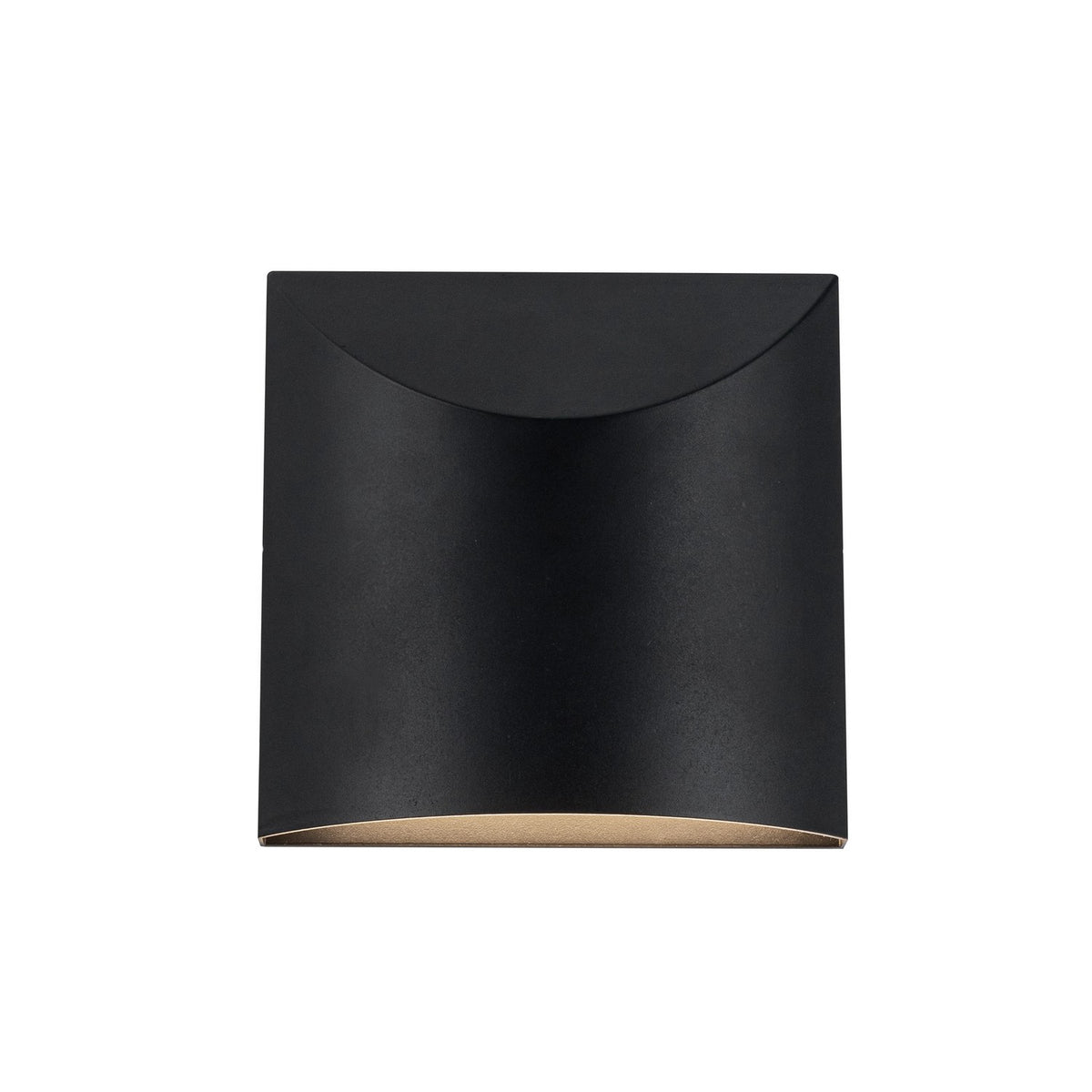
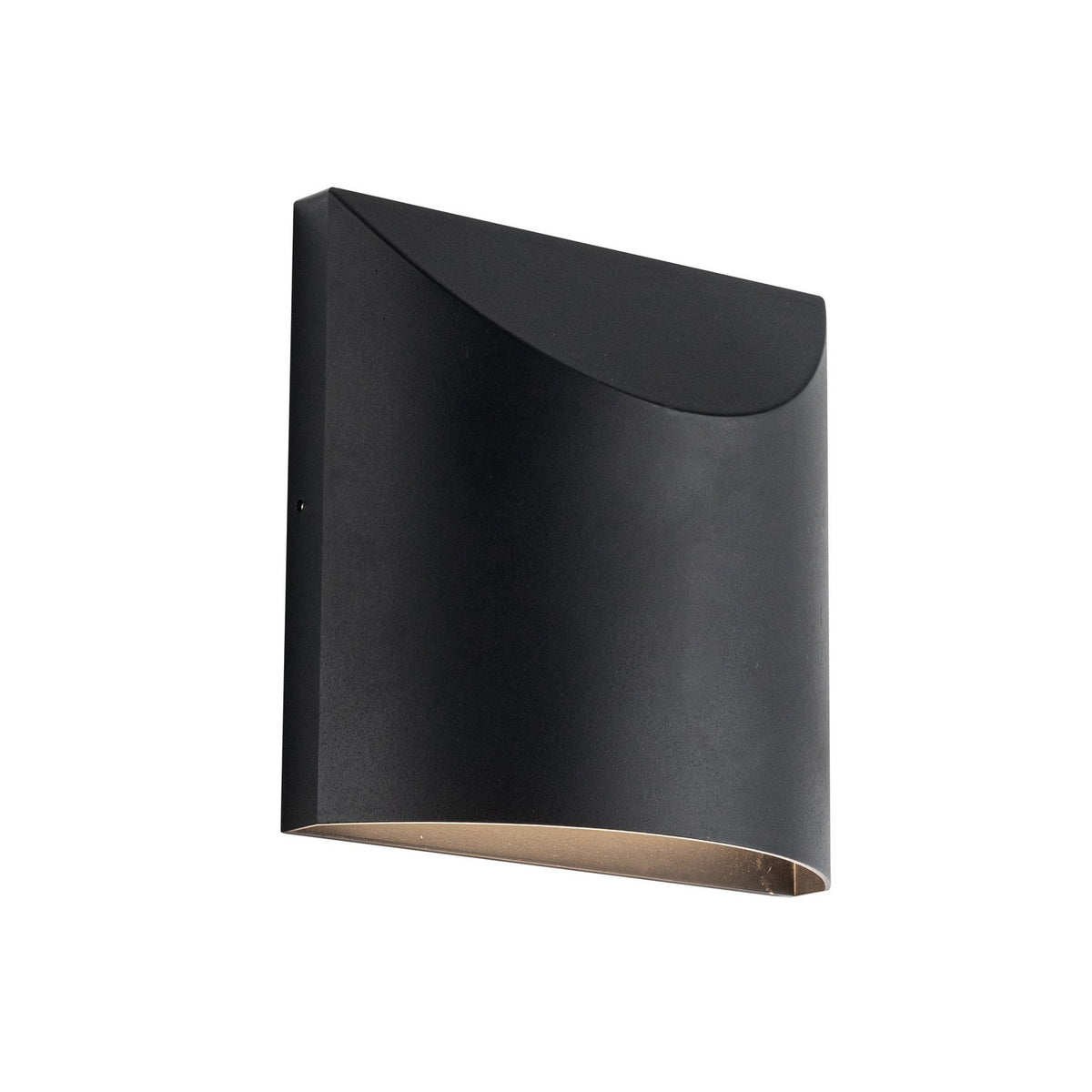
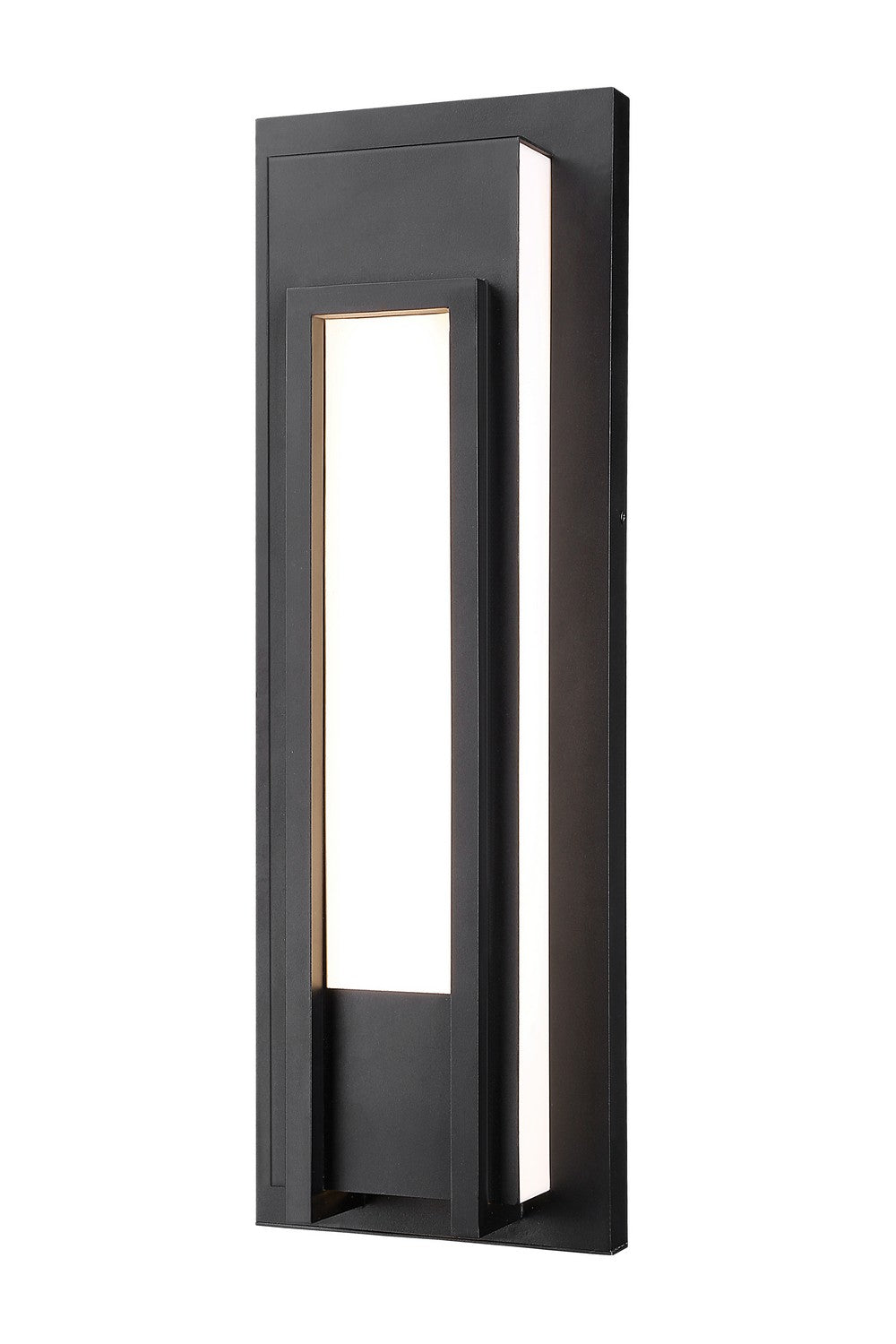
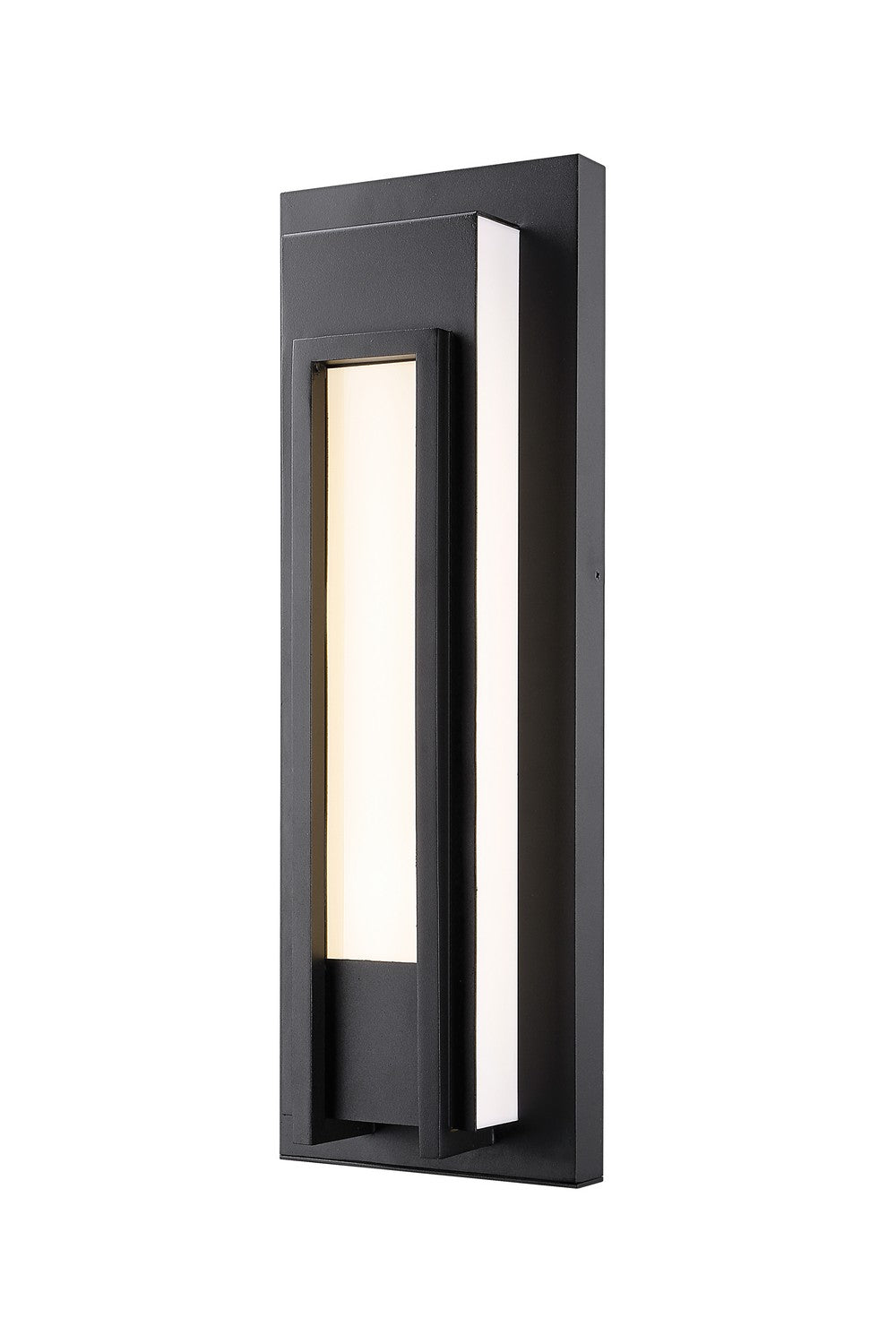
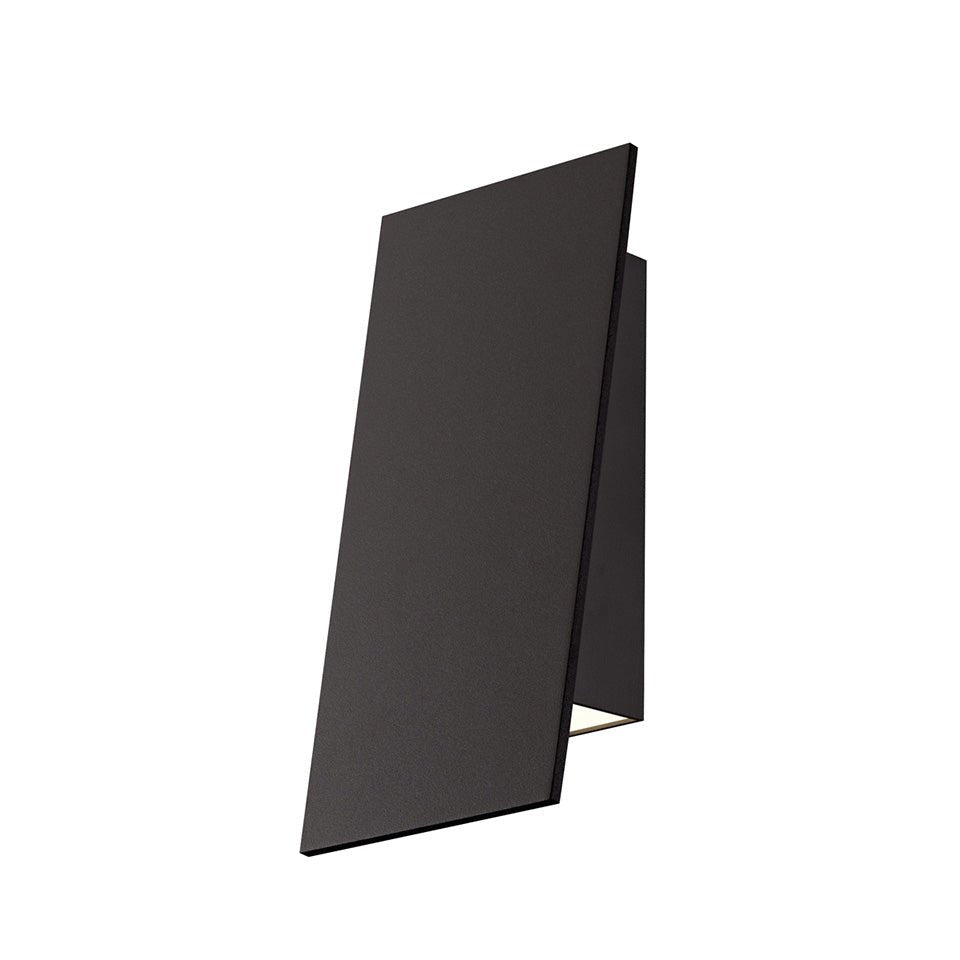
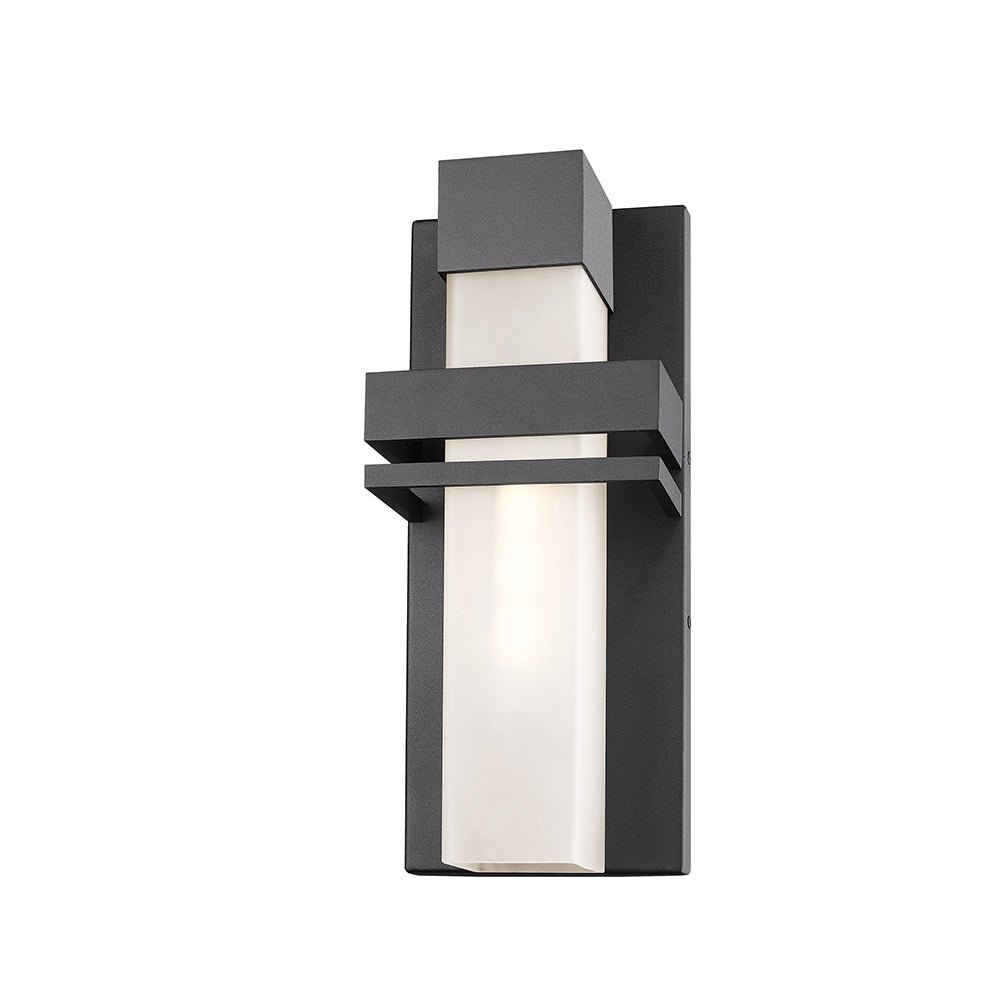
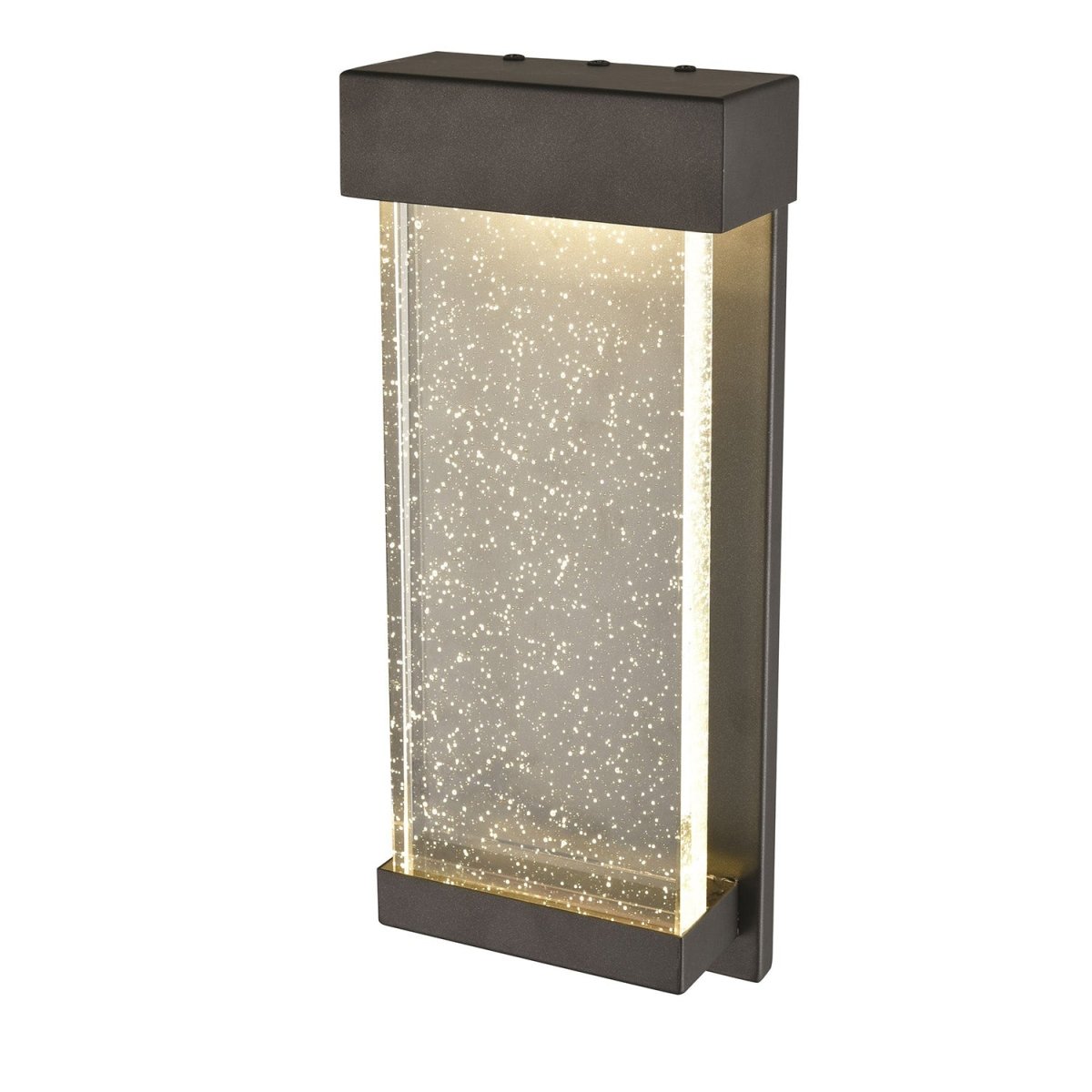
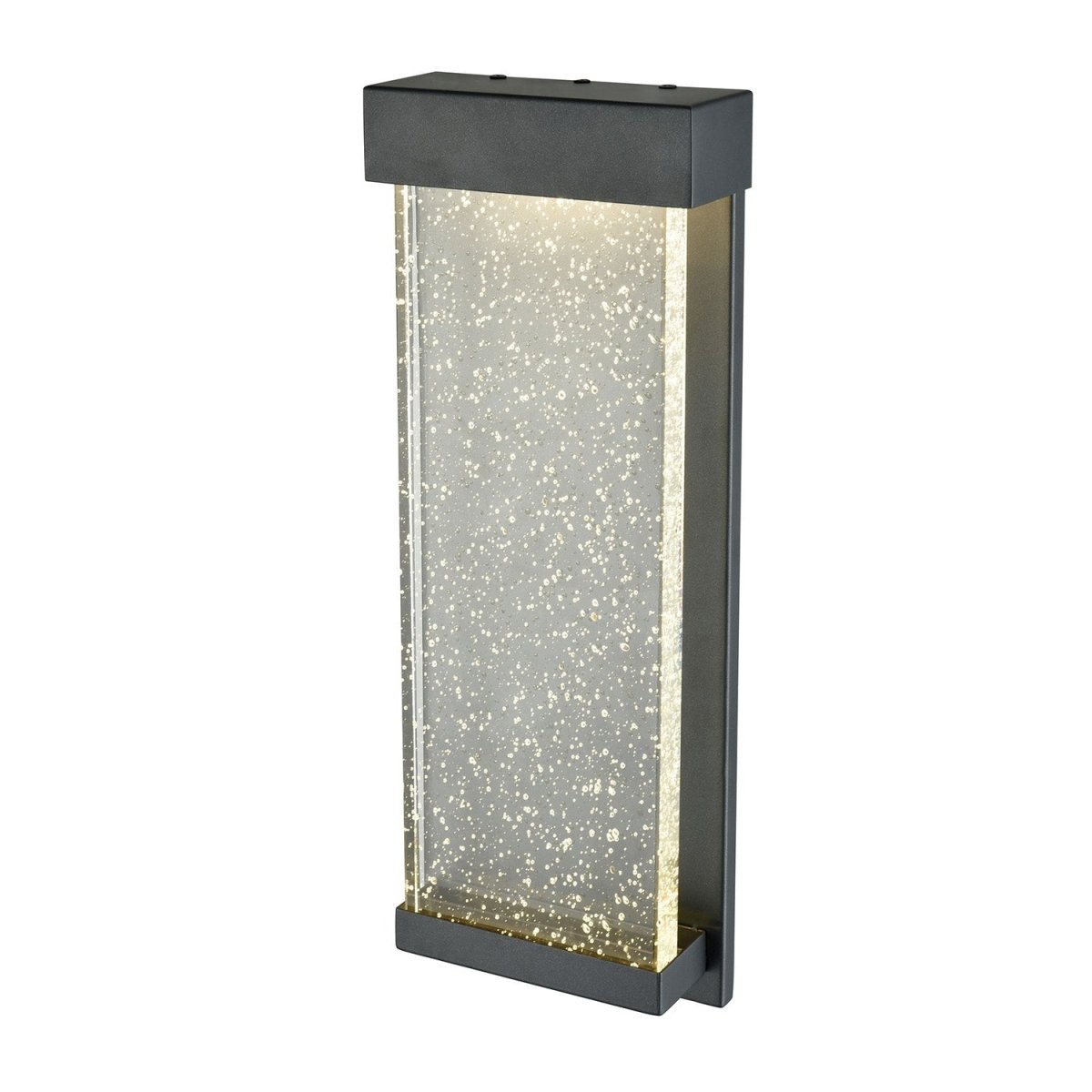
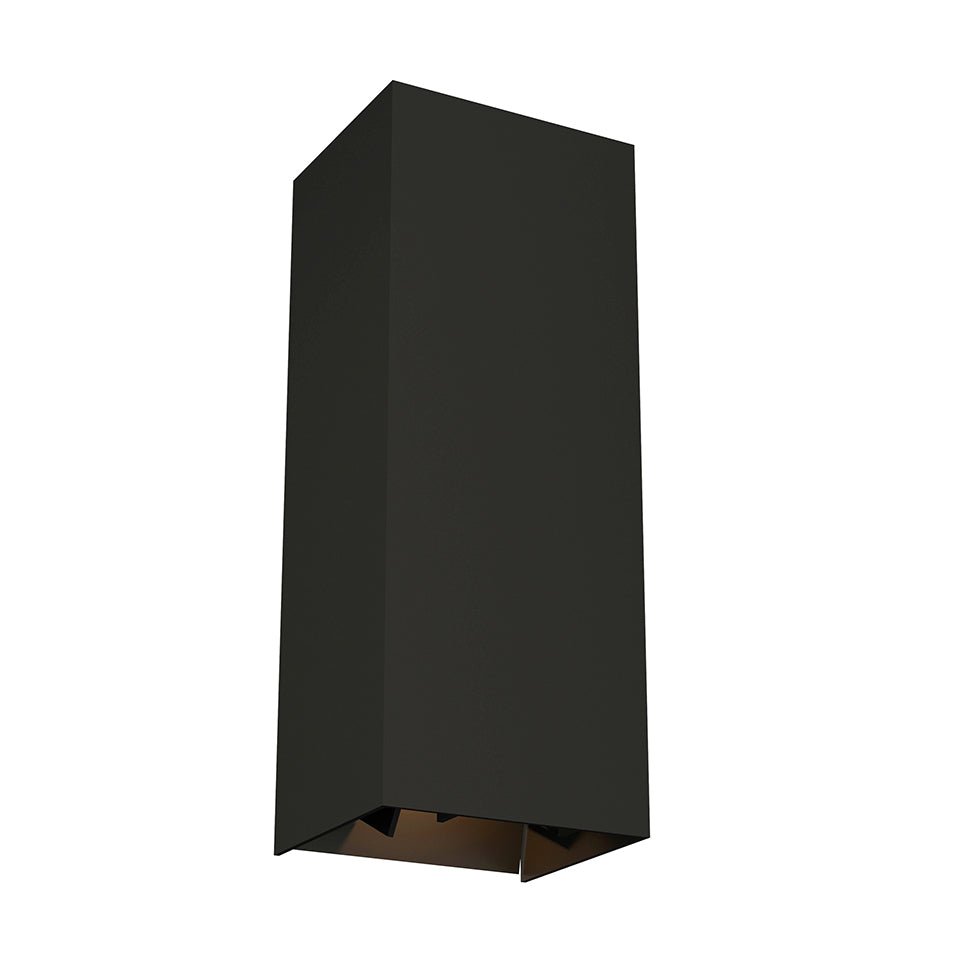
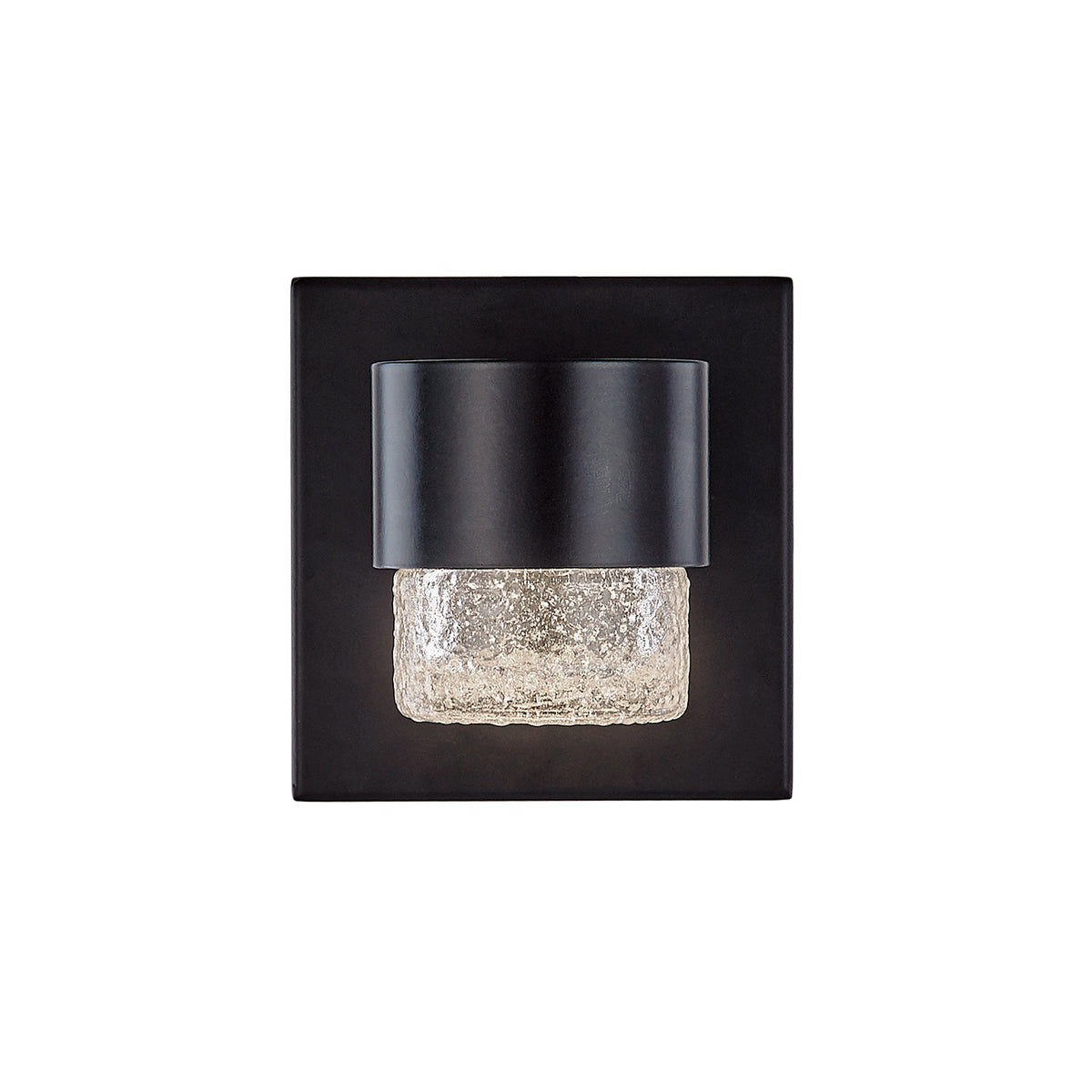
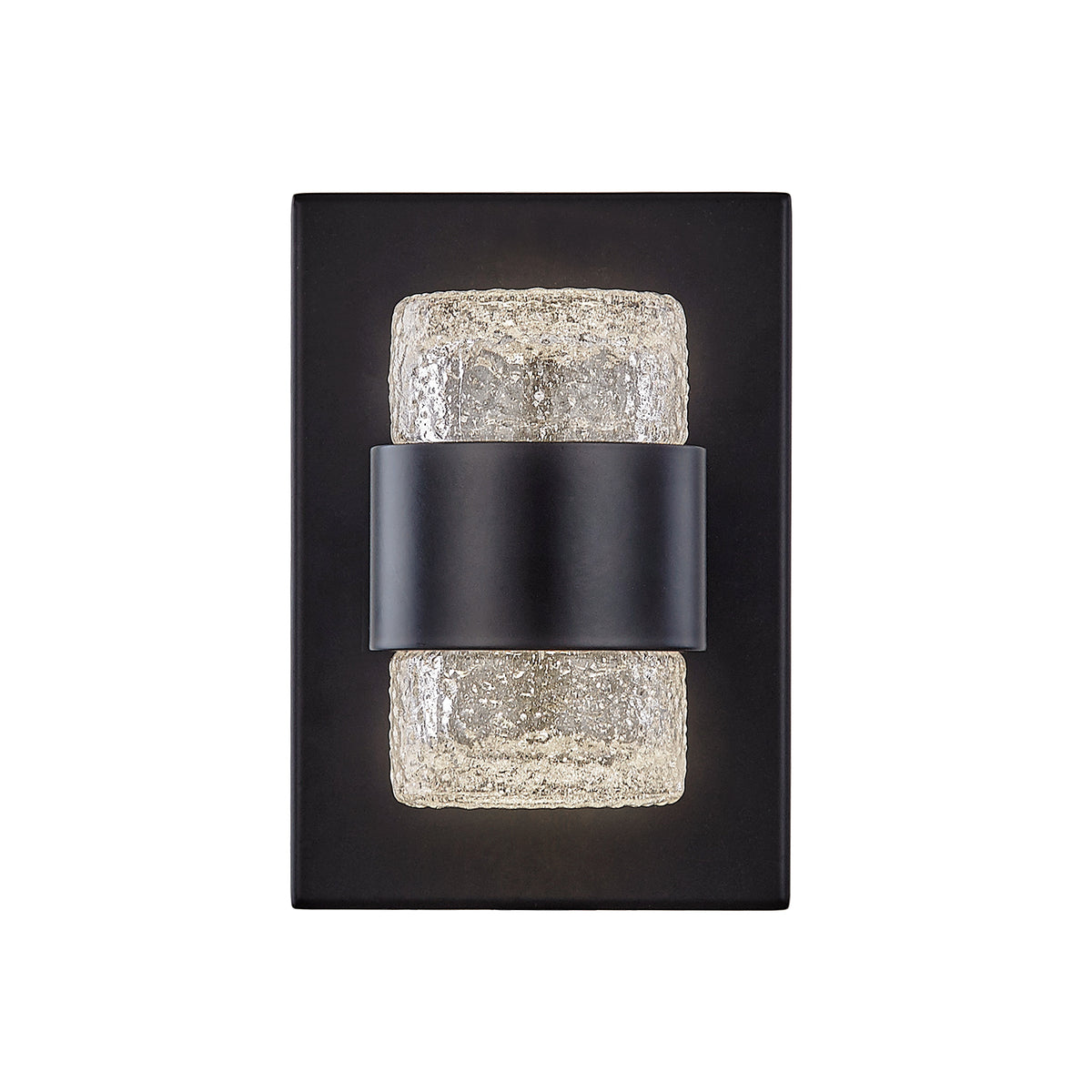
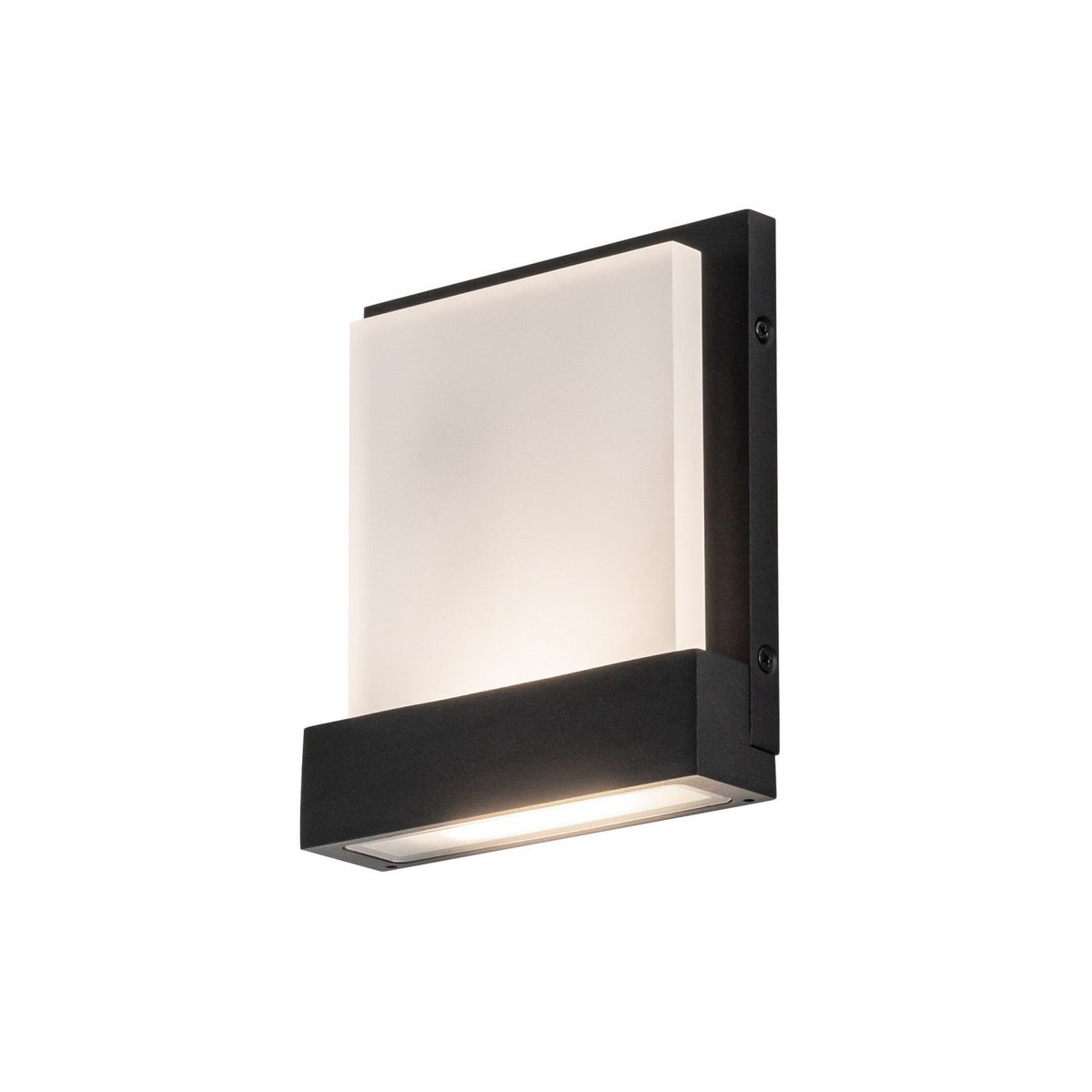
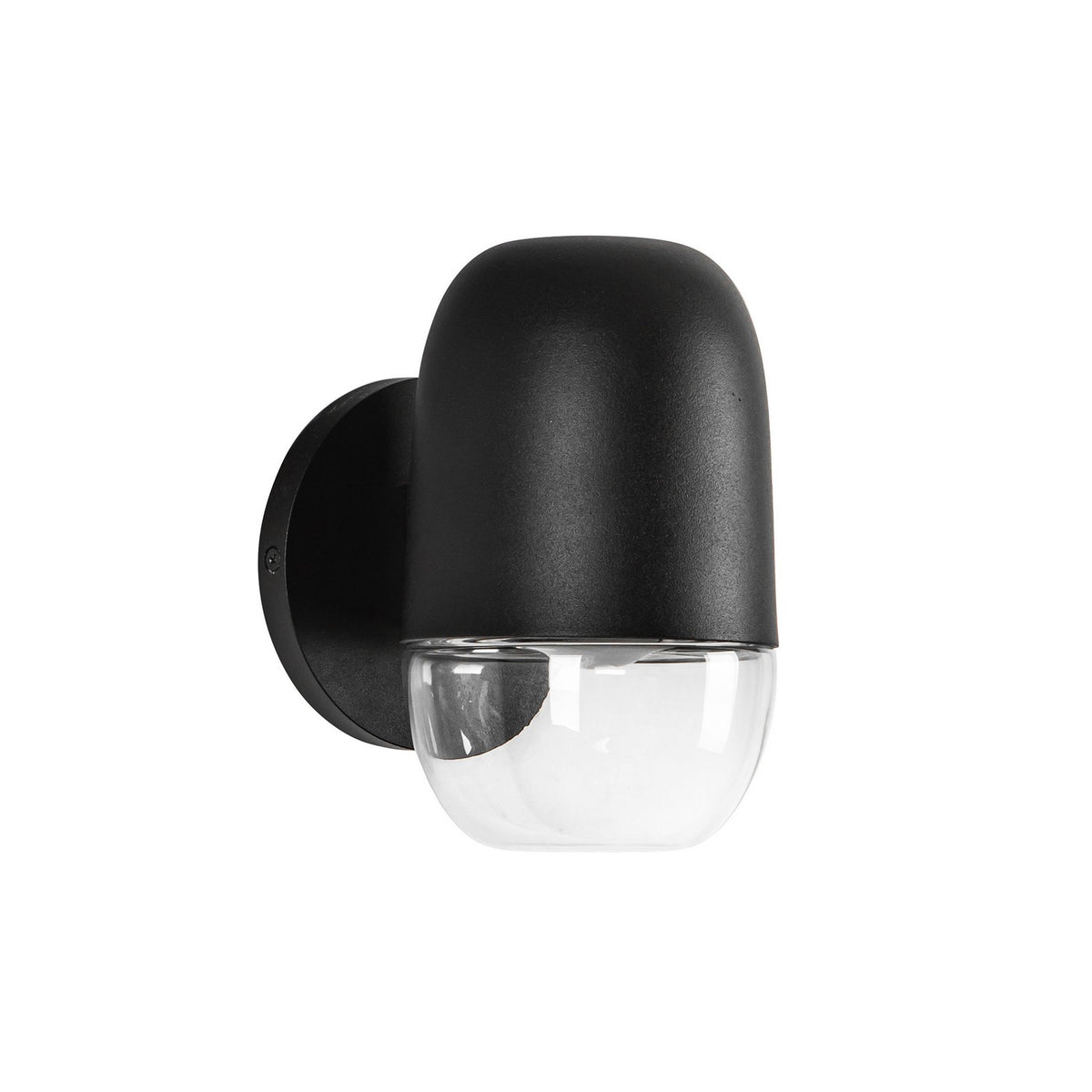
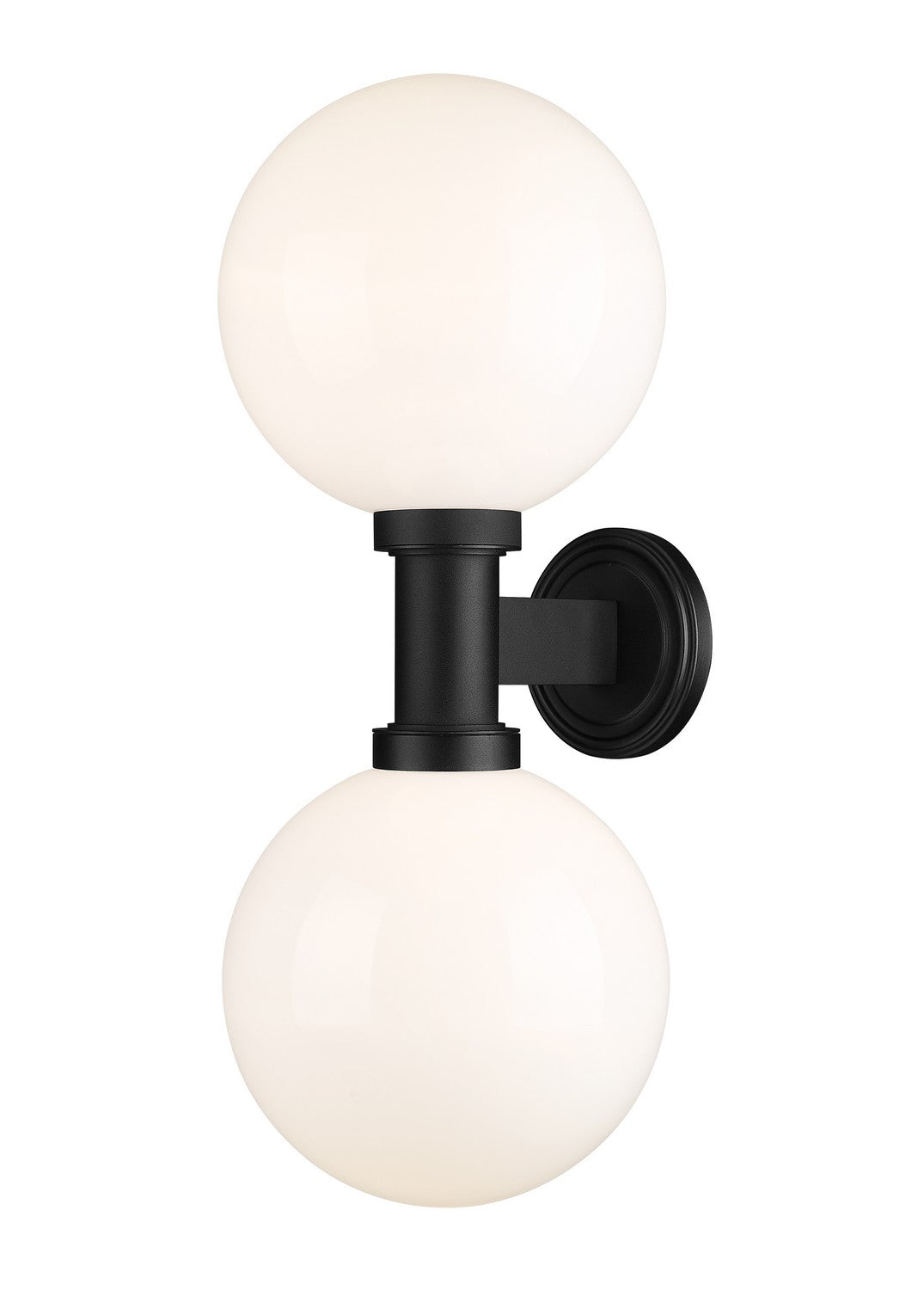
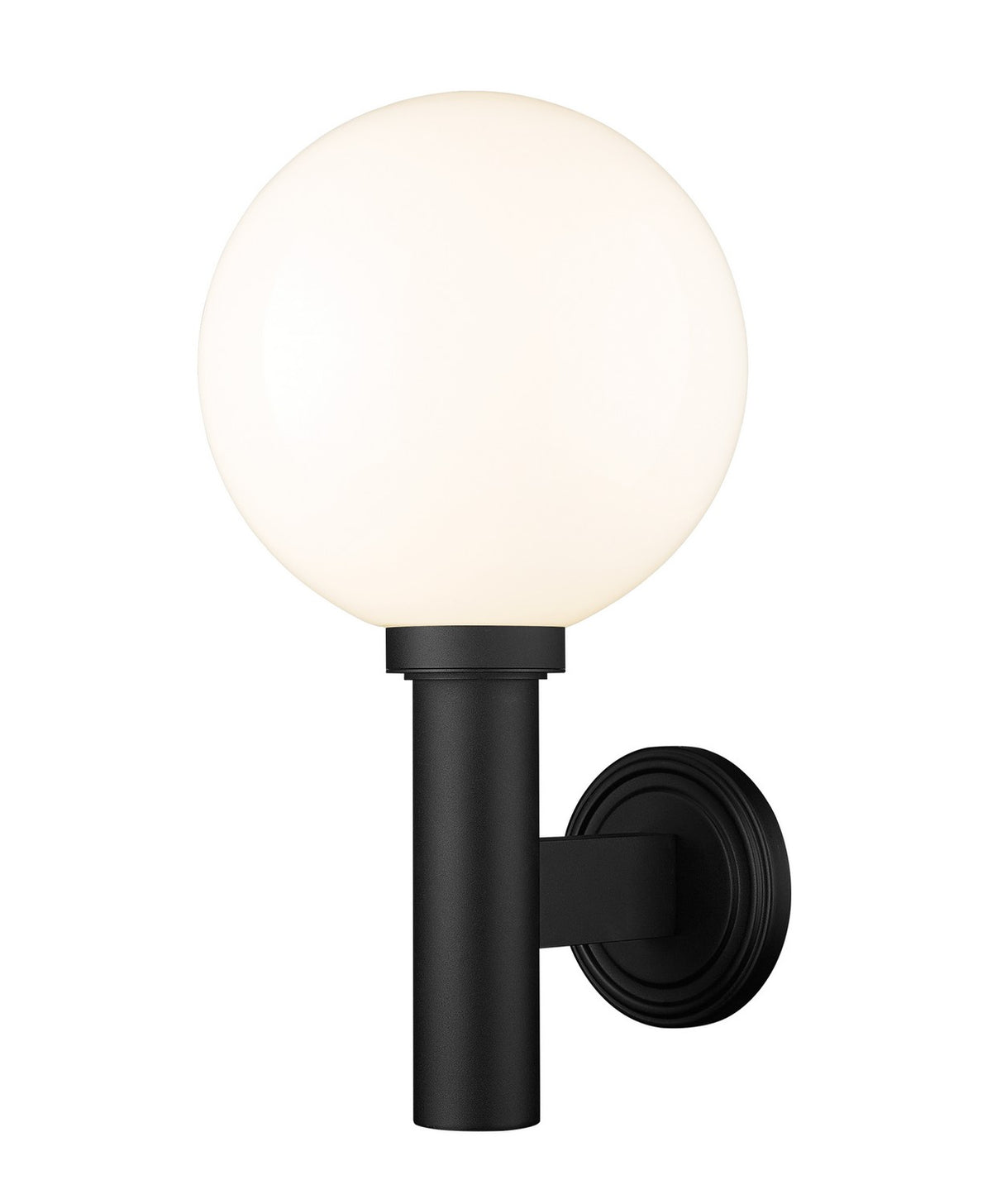
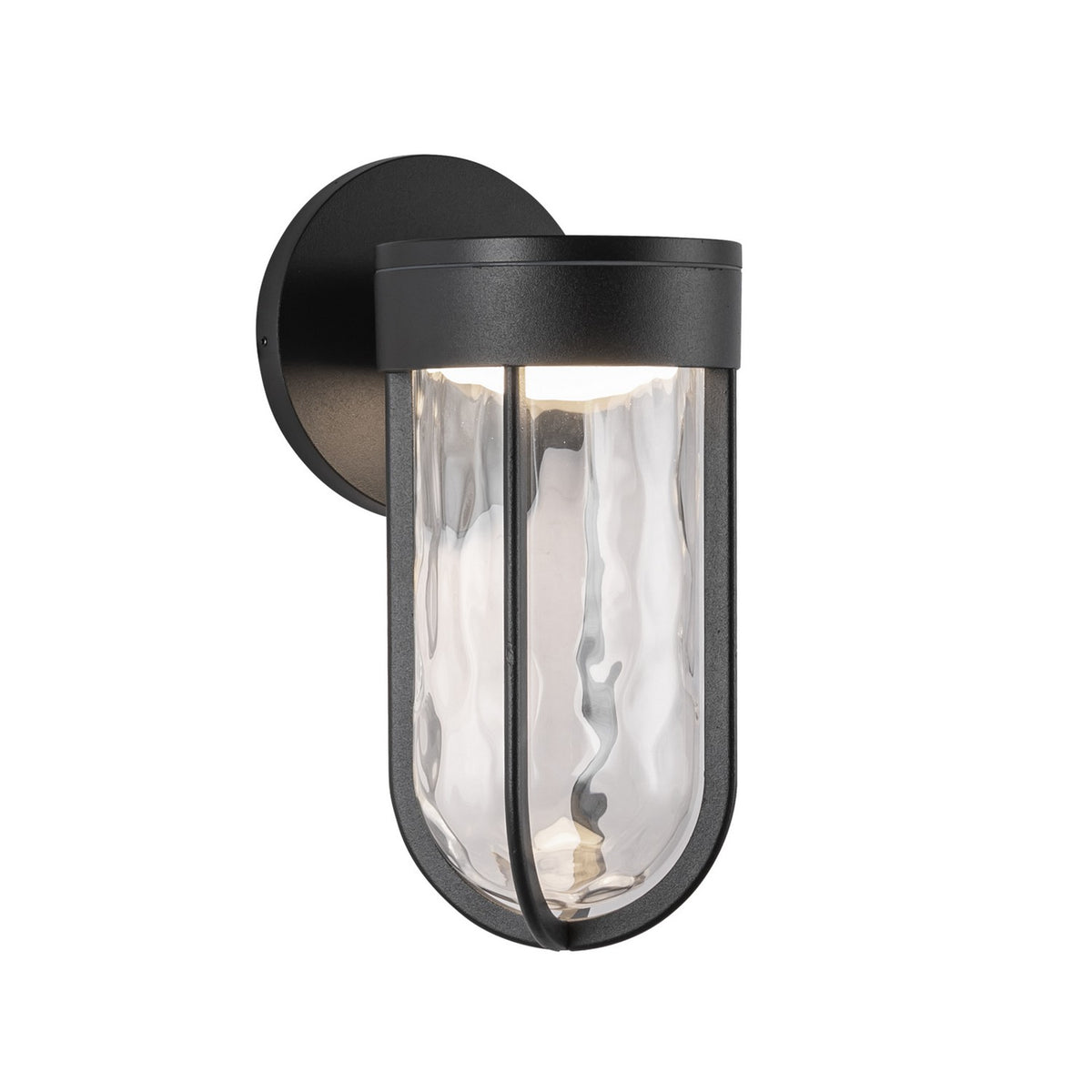
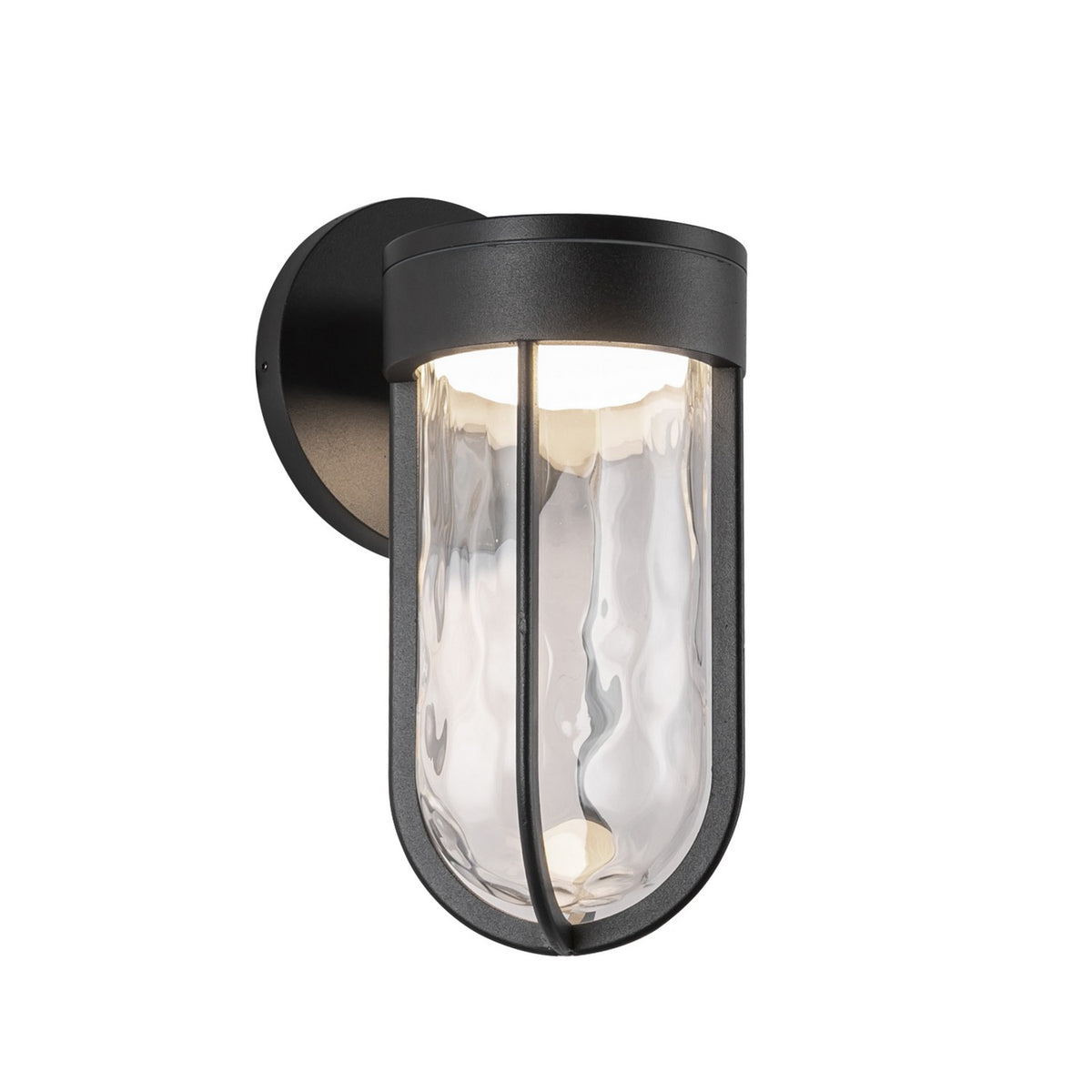
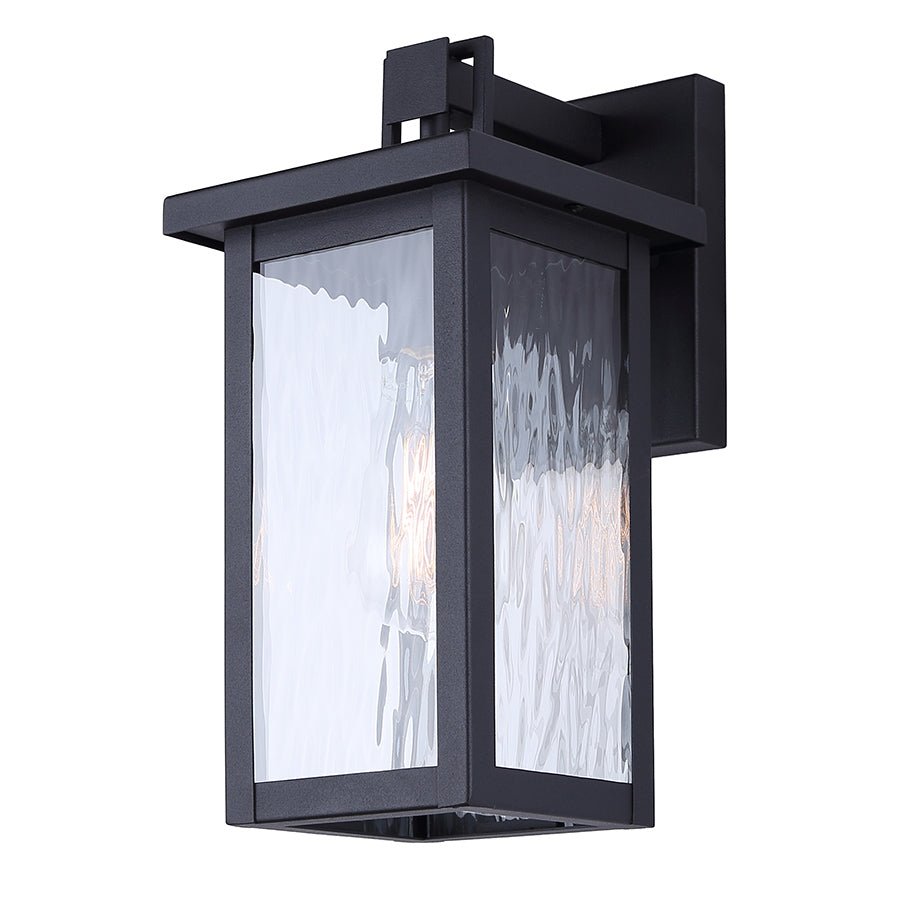
- Modern and contemporary: geometric volumes and restrained detailing, with brands like Kuzco Lighting, Tech Lighting and Visual Comfort Studio.
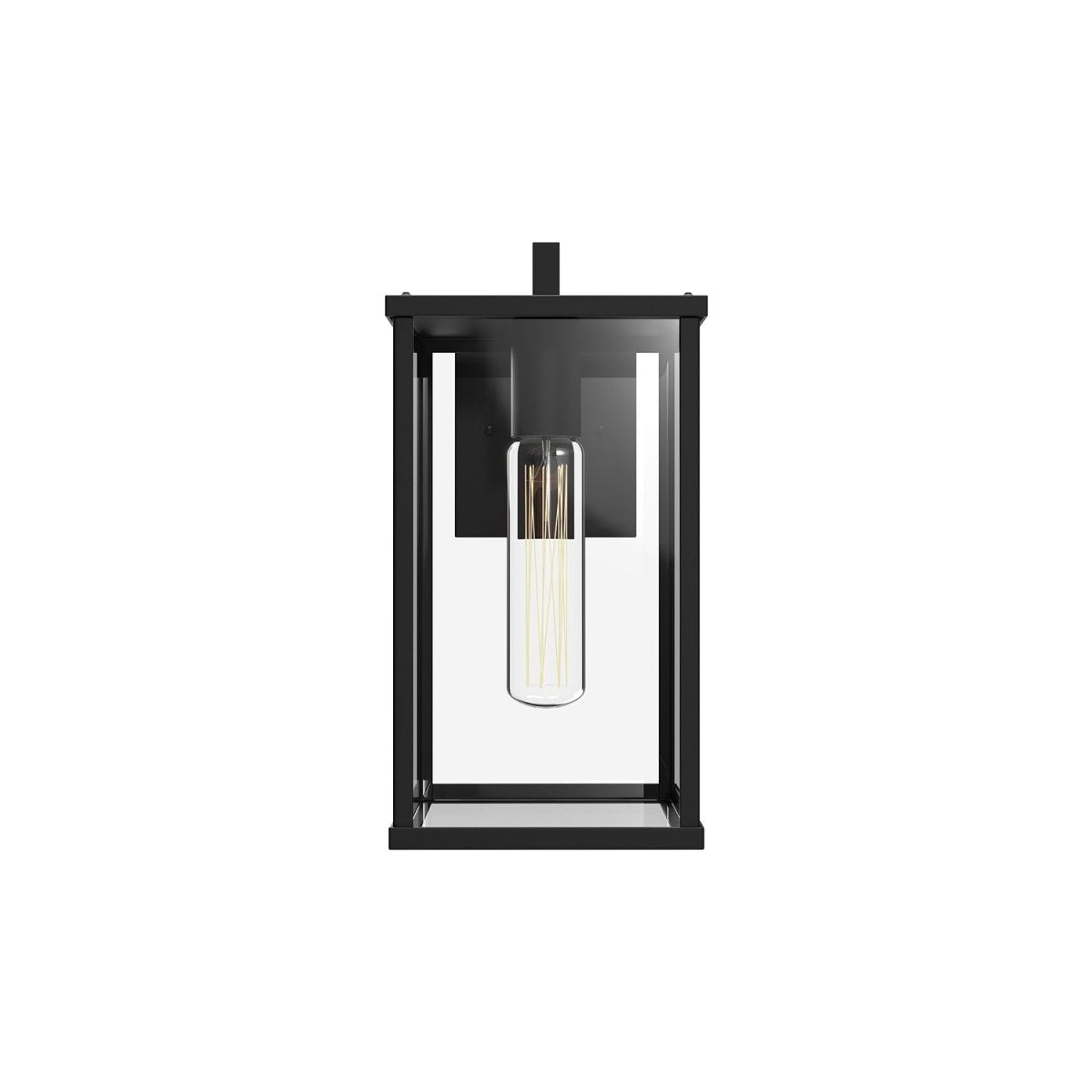
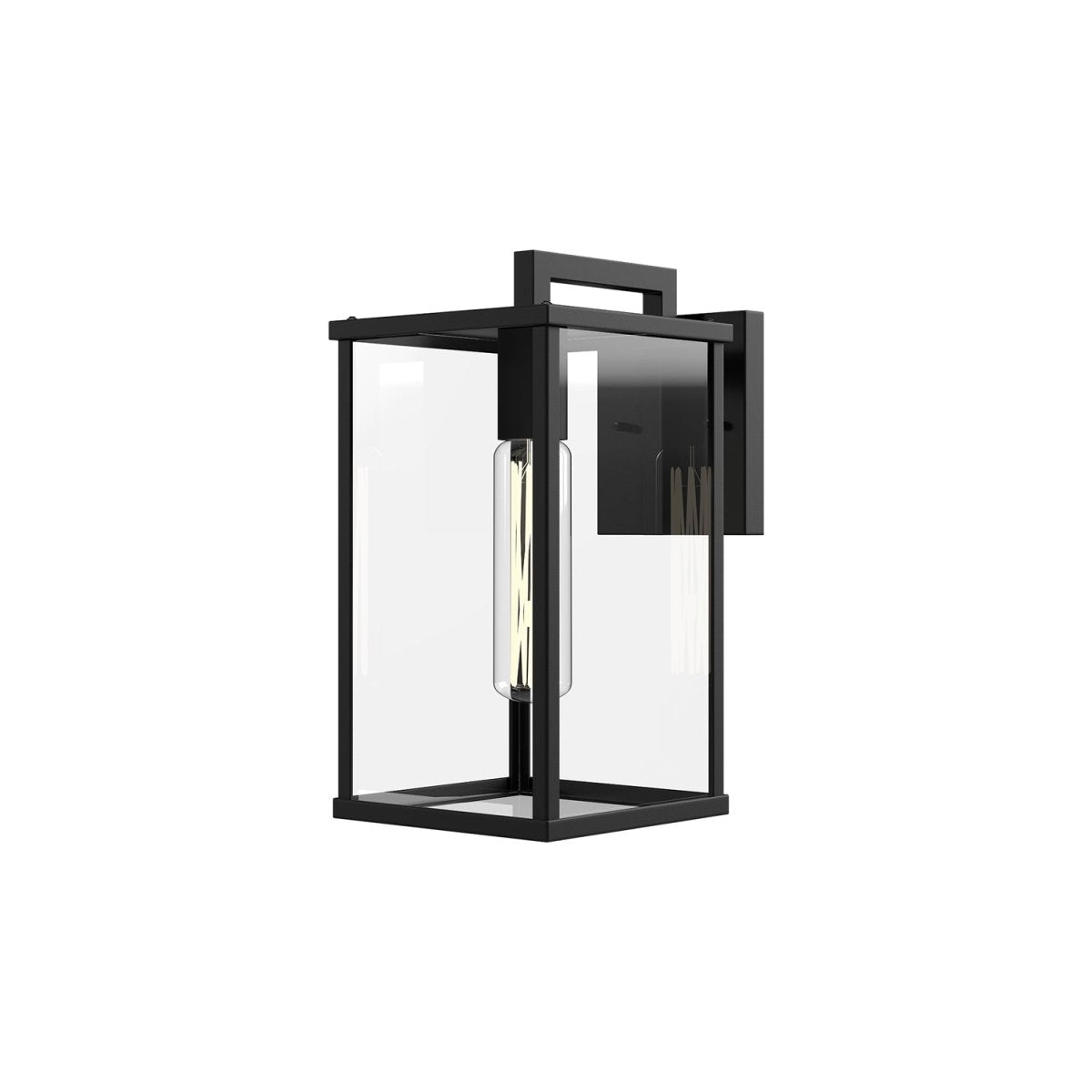
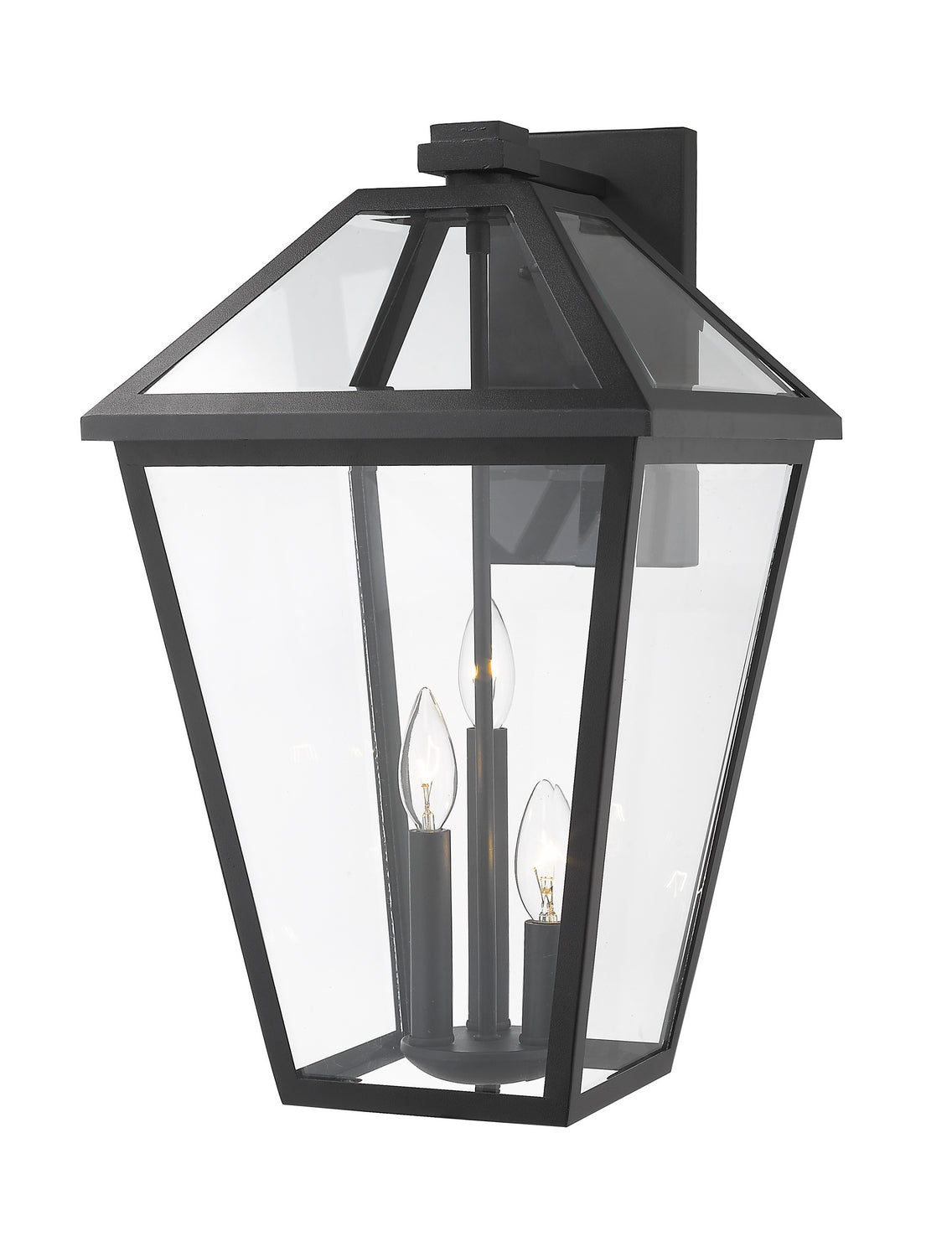
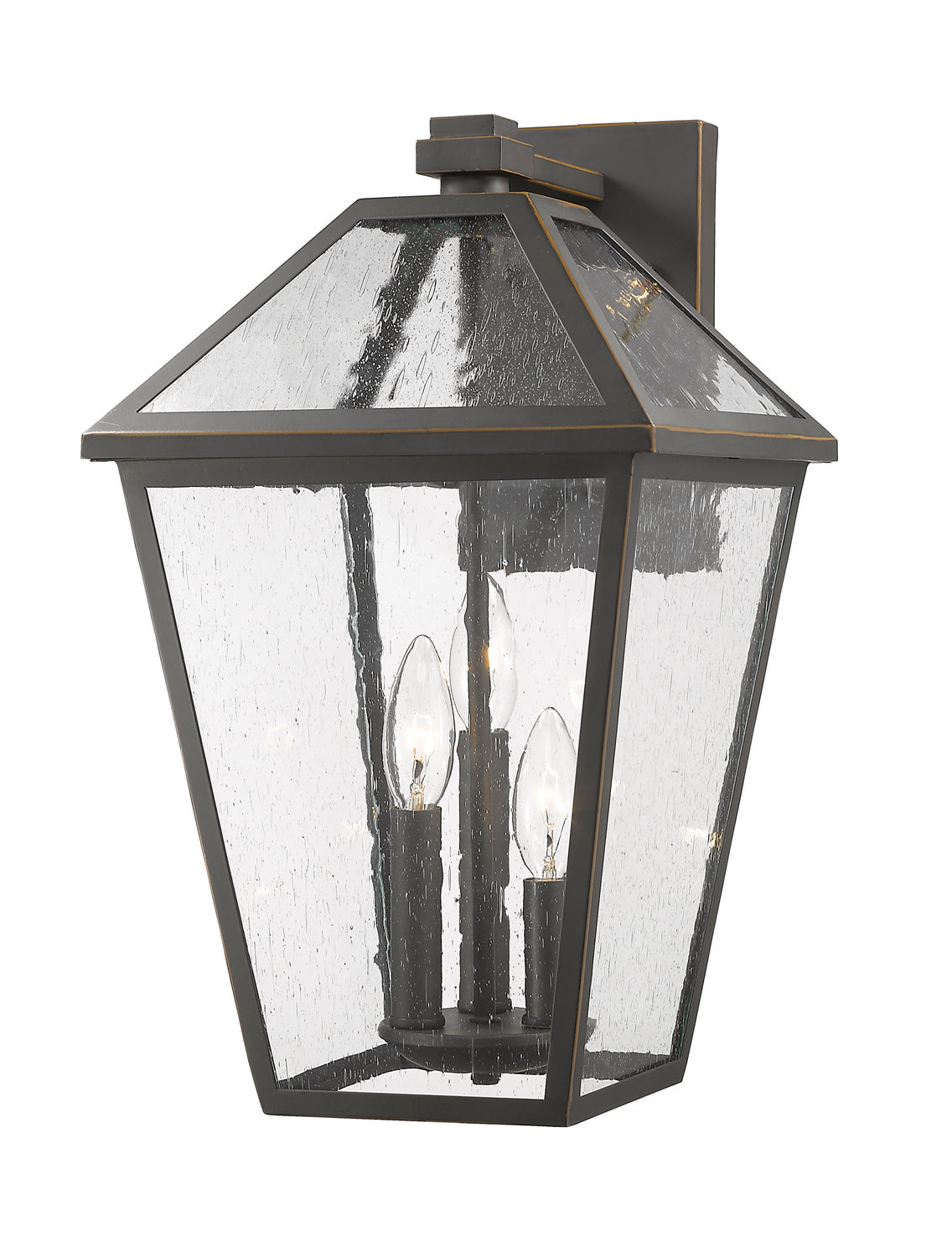
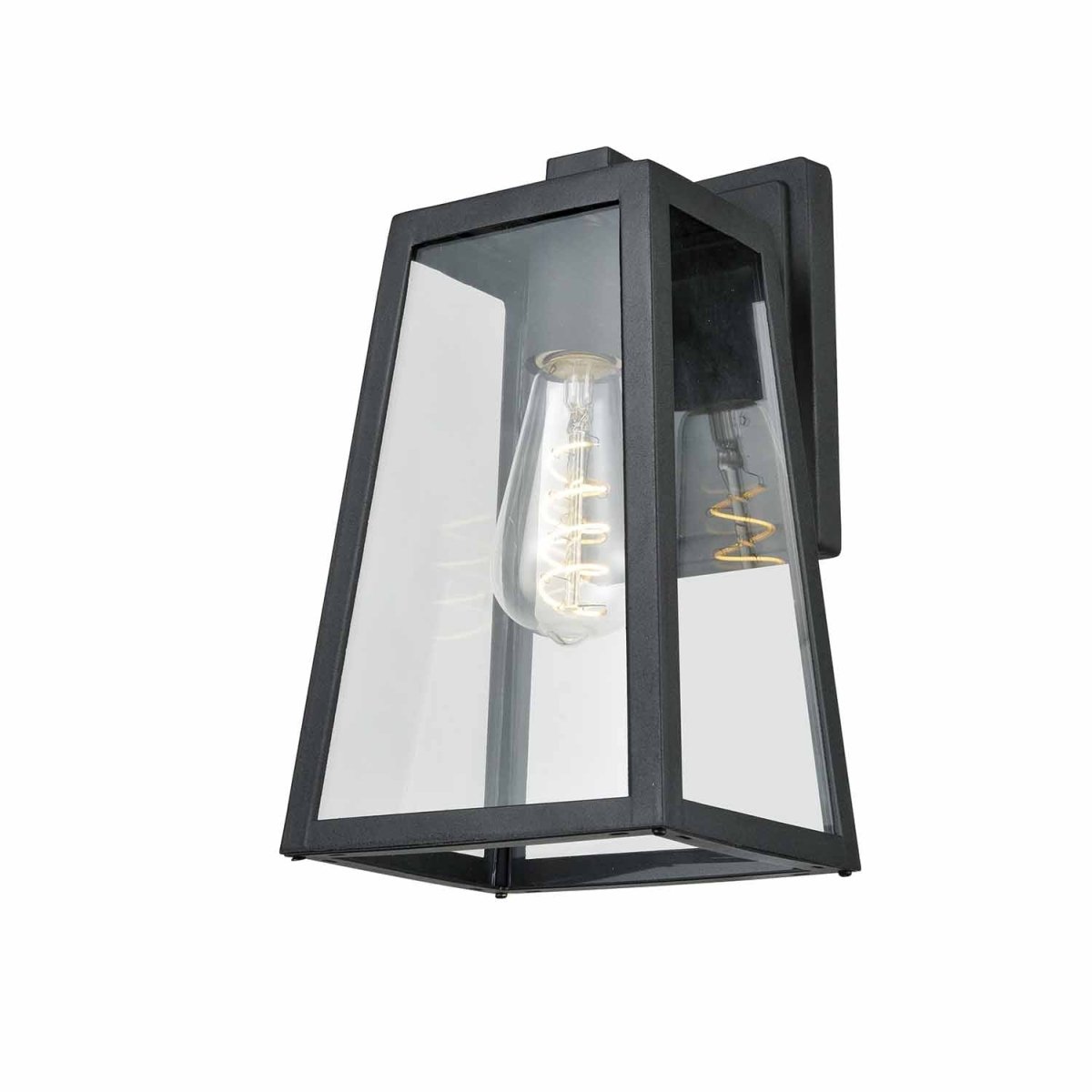
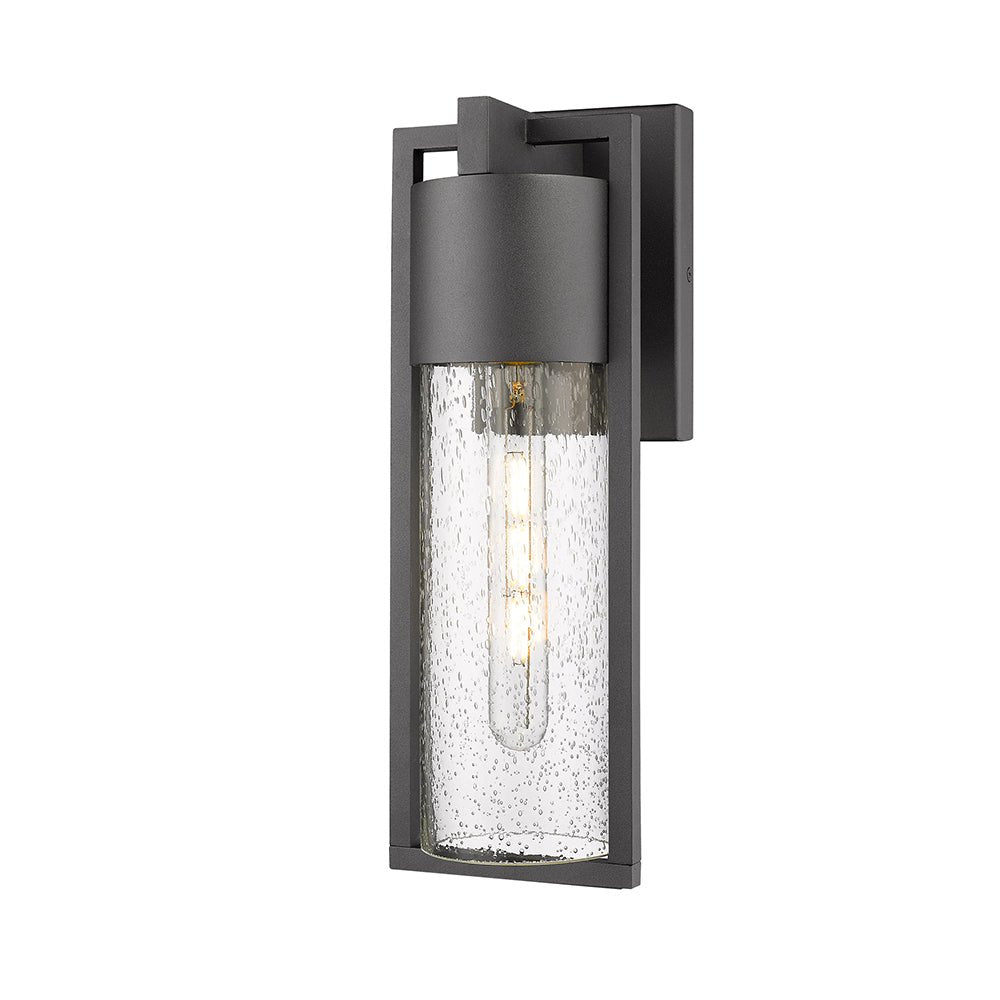
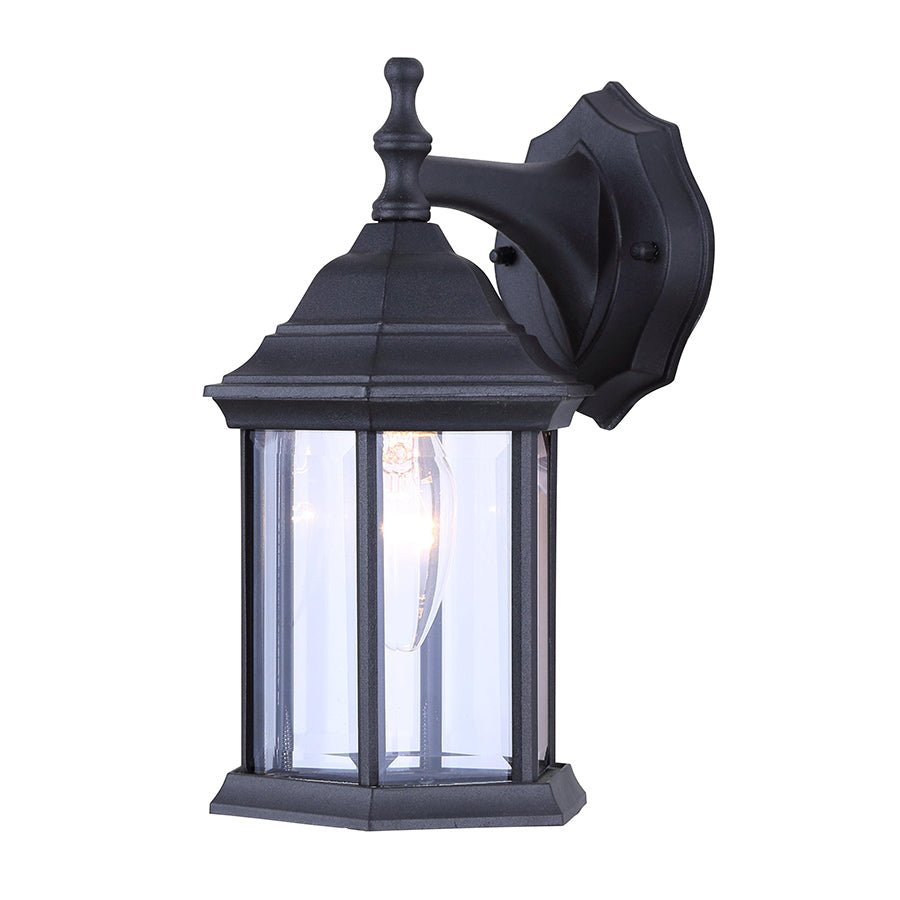
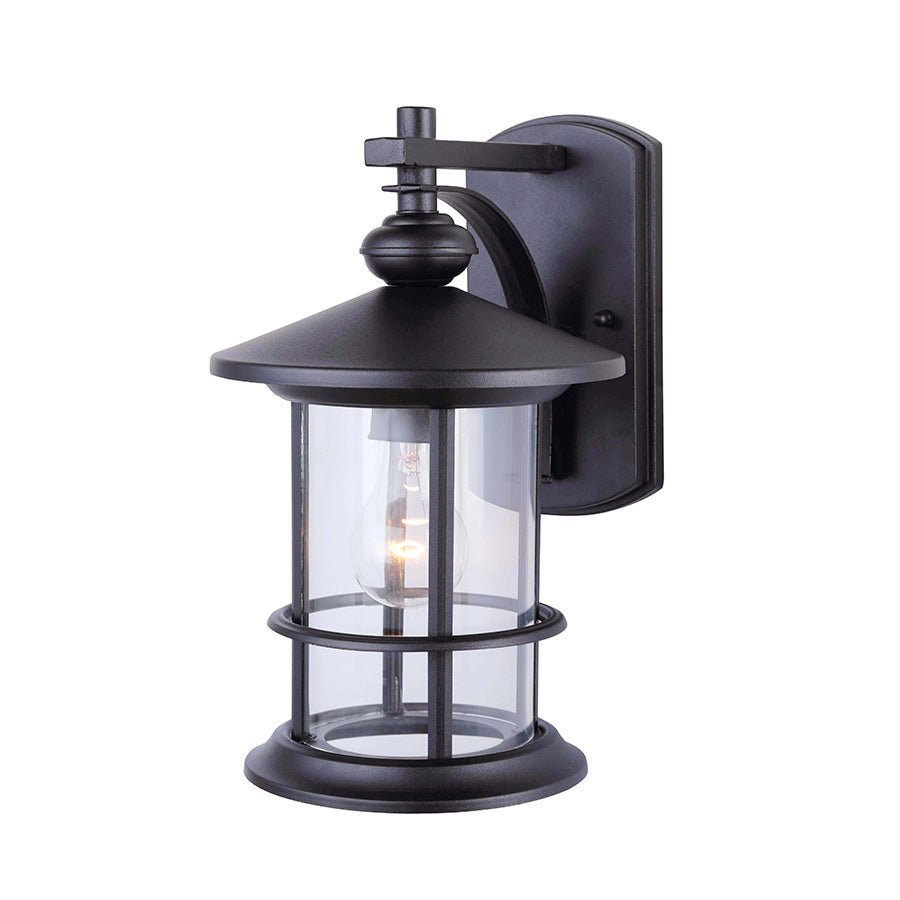
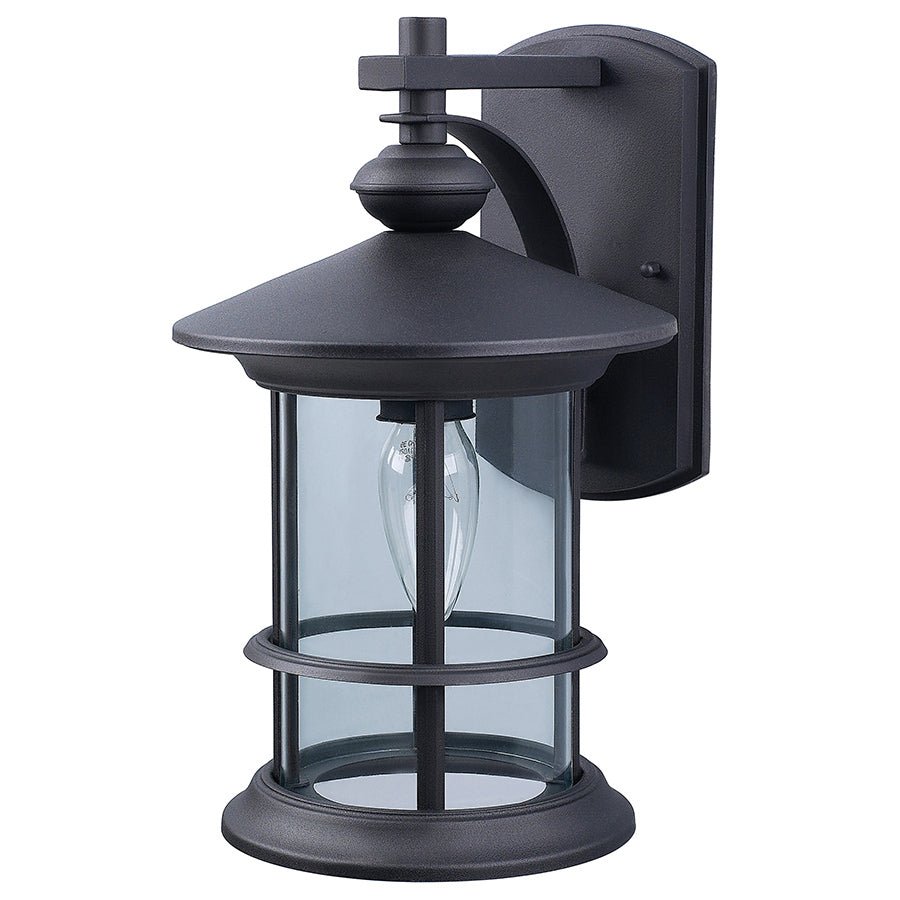
- Traditional and lantern: the outdoor wall lantern draws on classic heritage, offered notably by Canarm and Z-Lite.
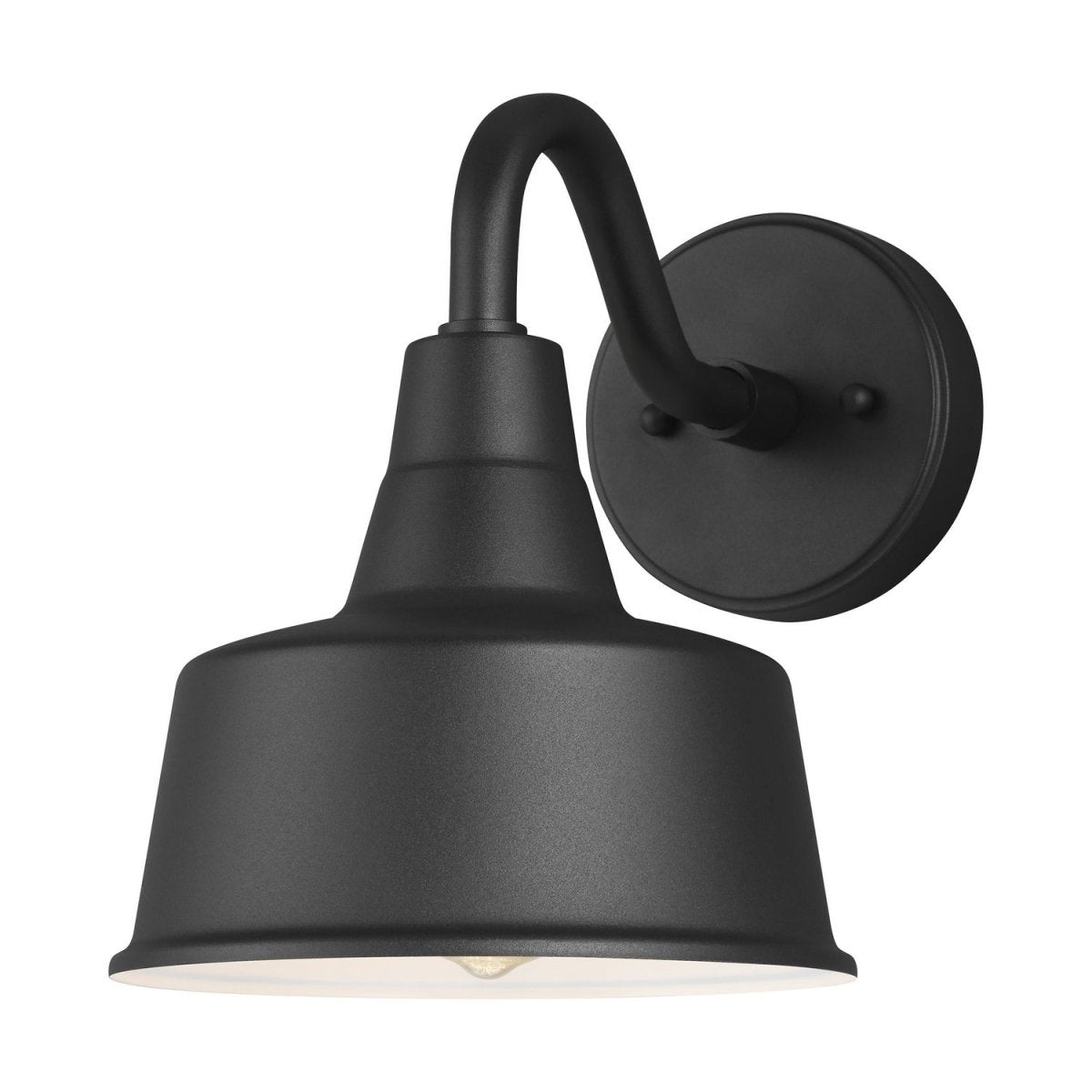
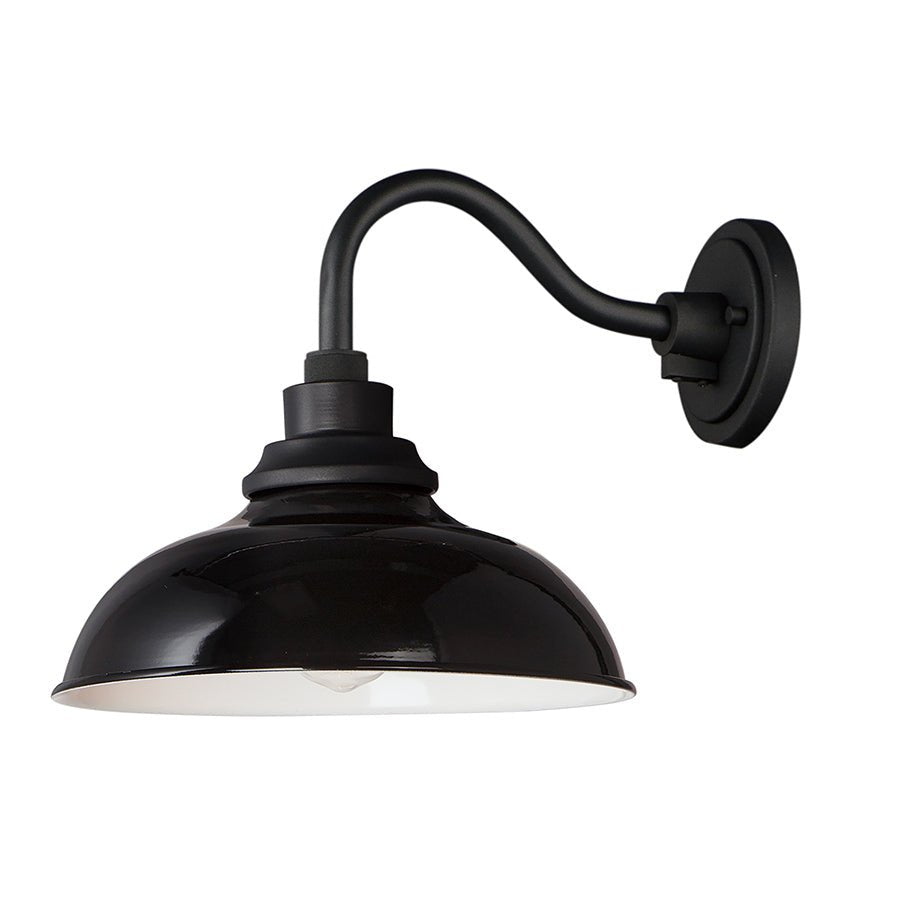
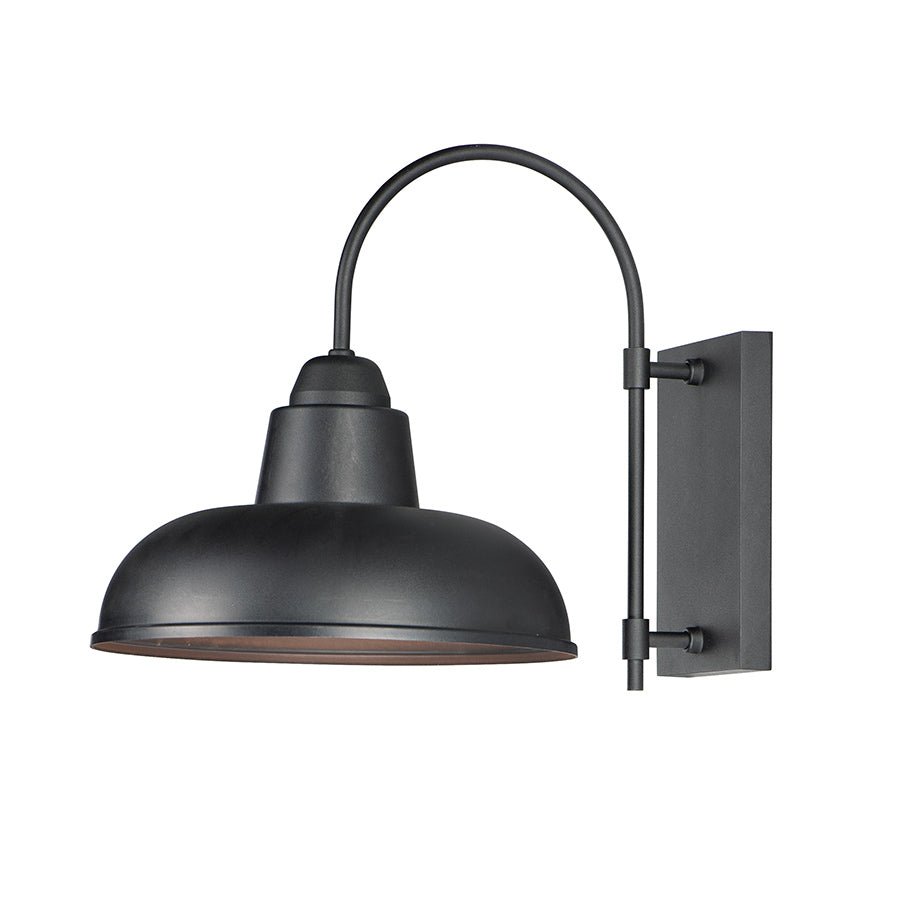
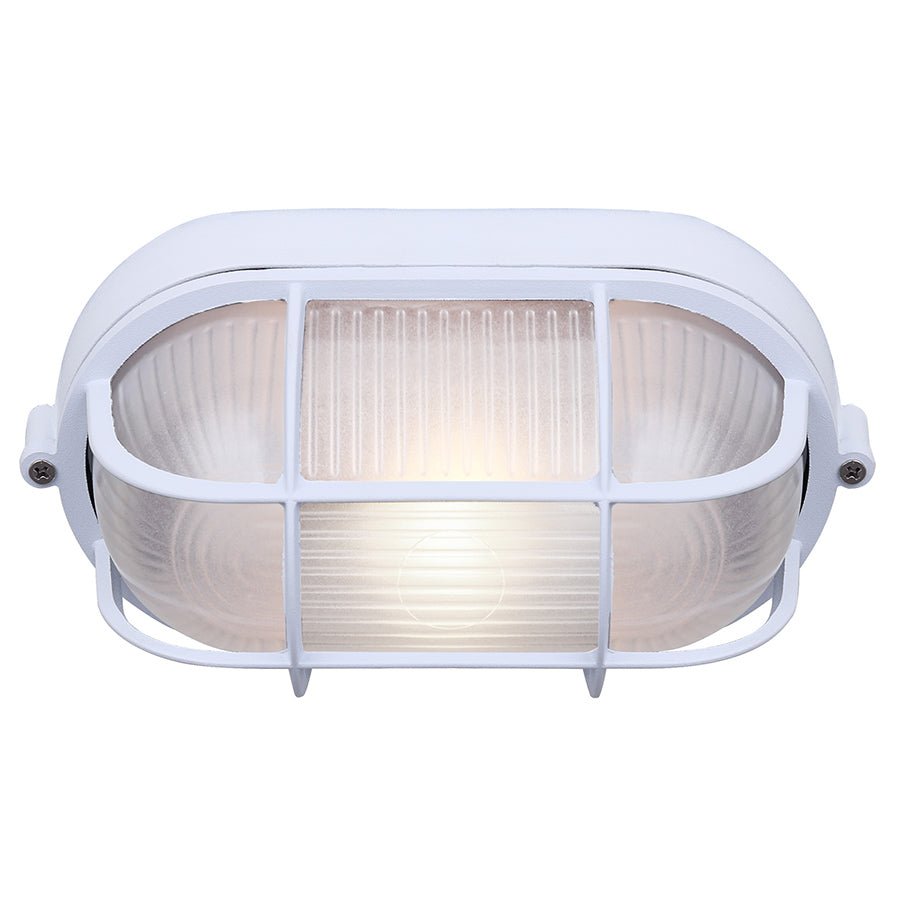
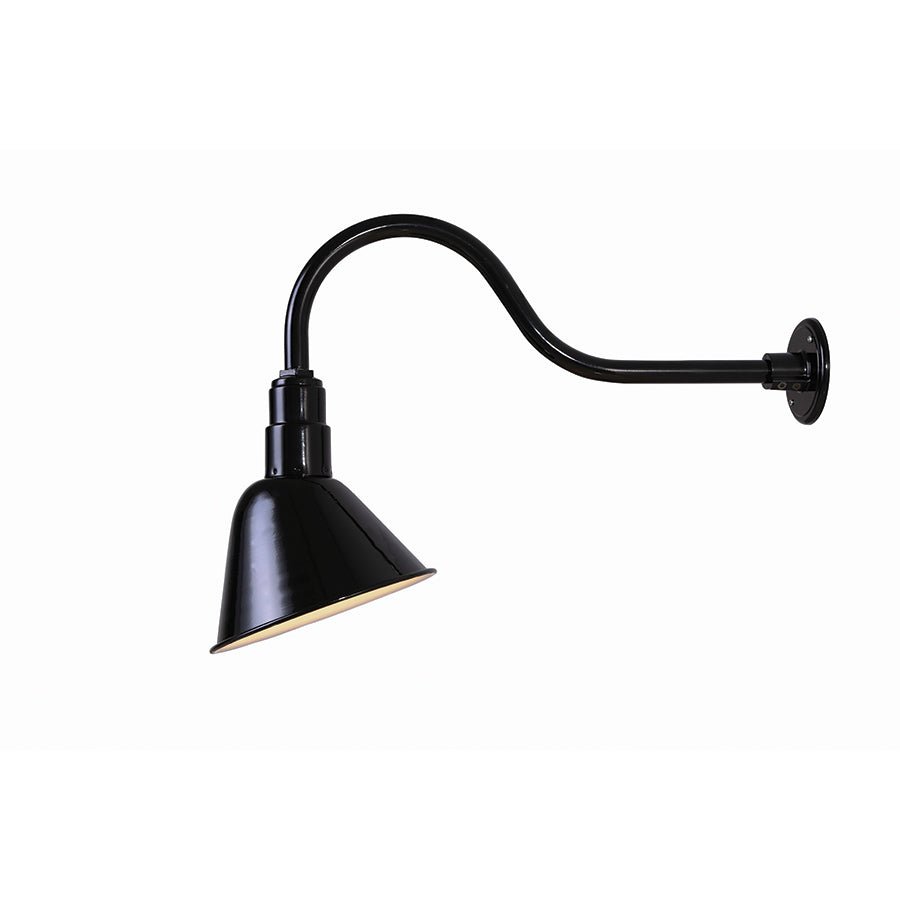
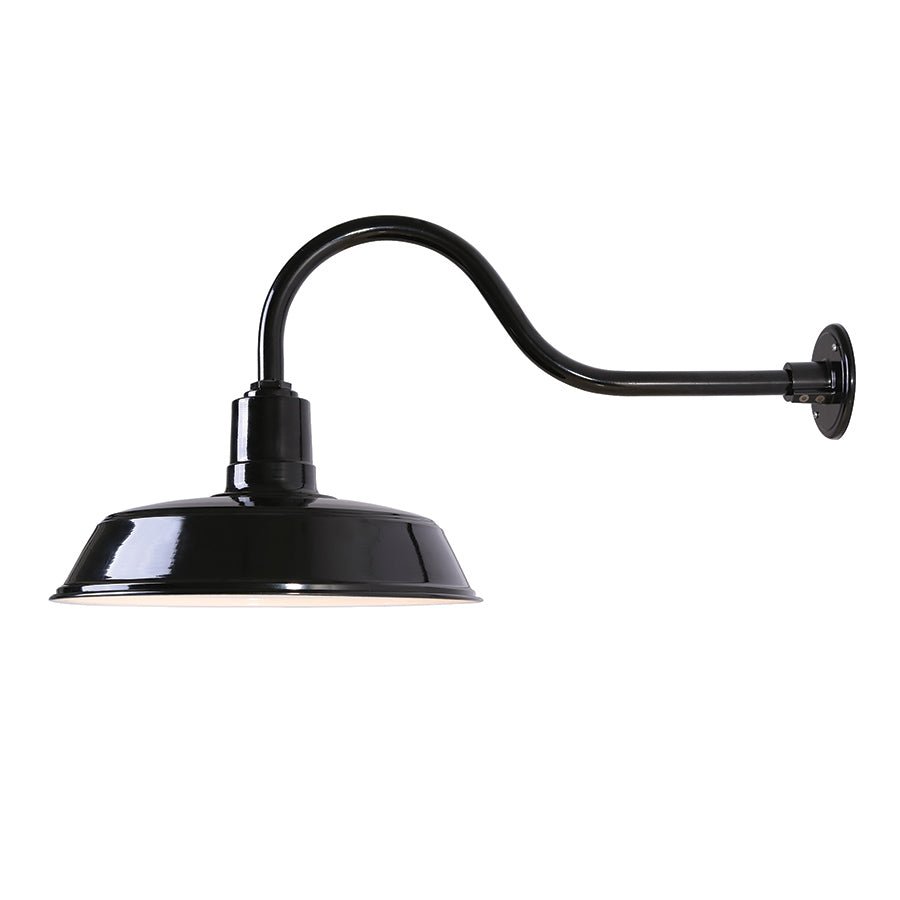
- Industrial: workshop-inspired silhouettes reimagined with current finishes and LED technology.
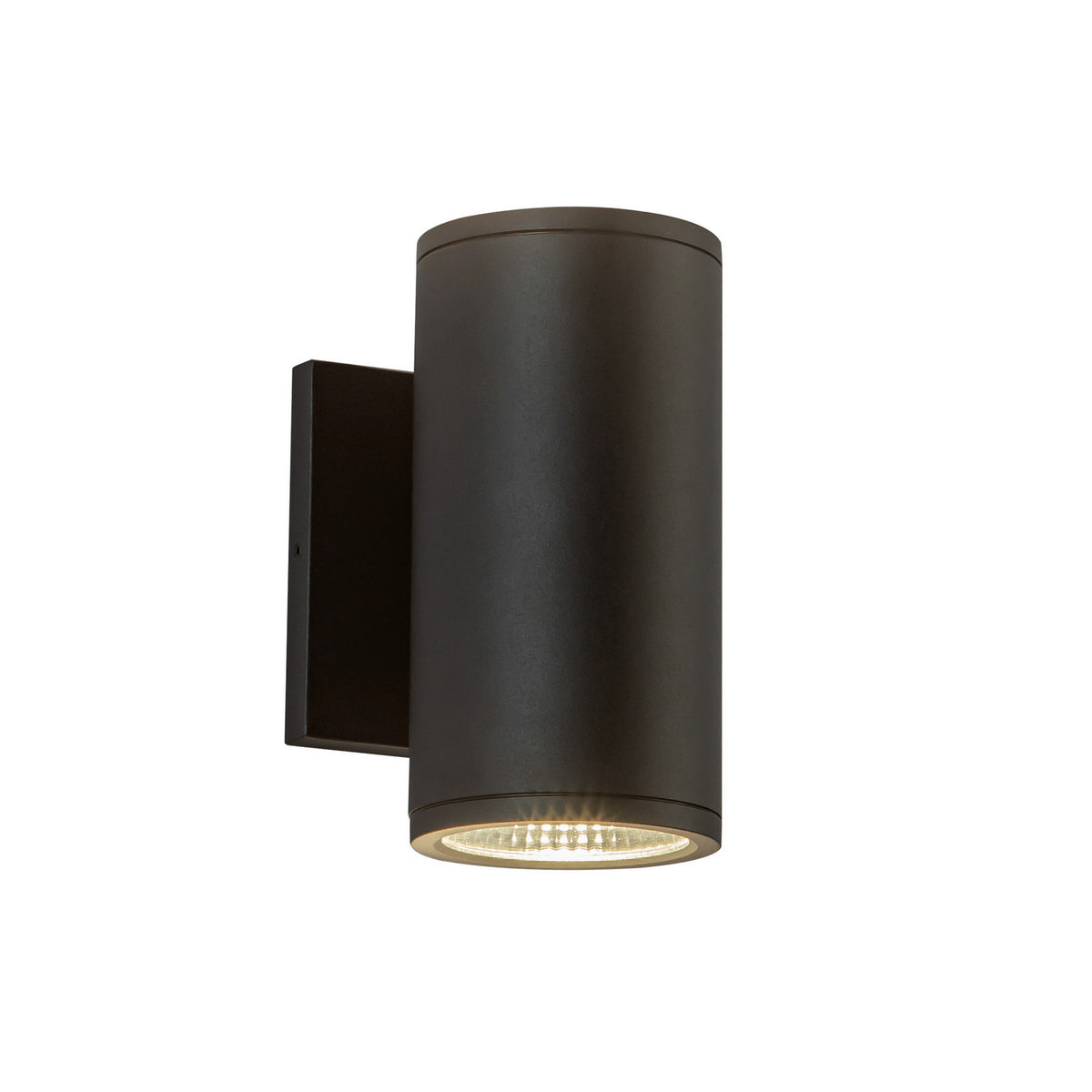
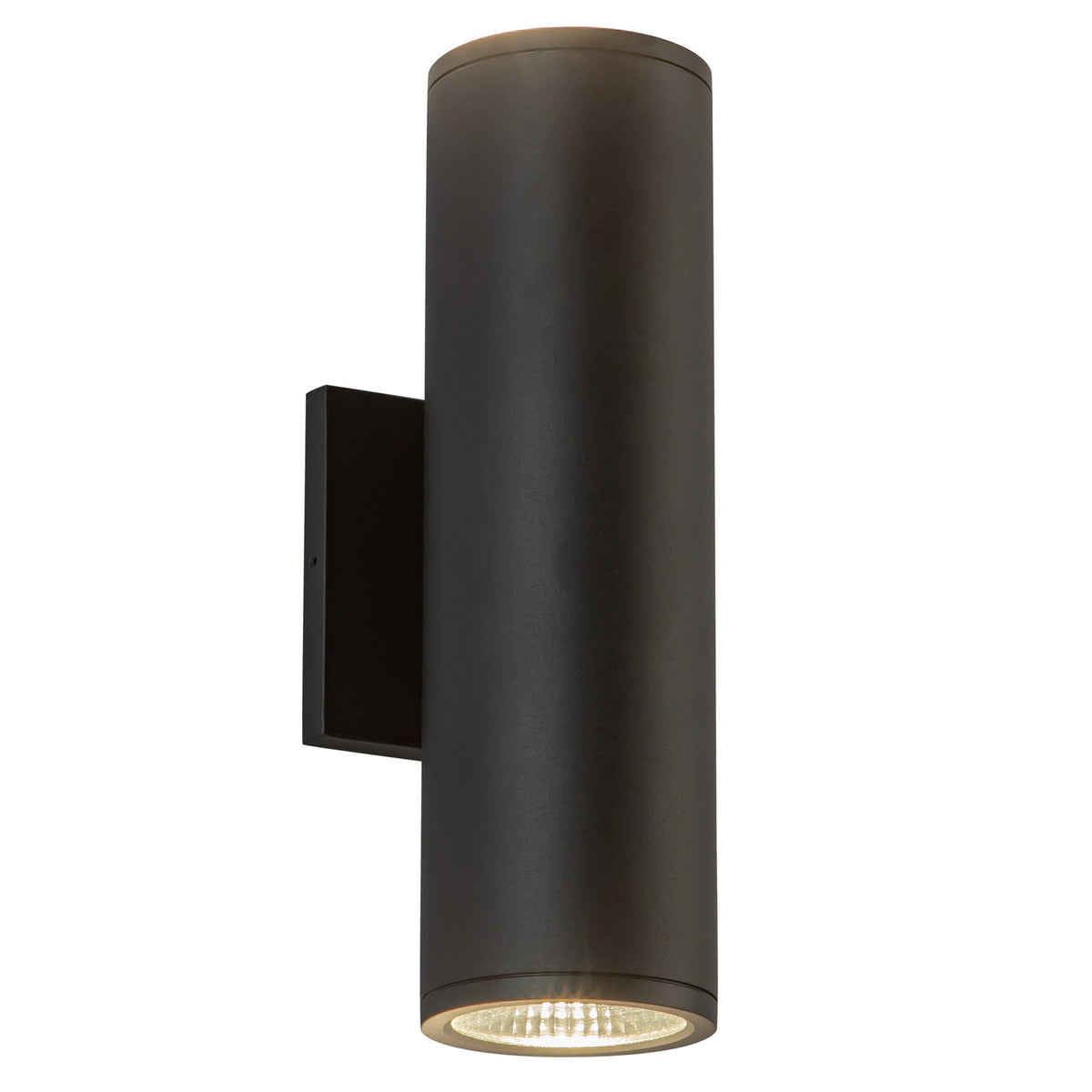
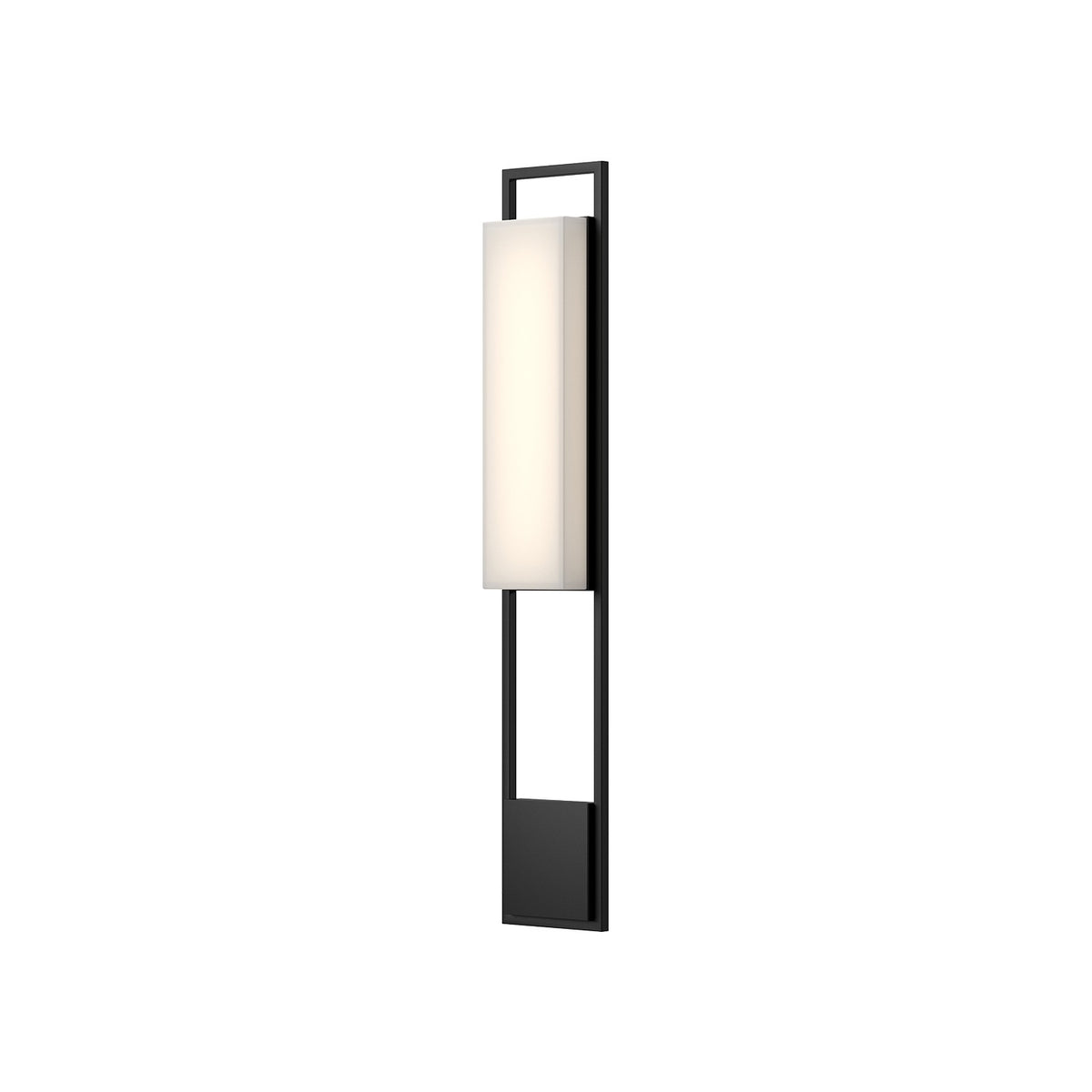
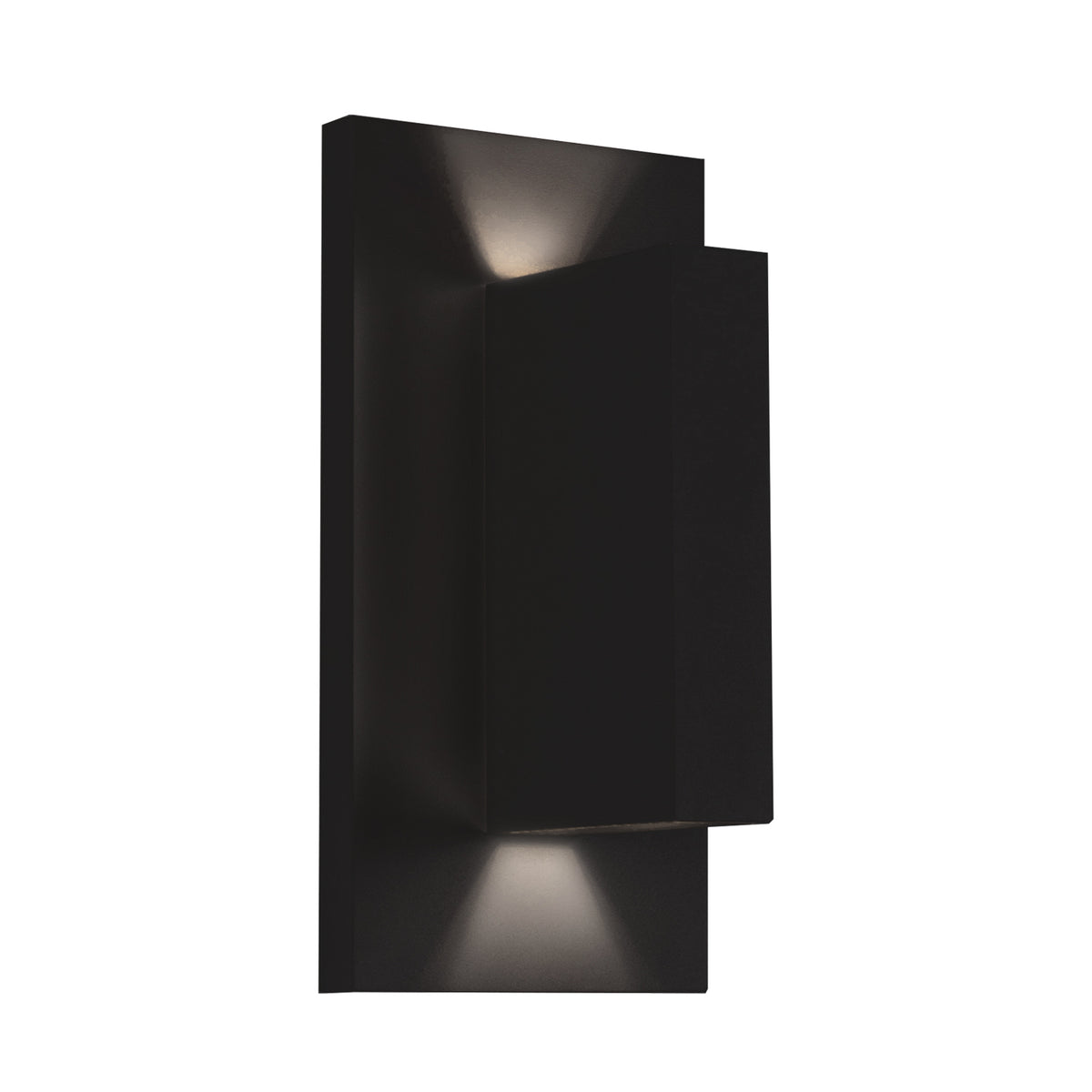
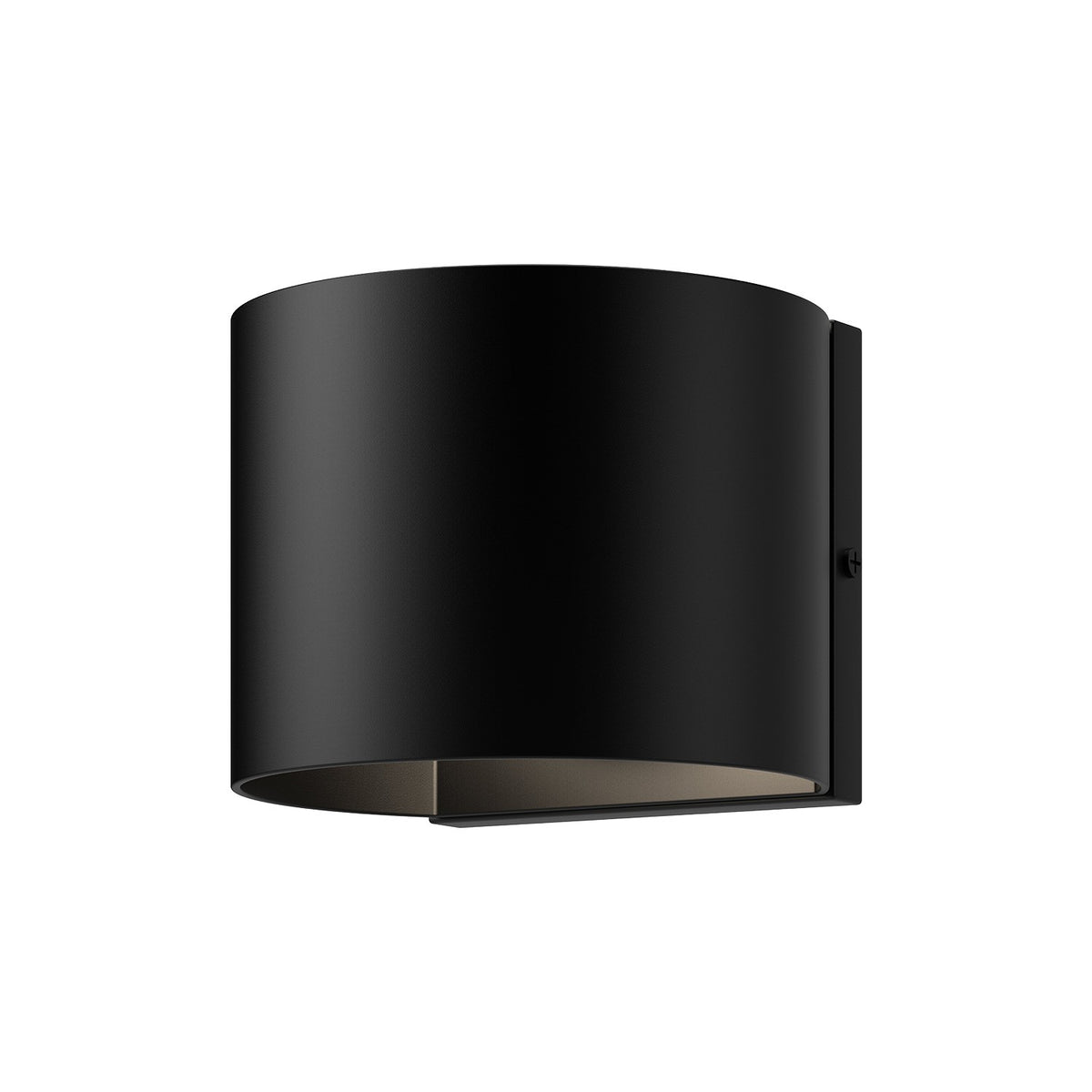
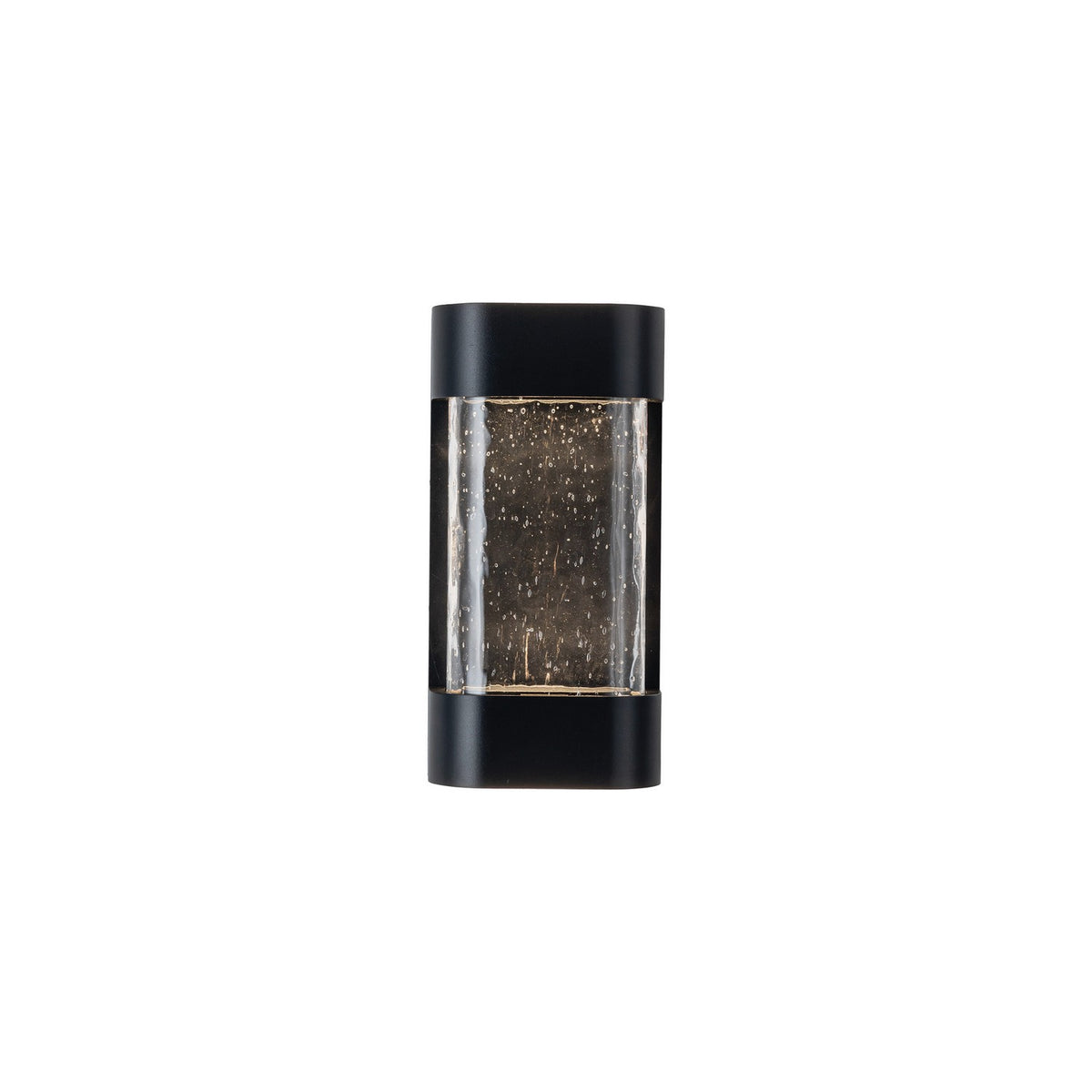
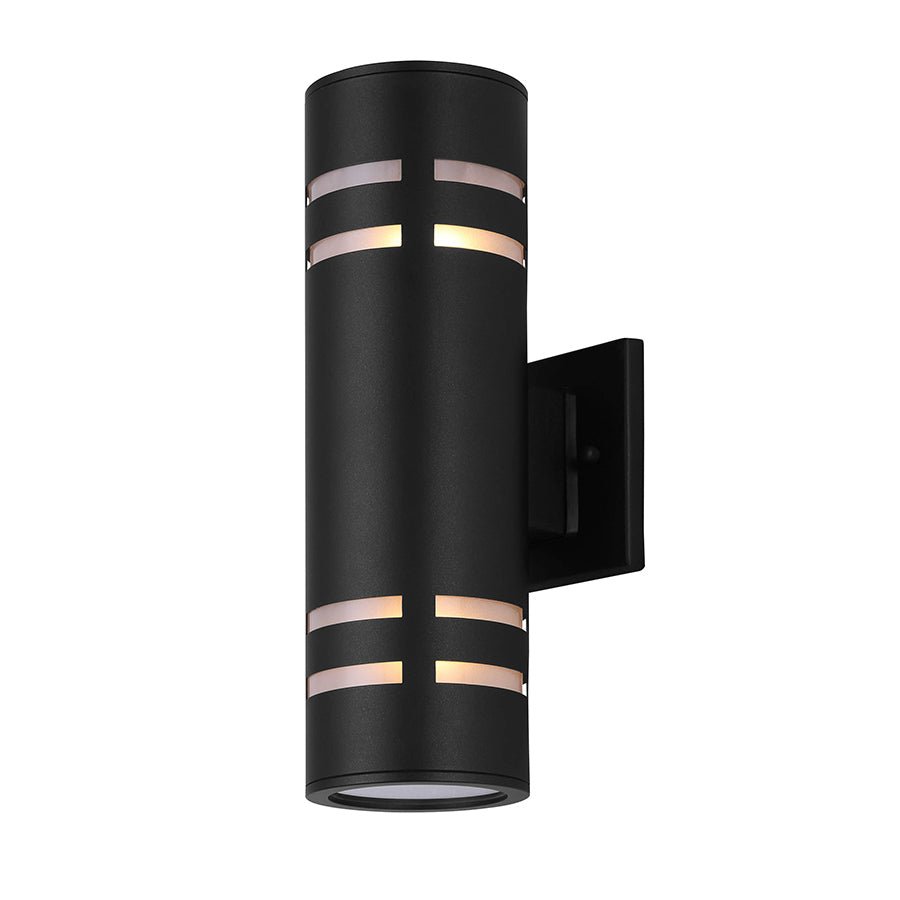
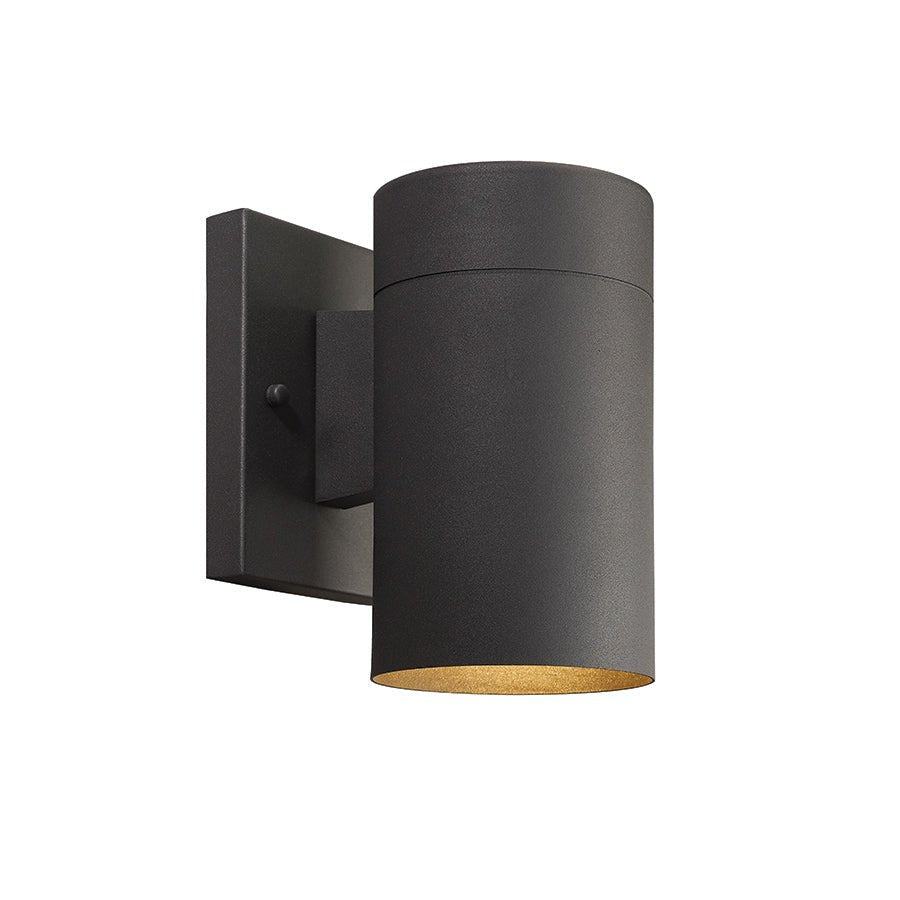
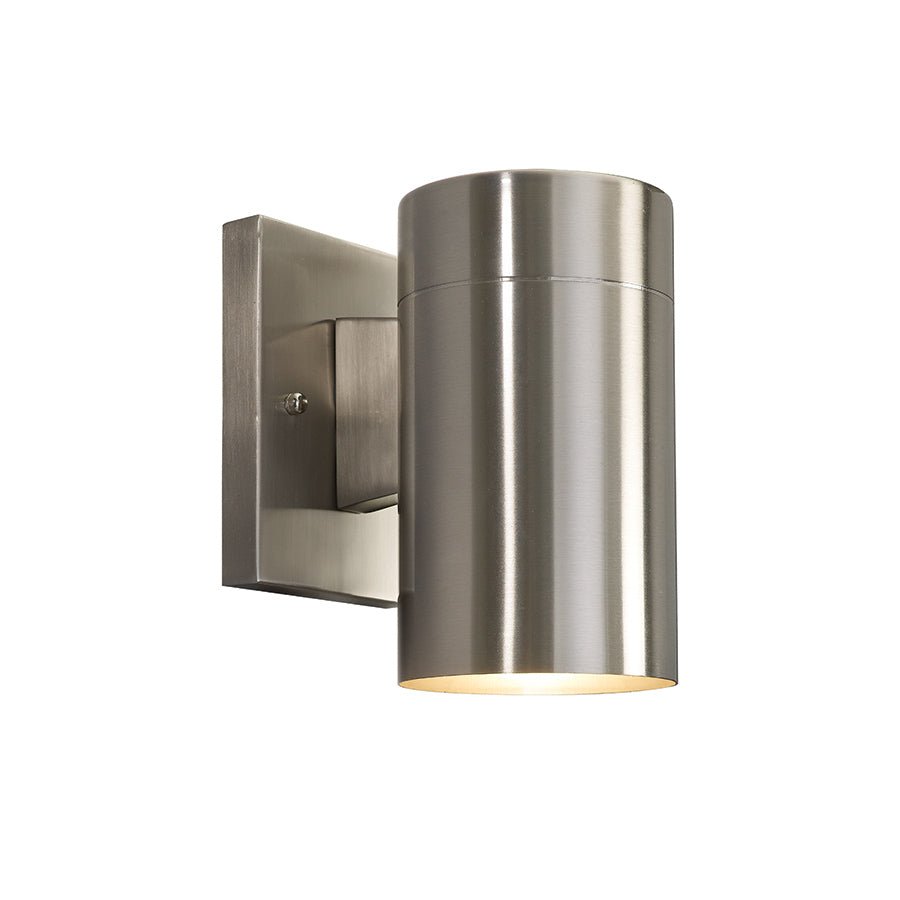
- Up/down and cylinder: sconces that cast a controlled beam along the wall for an architectural effect.
Size and proportion guide
- Small (6 to 14 in / 15 to 36 cm): narrow columns, spaces between windows, tight spots.
- Medium (15 to 21 in / 38 to 53 cm): the most versatile range, for standard entries, garages and patio walls.
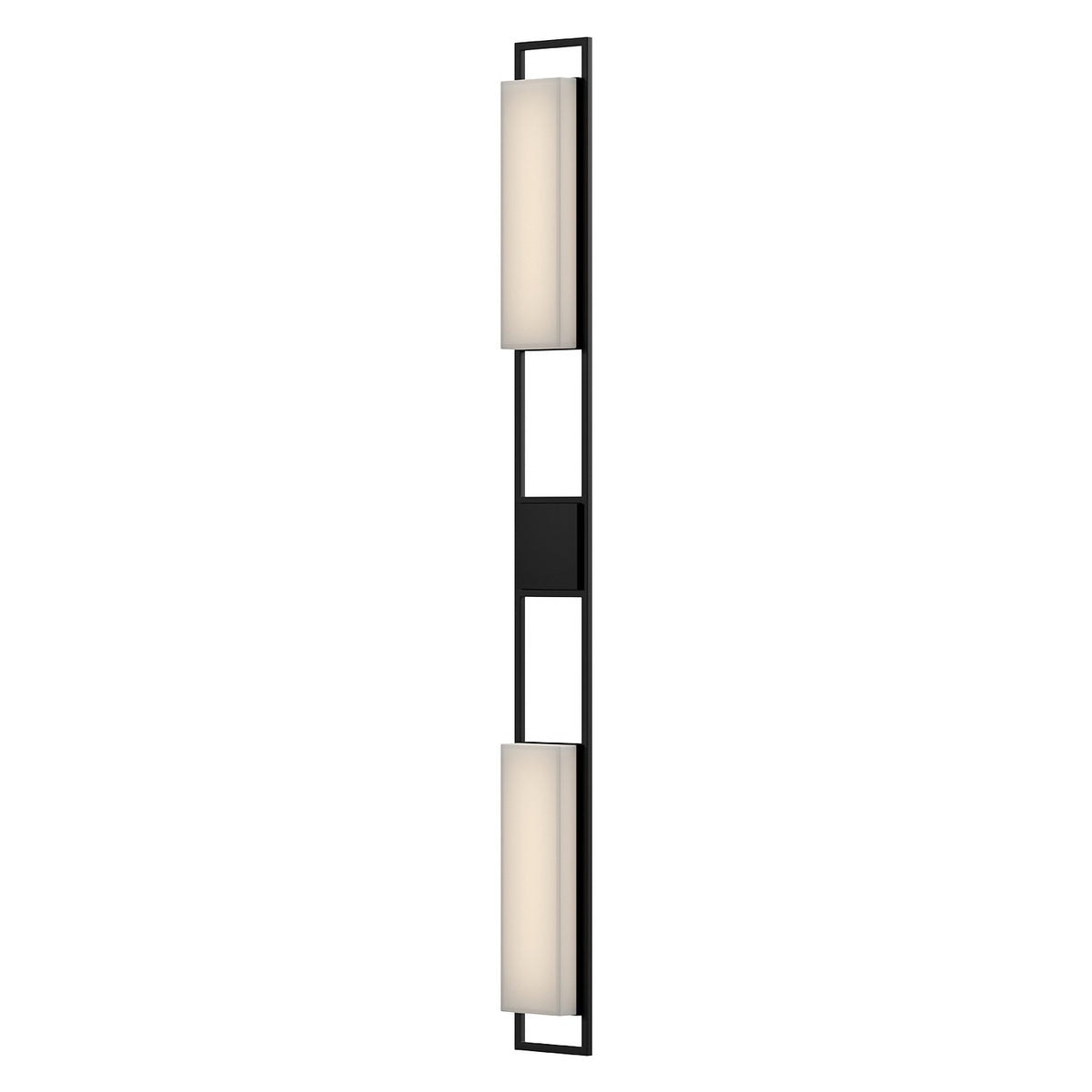
- Large (22 to 30 in / 56 to 76 cm): a confident statement on tall facades and grand porticos.
- Extra large (30 in / 76 cm and up): reserved for large-scale entries.
Simple rule: aim for a fixture that measures one-quarter to one-third the height of the door or wall section it flanks.
Installation and ratings
The recommended mounting height for an entry fixture is 66 to 72 in (168 to 183 cm) above the finished floor. Space fixtures 8 to 10 ft (2.4 to 3 m) for even coverage, and keep flanking sconces 6 to 12 in (15 to 30 cm) from the door frame. Always check the rating: a wet-rated fixture suits spots directly exposed to rain, while a damp rating is enough under a covered porch. For an outdoor ceiling light under an eave, the same logic applies. Most hardwired outdoor wall lights require an outdoor-rated junction box.
LED technology and smart features
Integrated LED fixtures house the light source within the body, with no bulb to replace, lifespans often over 50,000 hours and lower energy use. Some models take a standard bulb if you prefer that route. Motion sensors provide on-demand light for security, and many models connect over Wi-Fi or Bluetooth for scheduling and automation. Look for a CRI of 90 or above for true color rendering.