



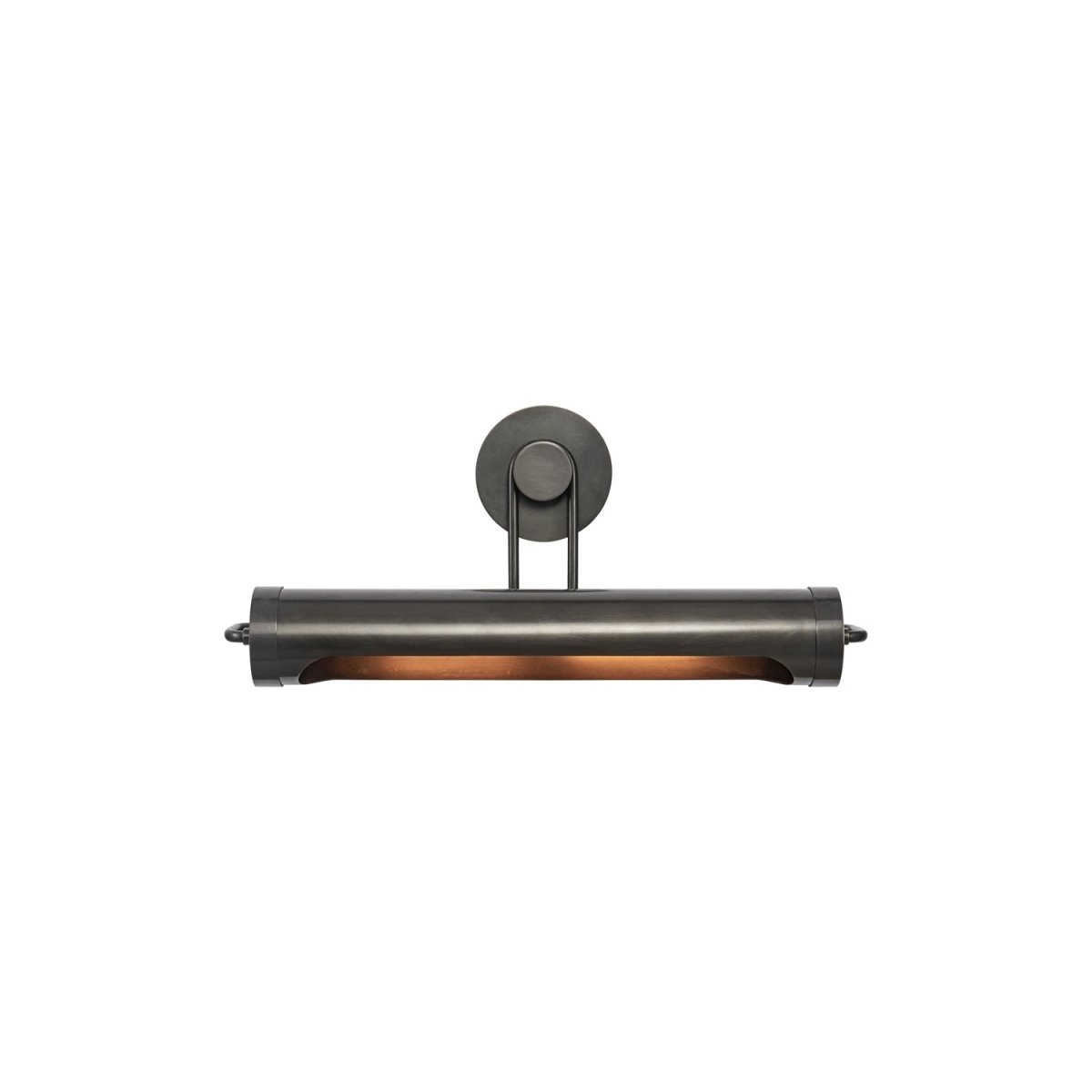
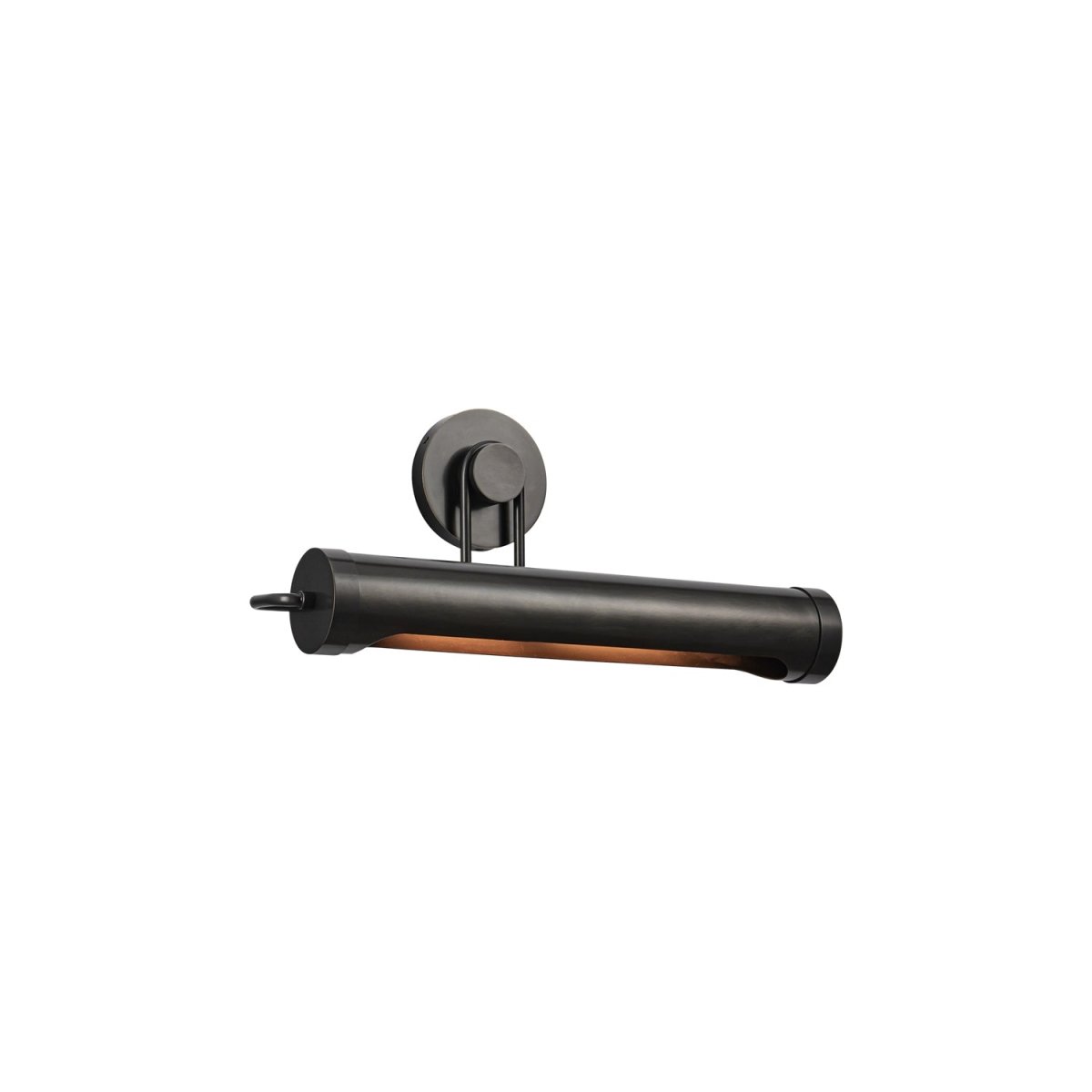
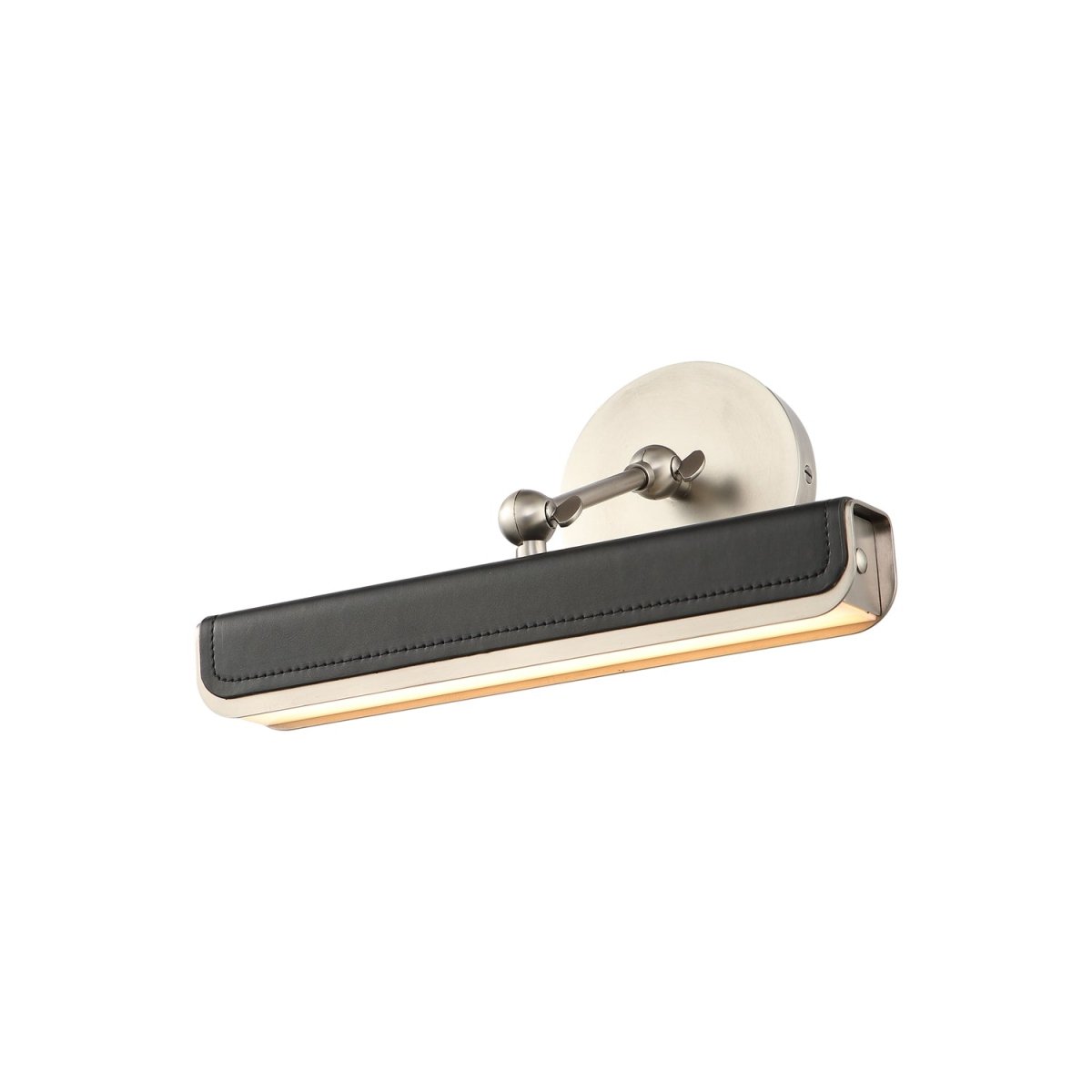


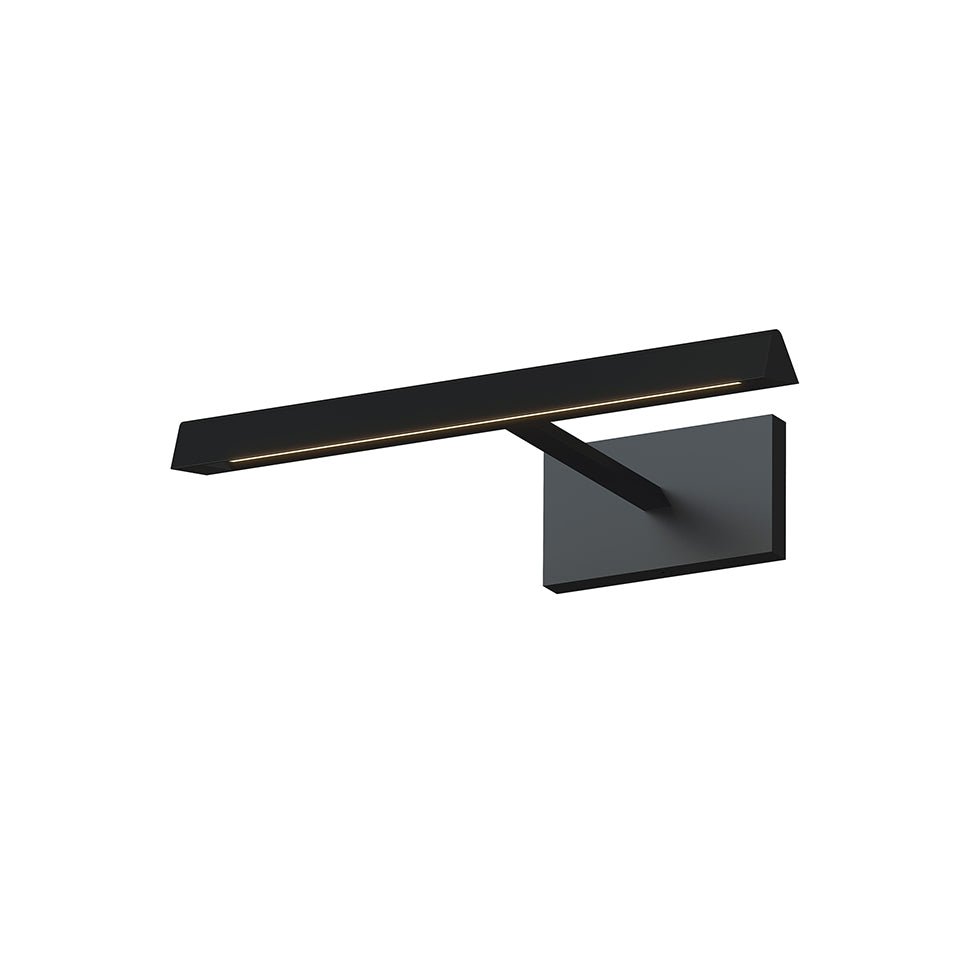



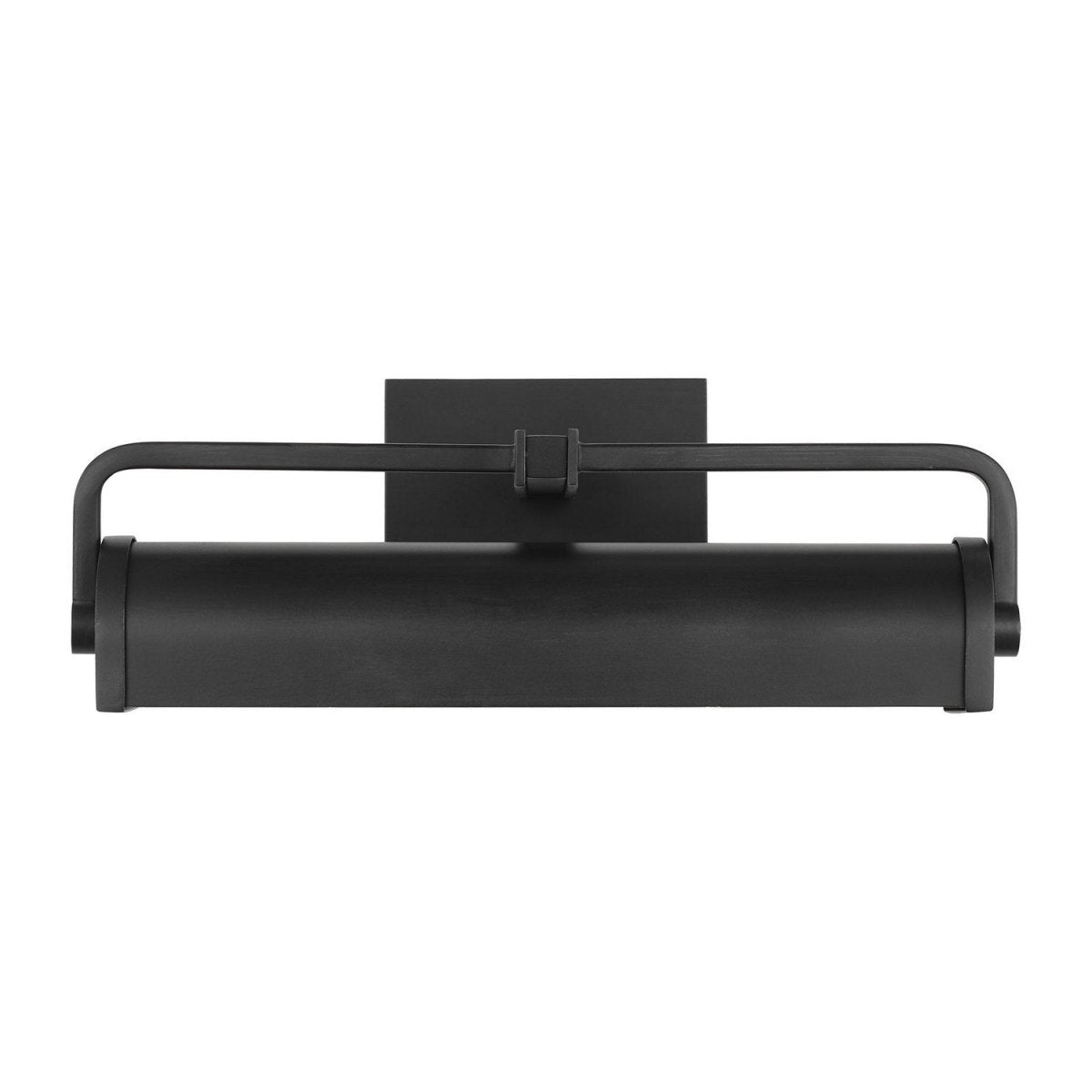
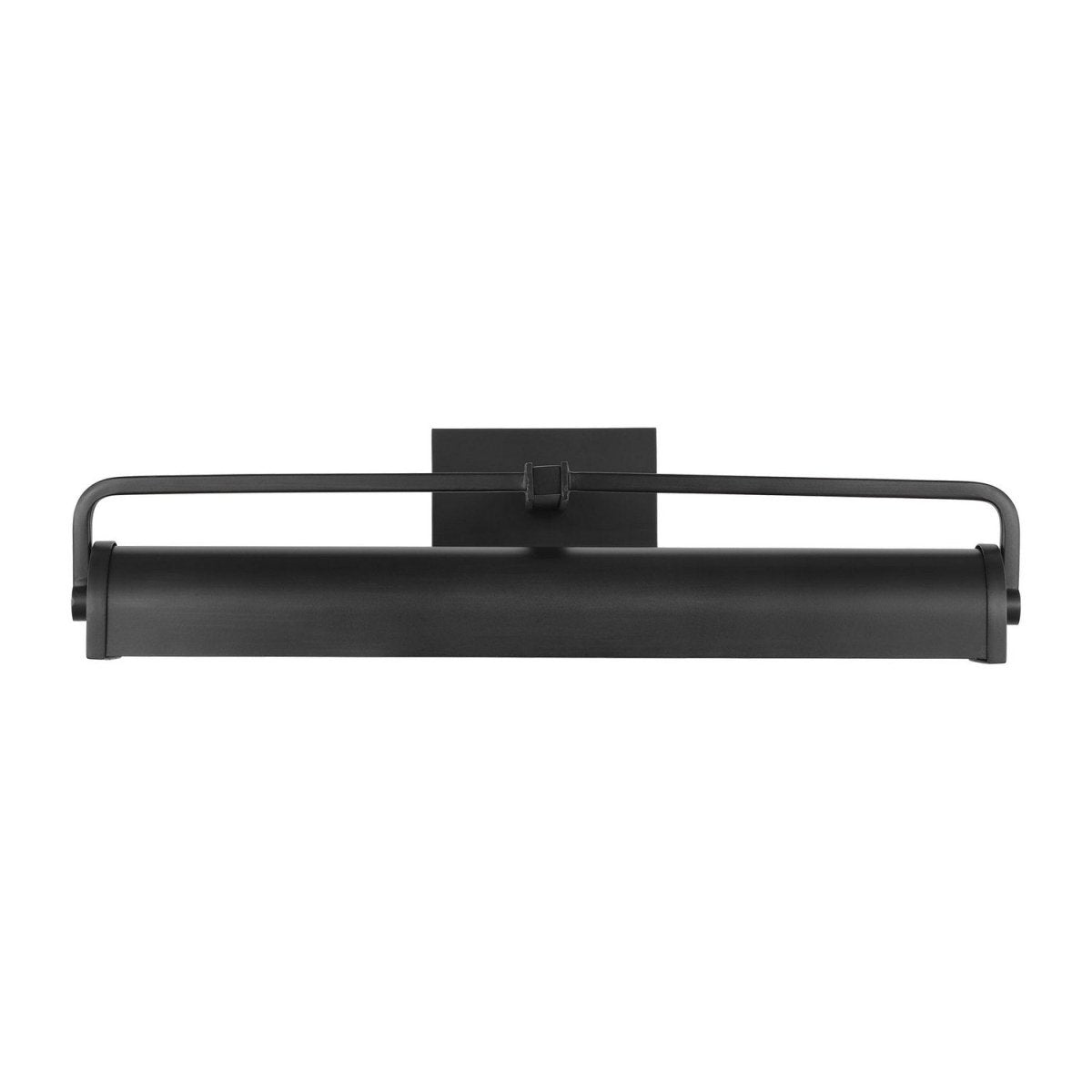
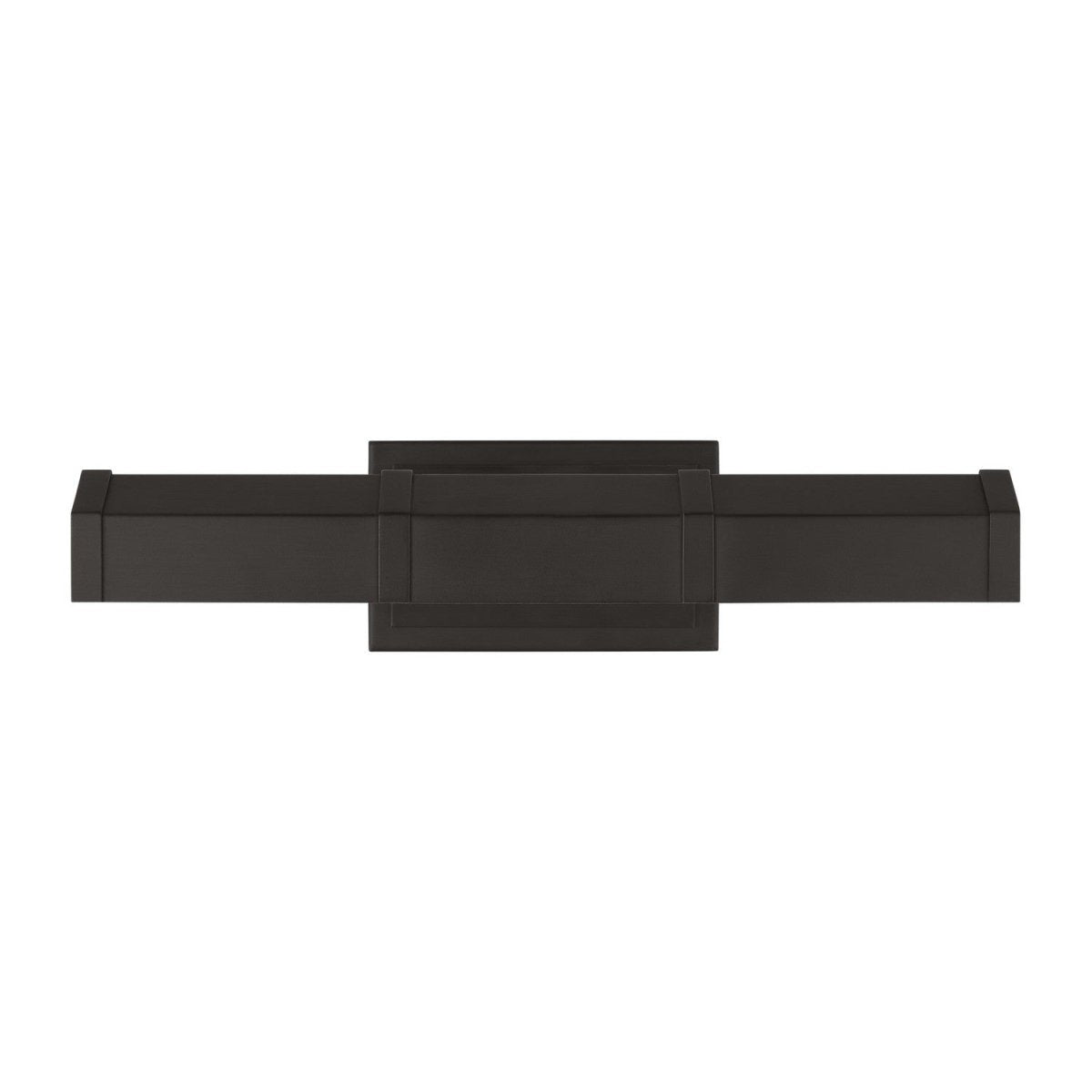
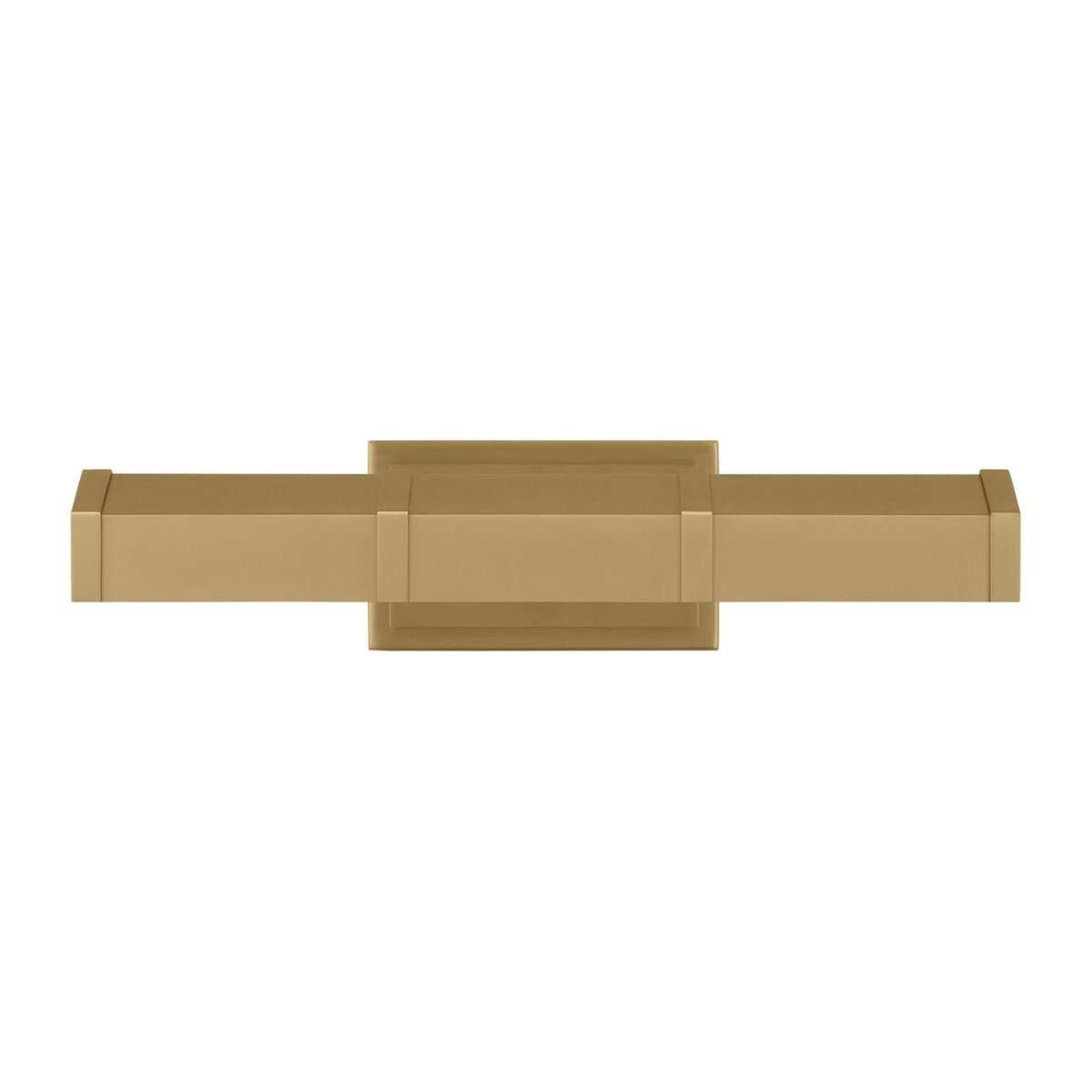


What a picture light is for
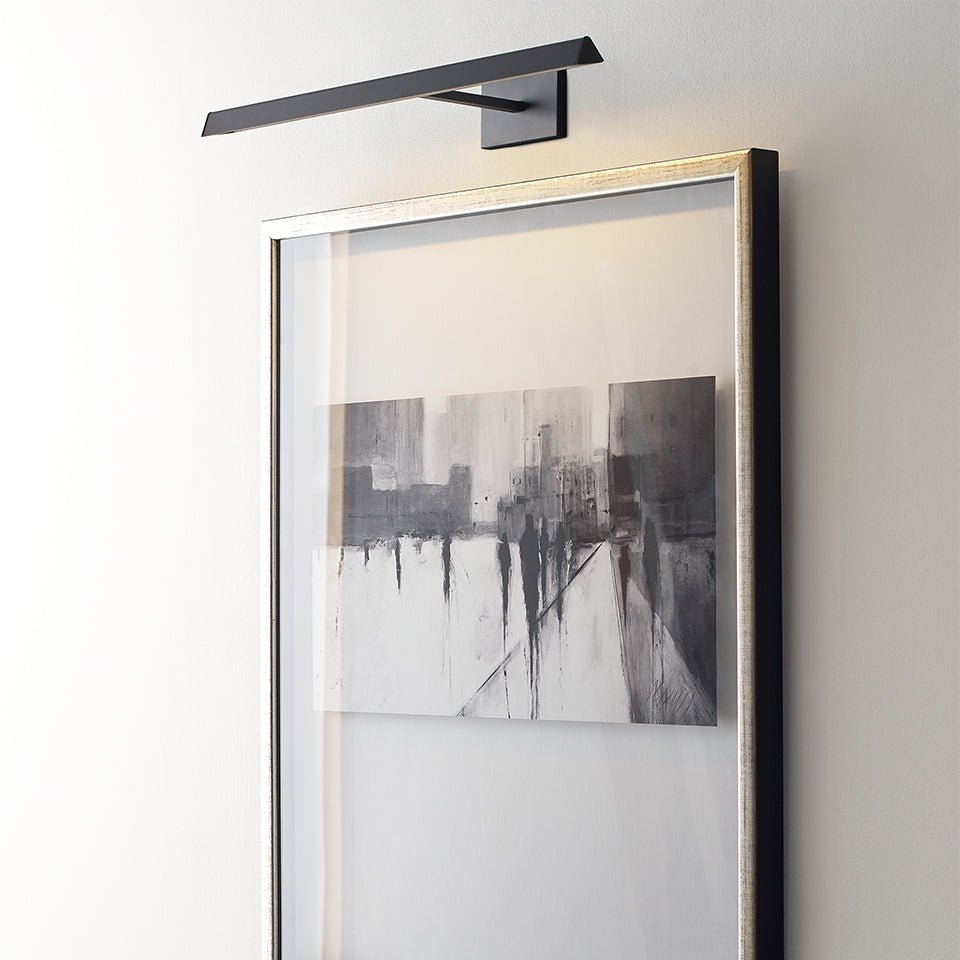
A picture light is a directional fixture mounted above (or sometimes beside) a piece to cast controlled light onto it. Unlike ambient lighting that sets a room's mood, or task lighting that serves a job, display lighting lives in the realm of accent: it builds visual hierarchy and draws the eye. Well positioned, a picture light reveals the texture of an impasto surface, makes a watercolour glow from within, and gives a three-dimensional object real depth.
A picture light for every space
Canvases and framed artwork
For a living room, a hallway or a private collection, a single picture light above a framed work creates a focused pool that separates it from its surroundings. On a textured oil painting, a slightly angled beam brings out the grain of the surface. Look for an adjustable head to fine-tune the angle to the size and reflectivity of the piece.
Shelving and display cabinets
To light a collection of ceramics, sculpture or personal objects, a low-heat fixture can sit close without risk. LED display lights are ideal here, and a wider beam washes an entire shelf evenly rather than creating isolated hot spots.
Gallery walls
When several pieces share a wall, consistent illumination unifies the arrangement and keeps any single frame from receding. Longer fixtures — 24 in (61 cm) and up — or a series of matched picture lights spaced evenly deliver uniform coverage. Keeping the same colour temperature across every fixture is essential for the wall to read as one composition.
Architectural details
Picture and display lights aren't limited to framed art. Well placed, one can highlight a niche, graze light across a stone or plaster wall to reveal texture, or warm up a mantel display. In these uses, the fixture itself becomes part of the room's architecture.
Finishes and materials
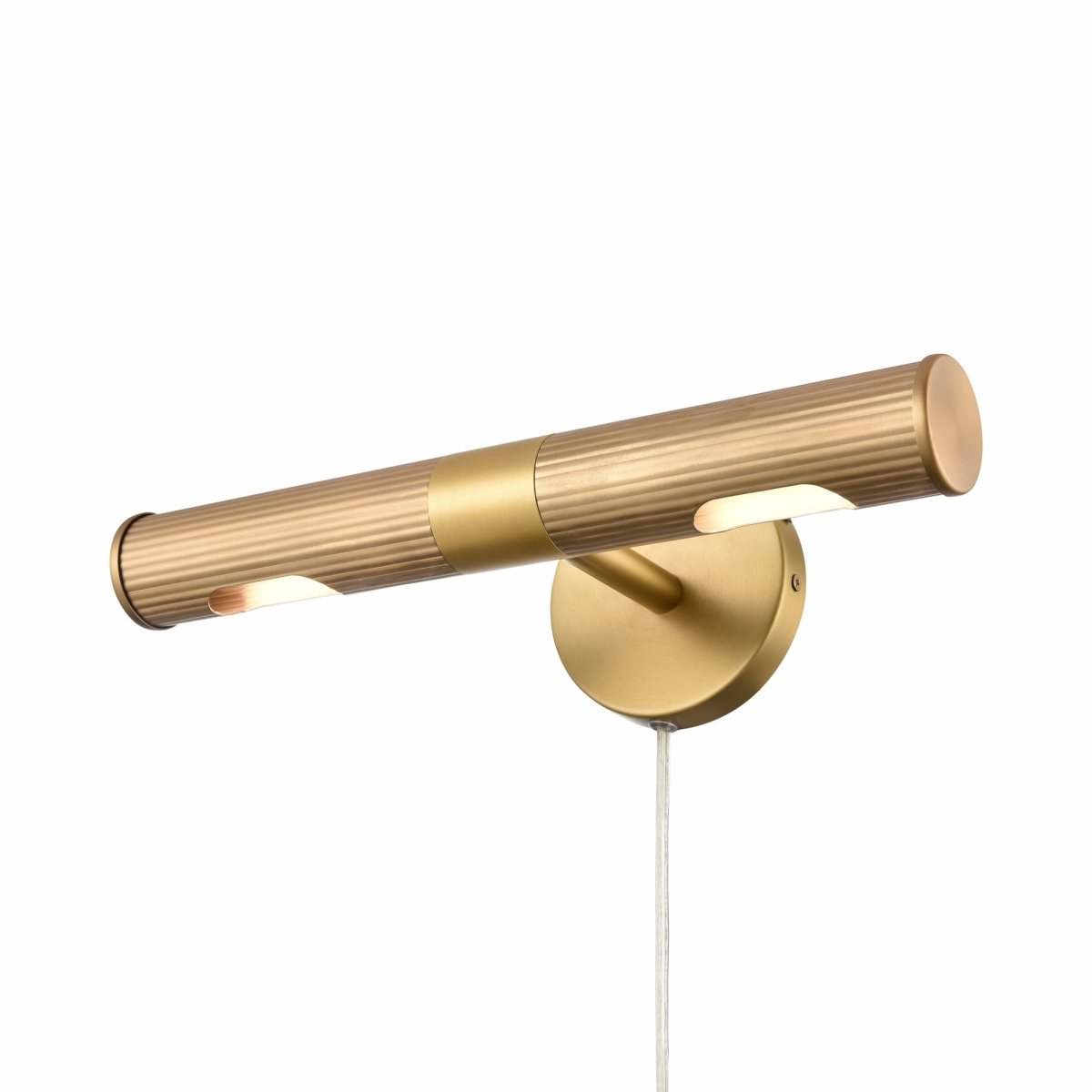
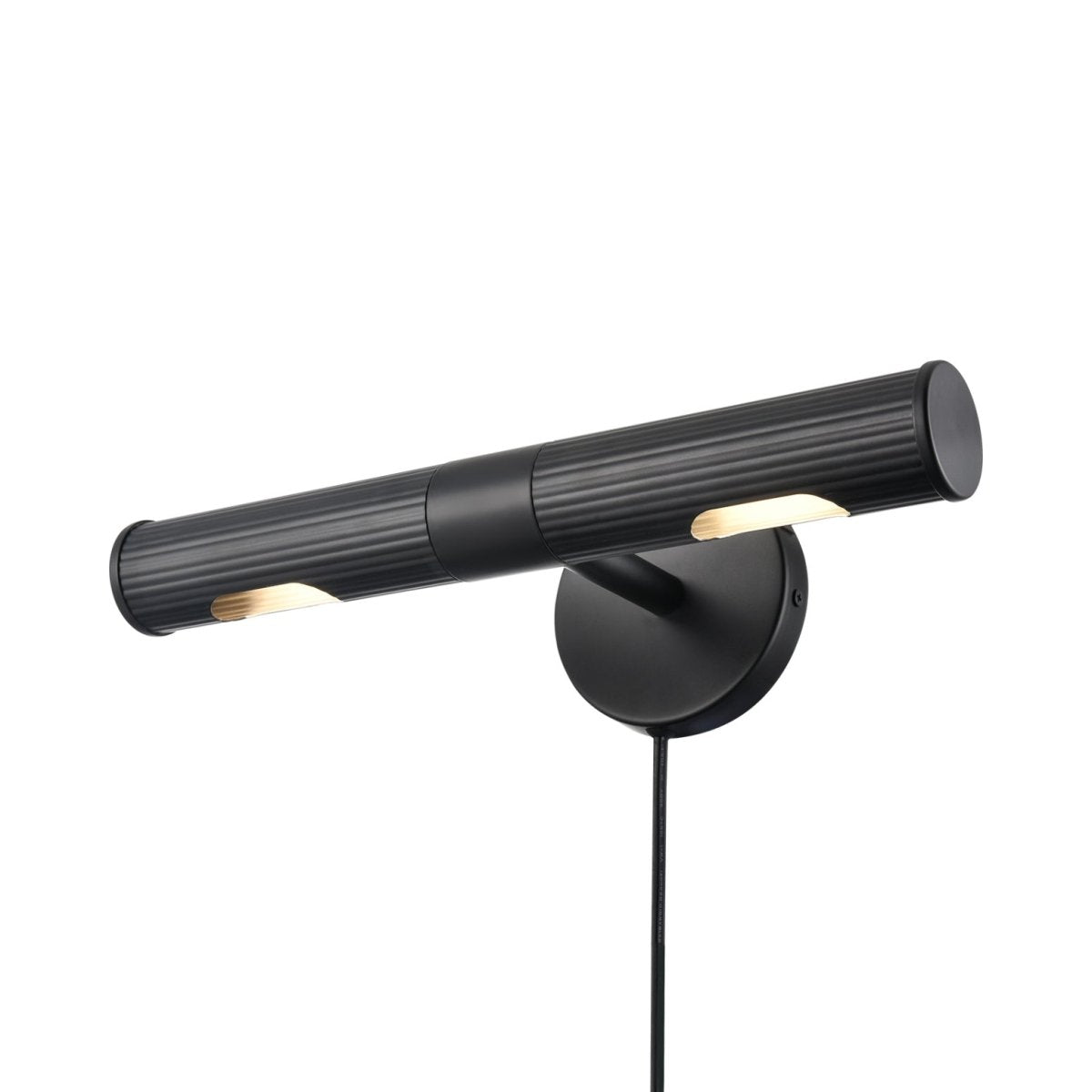
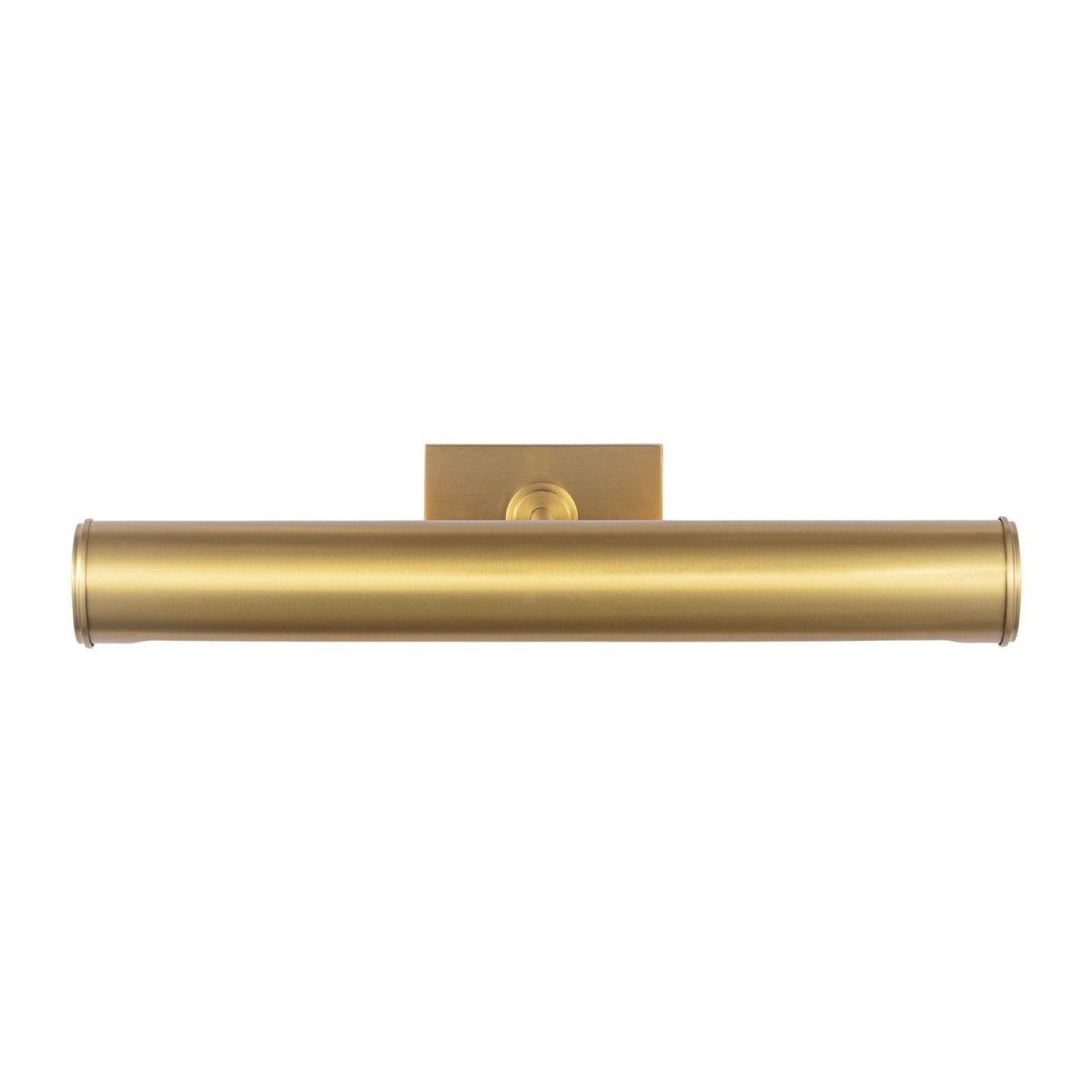
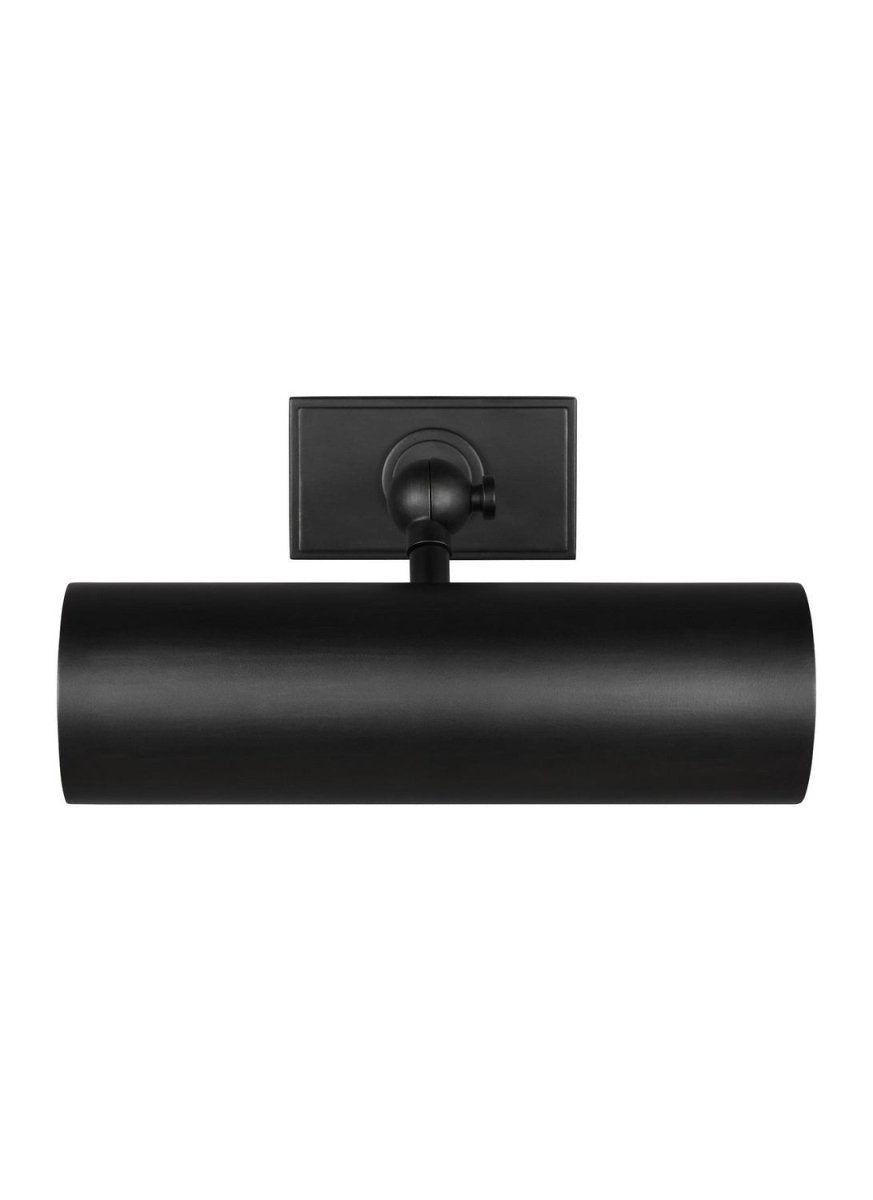
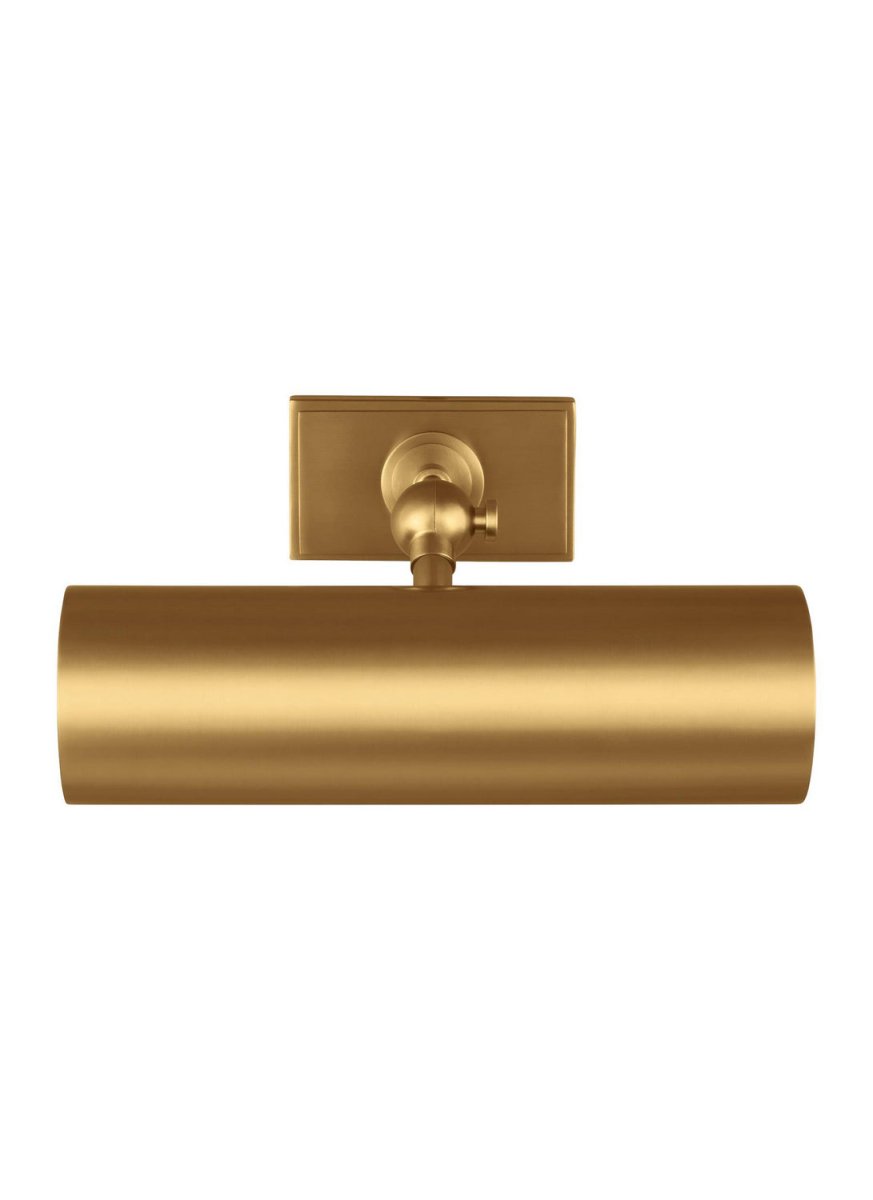
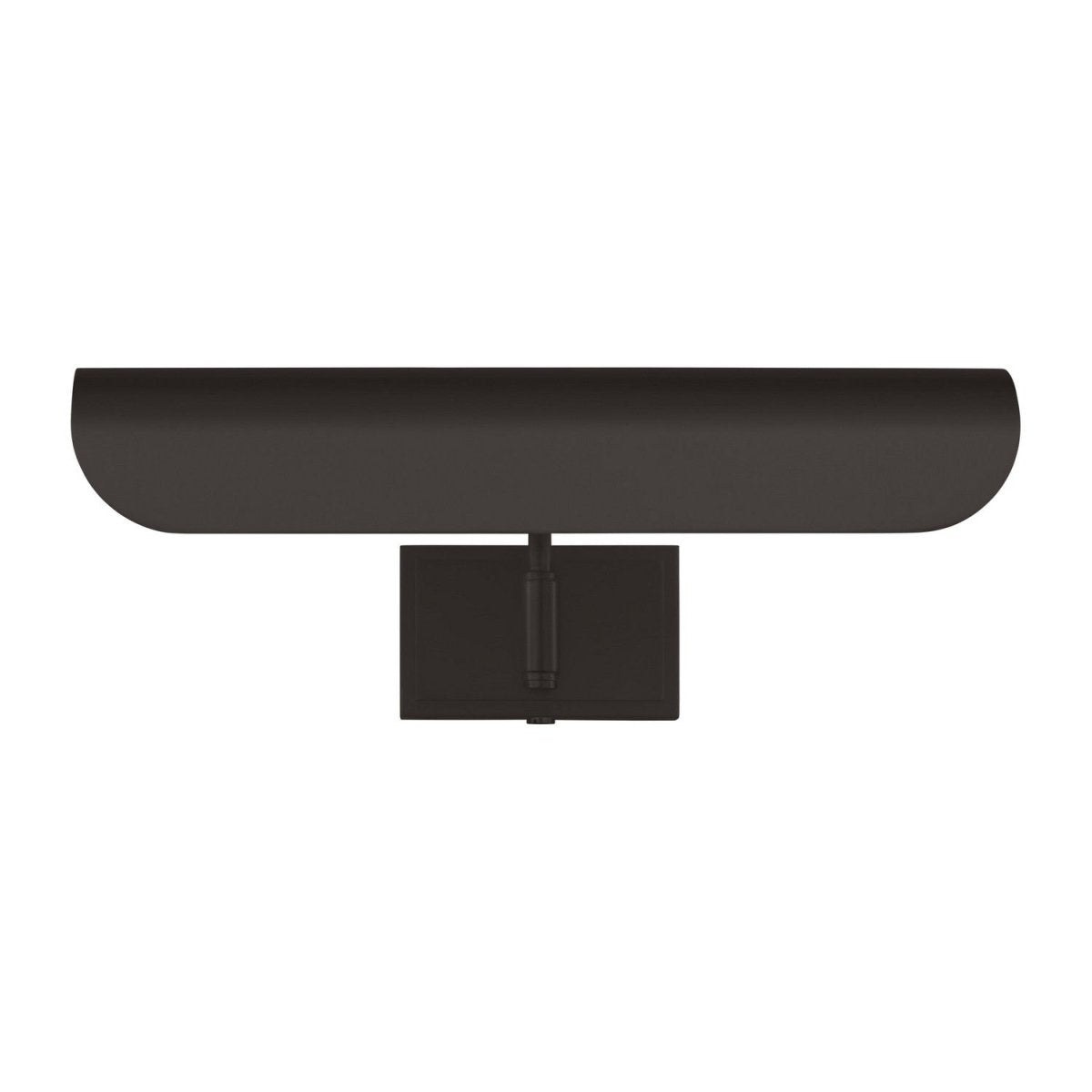
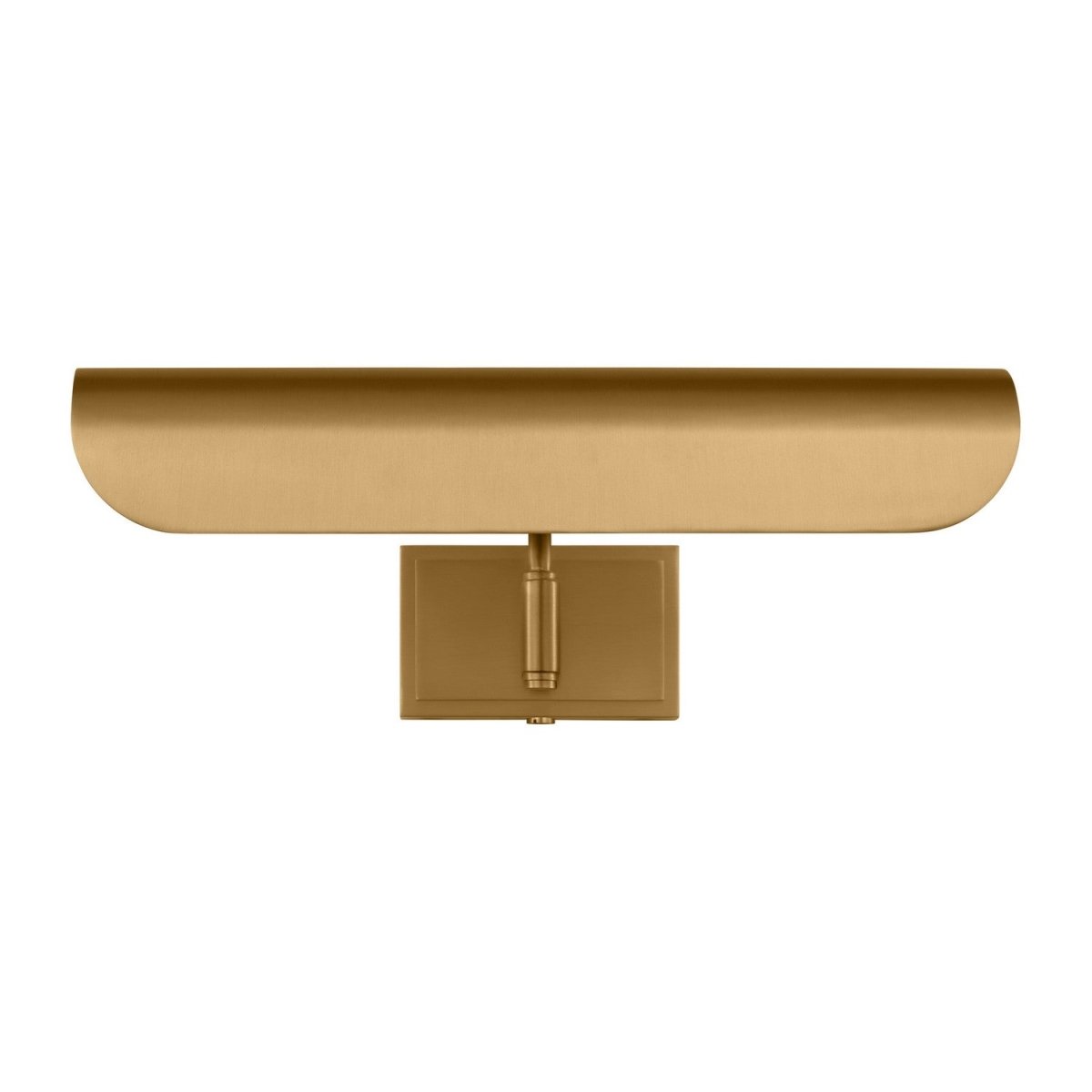
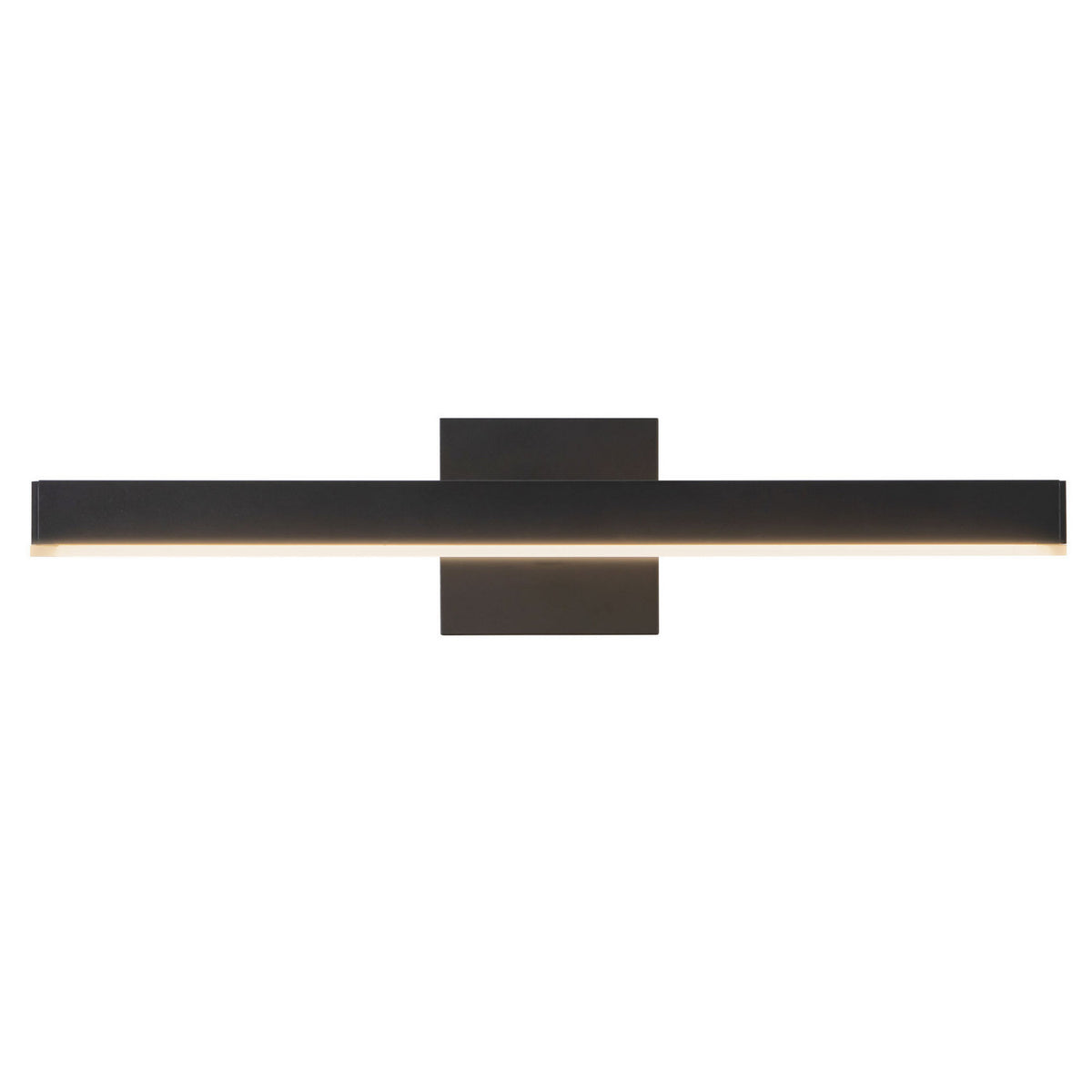
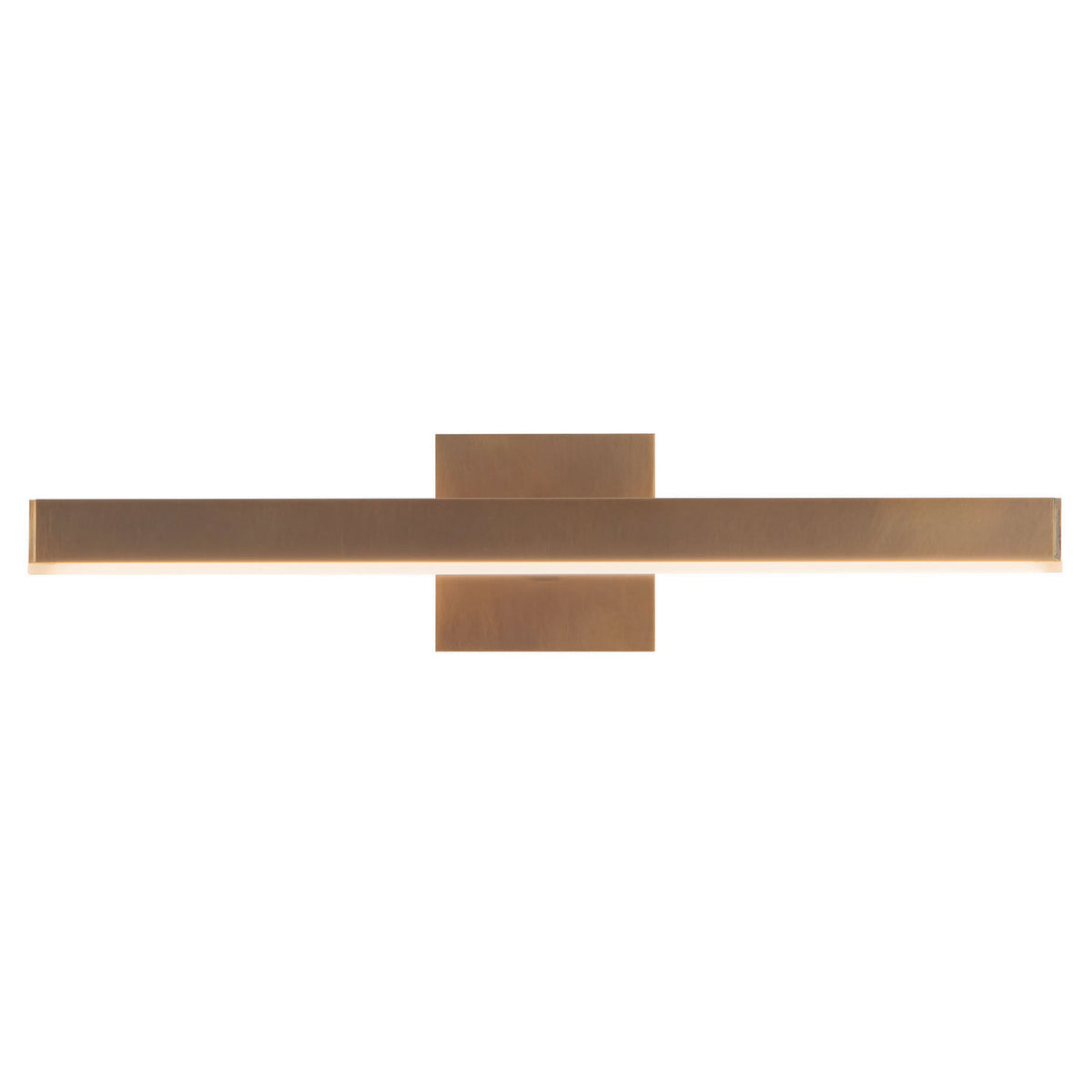
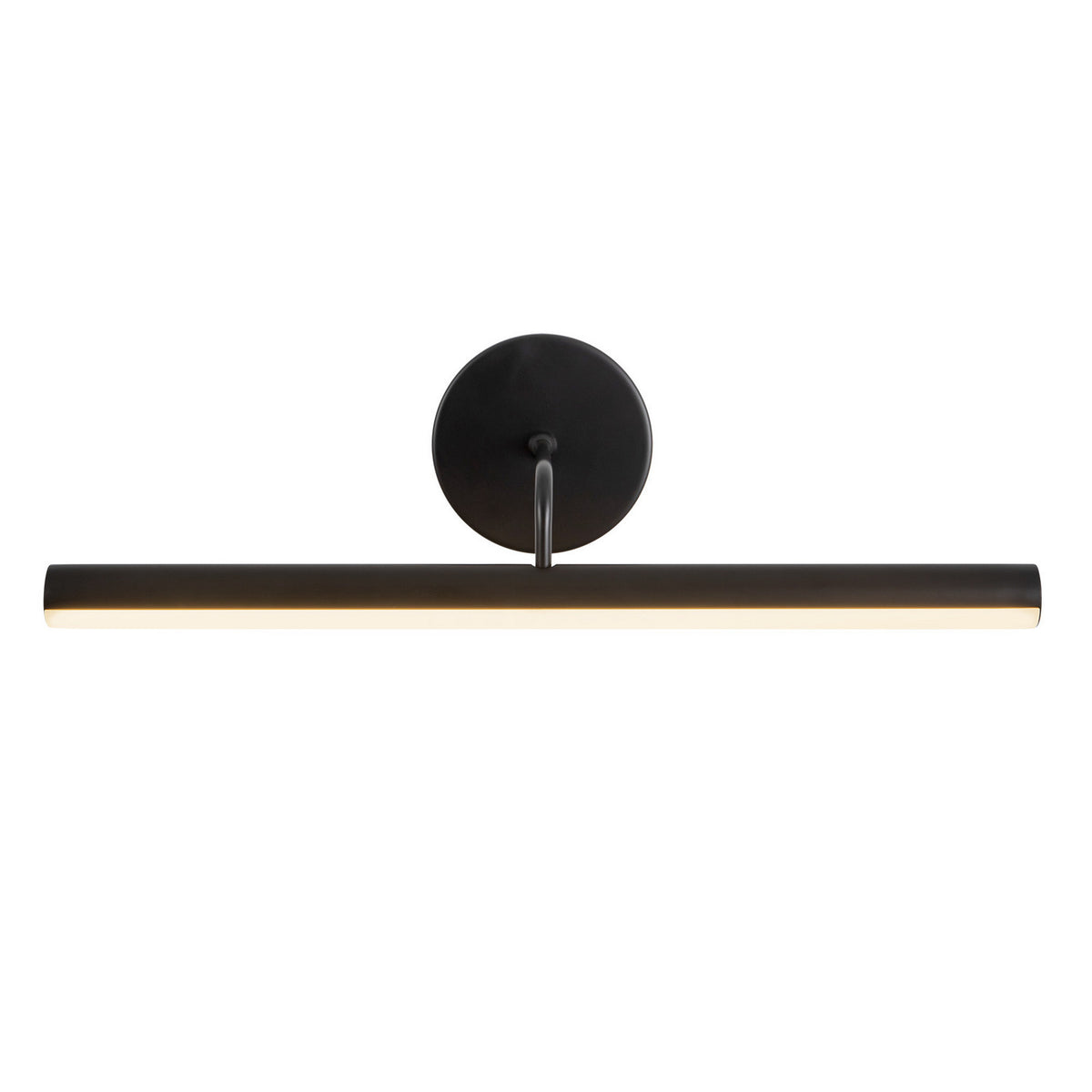
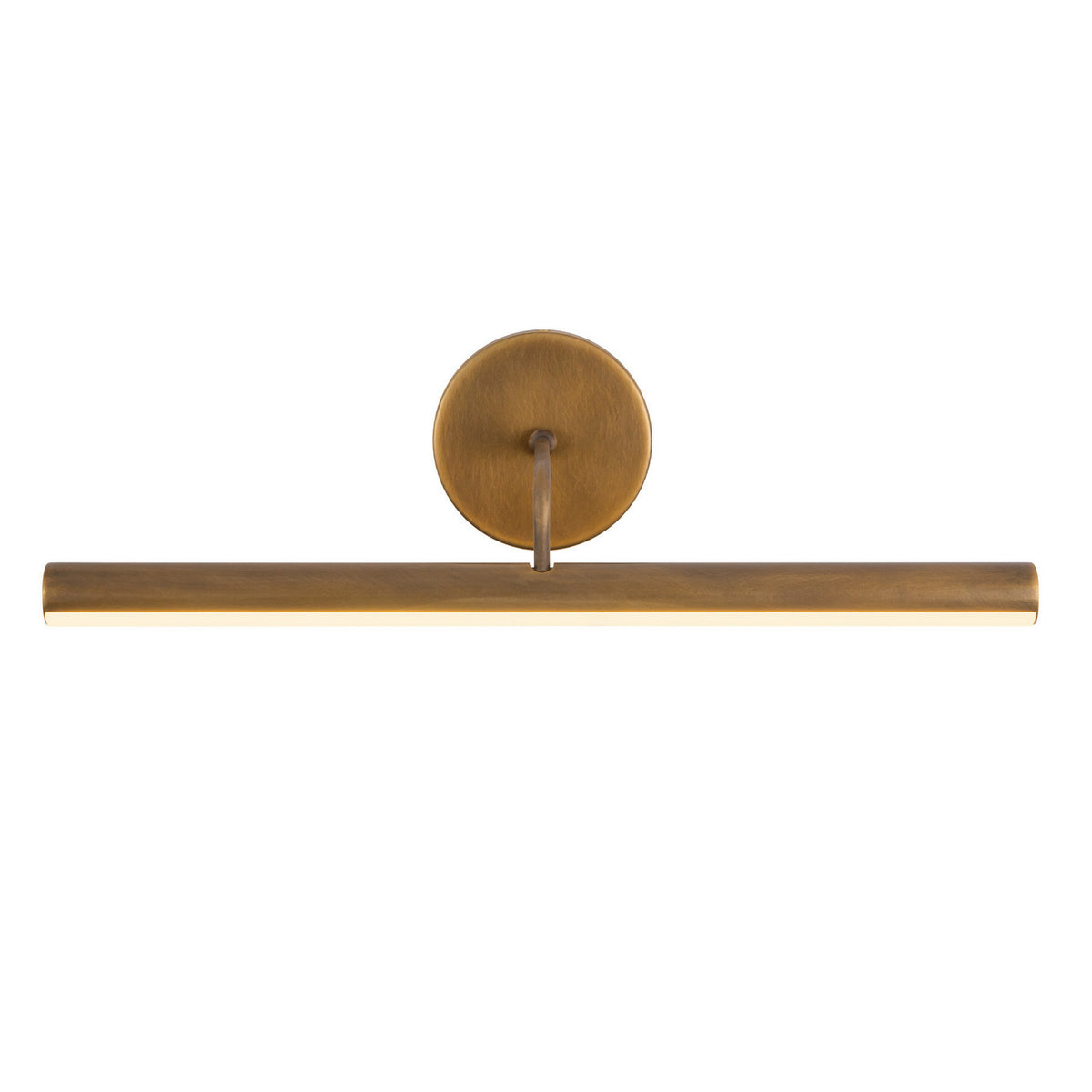
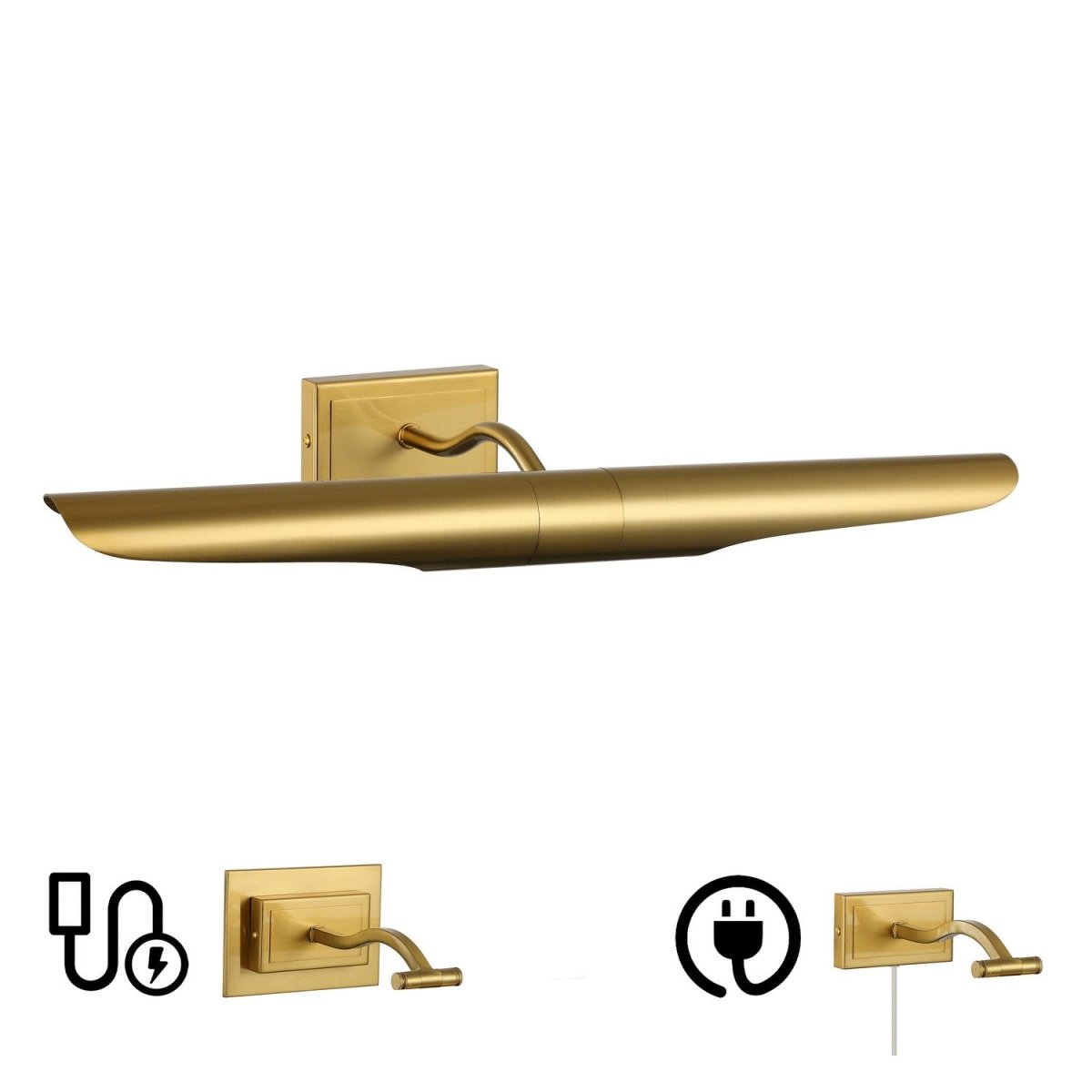
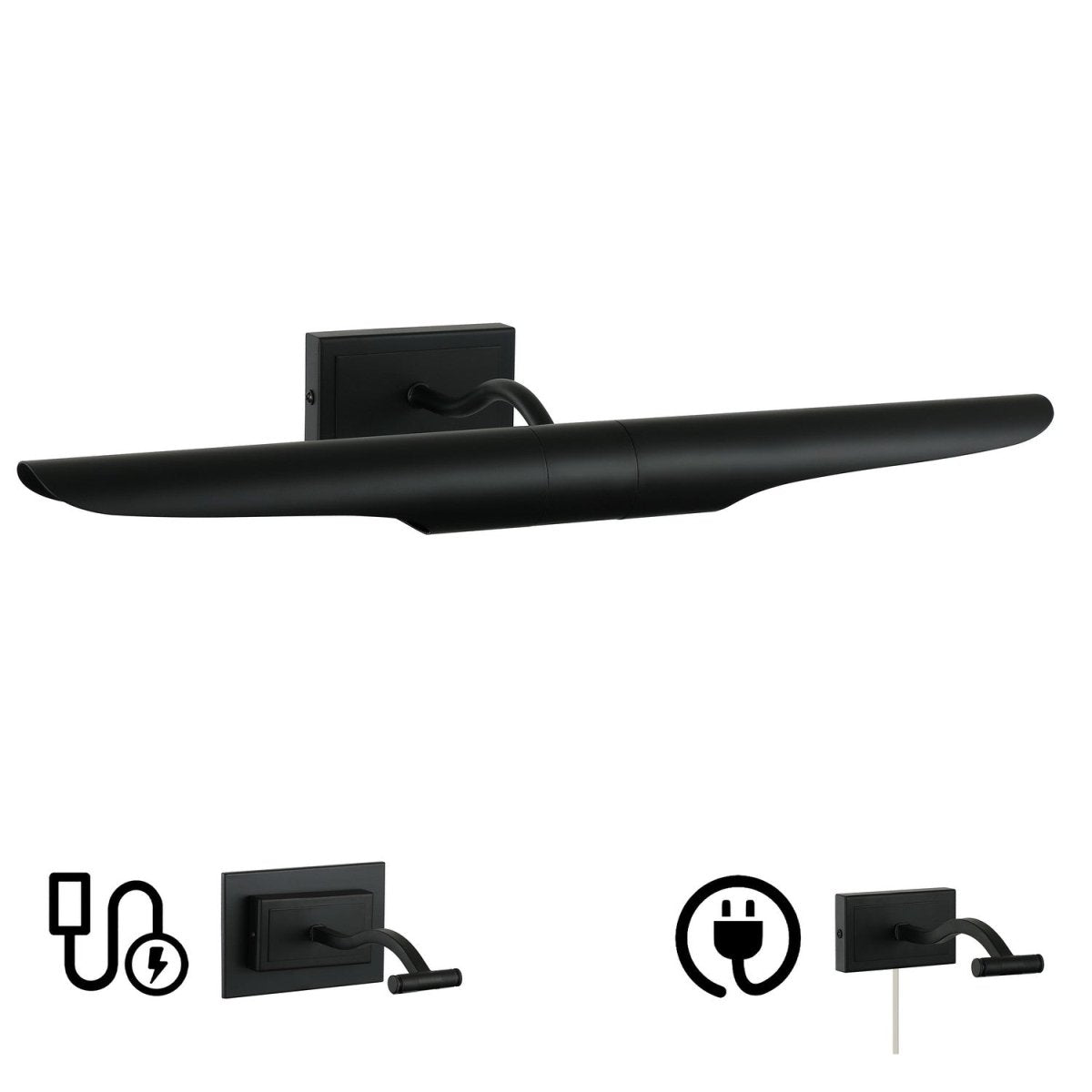
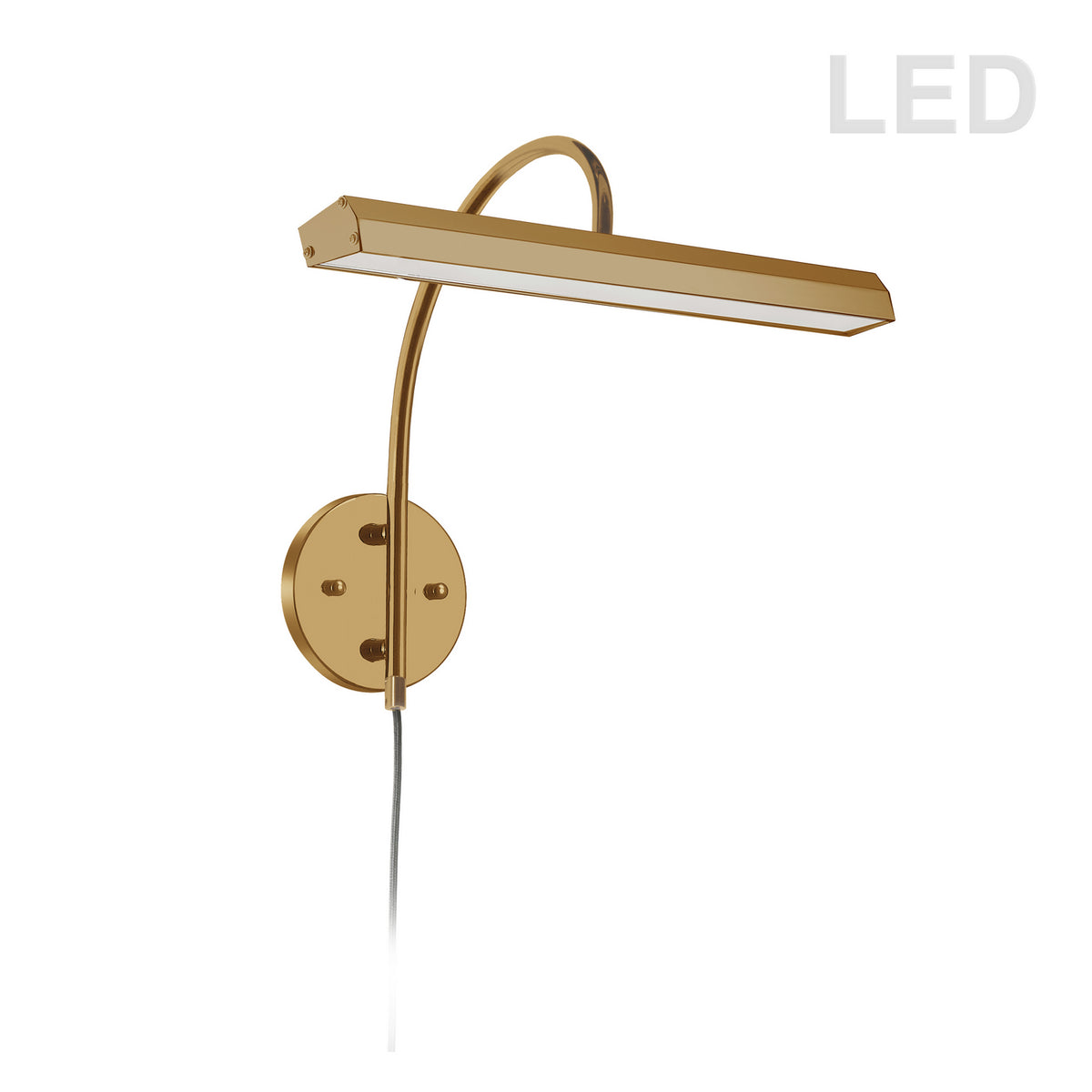
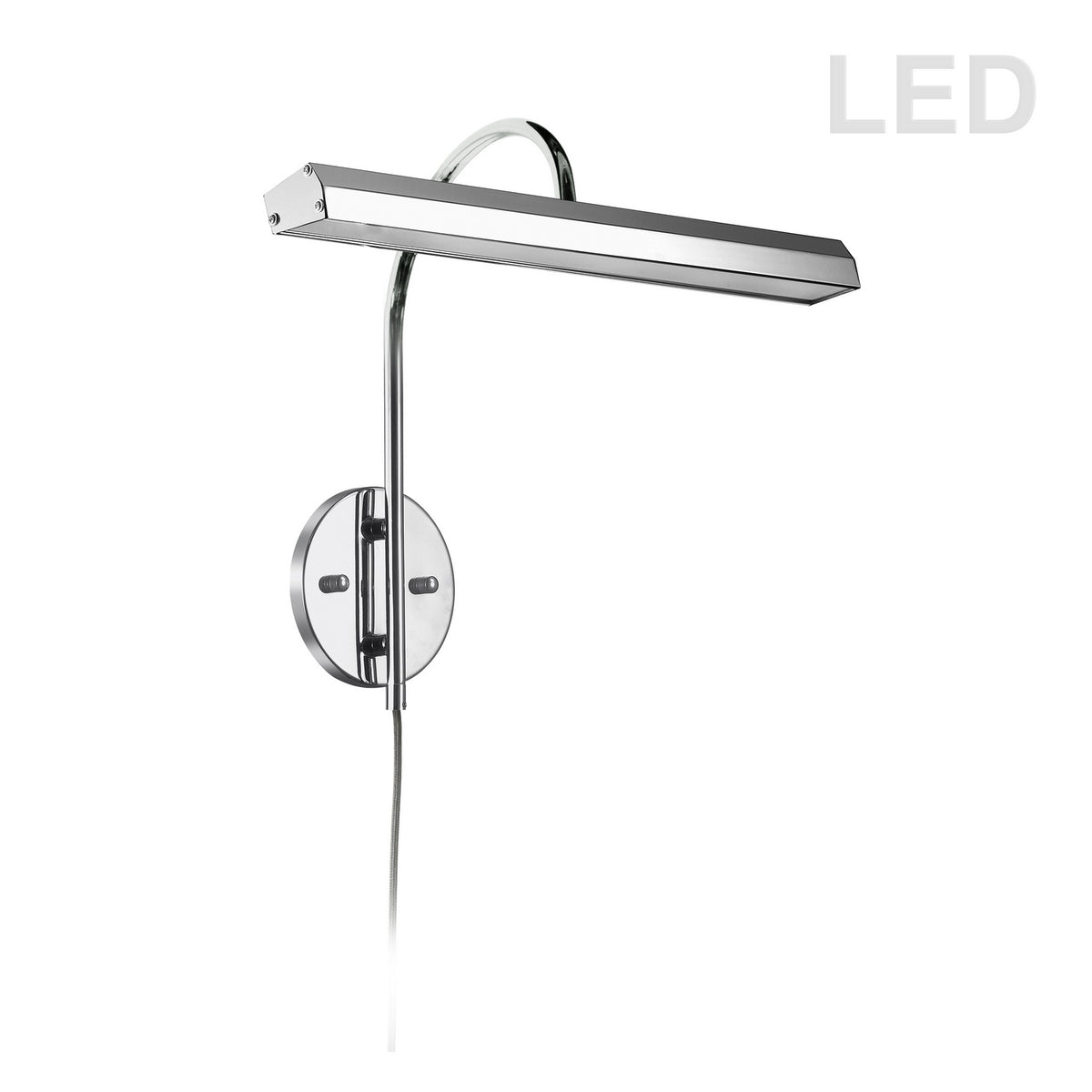
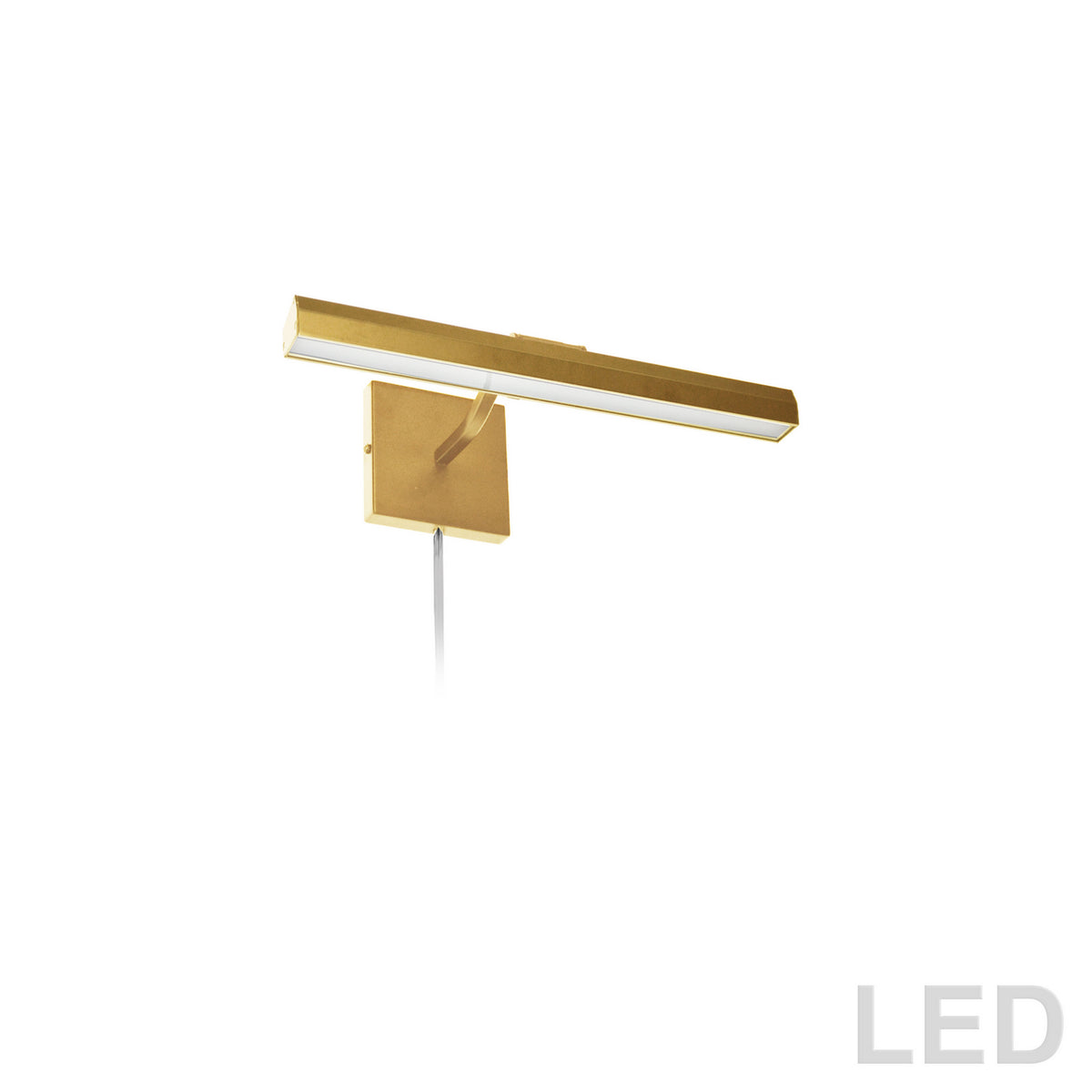
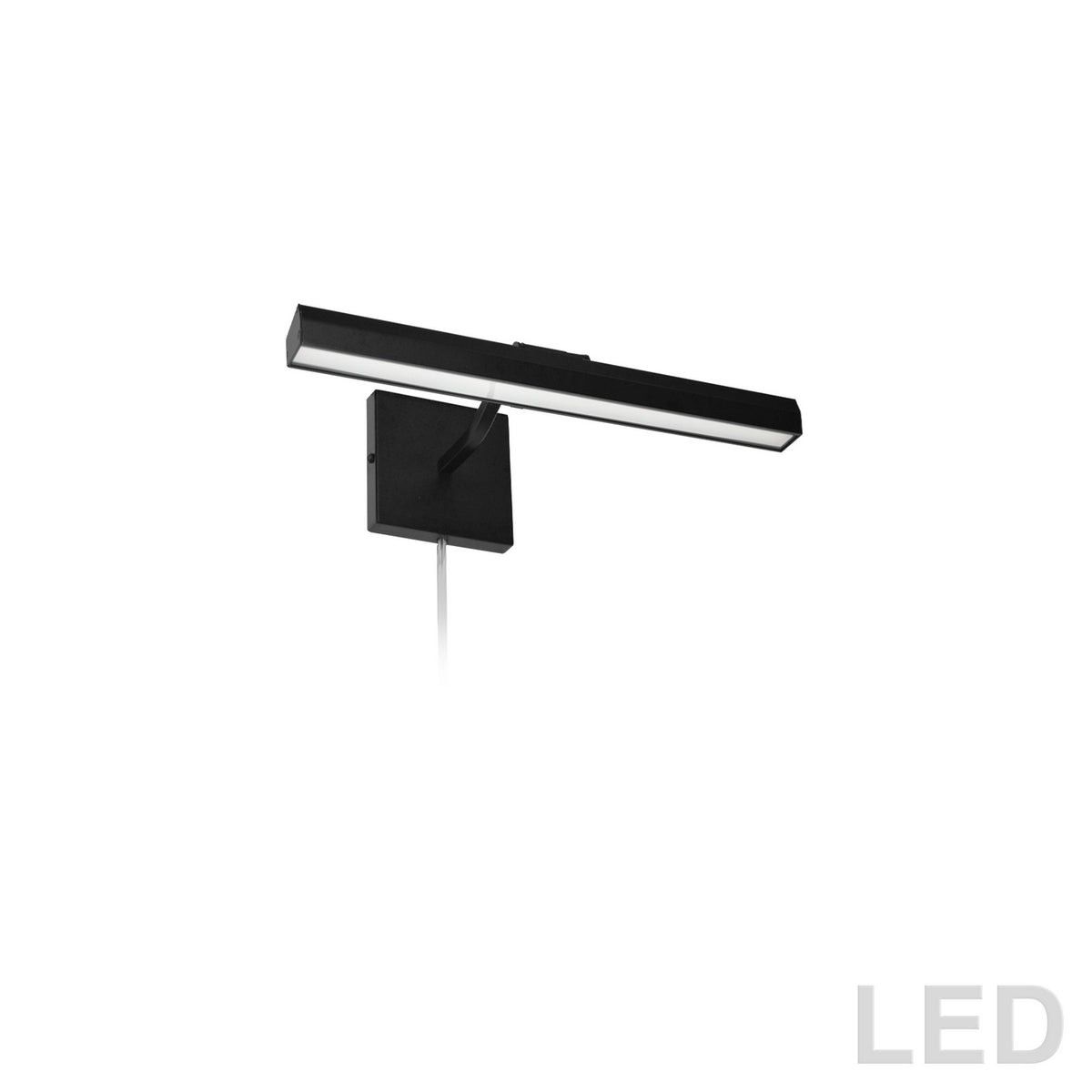
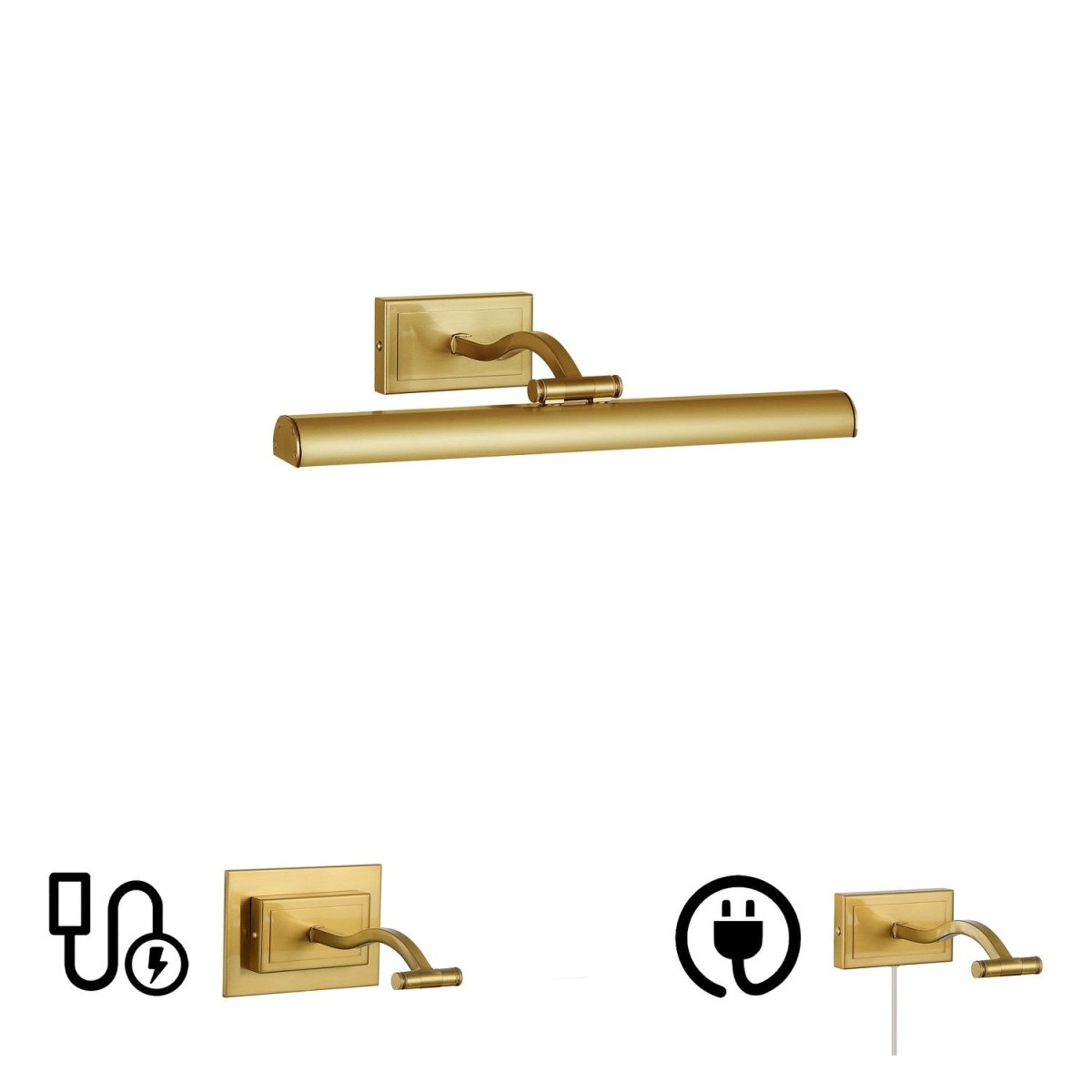
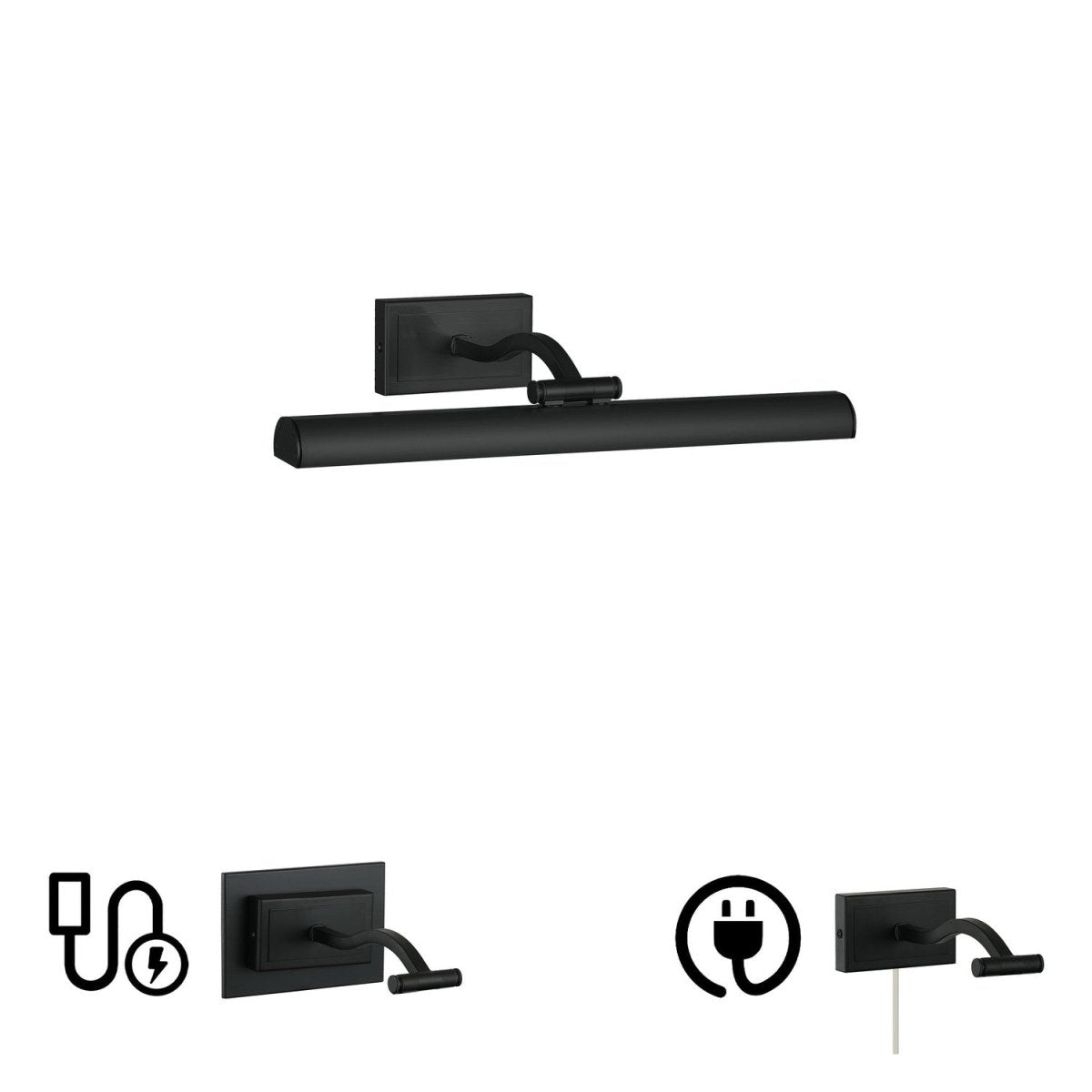
Brass and bronze warm a space and age gracefully: antique brass suits traditional interiors and warm wood tones, polished brass reads more contemporary, and bronze, being darker, grounds the fixture against neutral walls. Matte black is the most neutral finish, receding so the artwork takes centre stage. Nickel and chrome, being more reflective, add contrast in cooler palettes and resist tarnishing well.
How to choose the right picture light
The fixture should measure two-thirds to three-quarters the width of the artwork. A 30 in (76 cm) canvas, for instance, pairs well with a 20 to 22 in (51 to 56 cm) fixture. Undersize it and the light is uneven; oversize it and it spills onto the wall.
For mounting, position the fixture 4 to 6 in (10 to 15 cm) above the top edge of the frame: that clearance lets light spread evenly without a harsh shadow along the top of the piece.
For wiring, there are three routes: hardwired for the cleanest install with no visible cord, plug-in for easy repositioning, or rechargeable battery when running a wire isn't practical — great for rentals or temporary displays. A battery wall light avoids electrical work entirely.
For light quality, a colour temperature of 2700 to 3000 K gives a warm, natural white that flatters most subjects, and a CRI of 90 or above ensures accurate colour rendering. A modern LED picture light gives off little heat and virtually no UV, making it safe for photographs and works on paper. As an art light, it stays true to the palette of the work.
Beyond the frame
These principles apply elsewhere in the home too. The same accent thinking carries over to display lights in a study, a hallway or a curated shelf, where you want to underline a niche or an object without flooding the room. Browsing picture lights online, size the fixture to the piece first, then choose the finish.